
Retailers Are Quietly Pocketing Your Tariff Refund
A wave of retail earnings this week show tariff refunds inflating profits well beyond what shoppers are actually buying, and the gap tells you where the real trouble sits
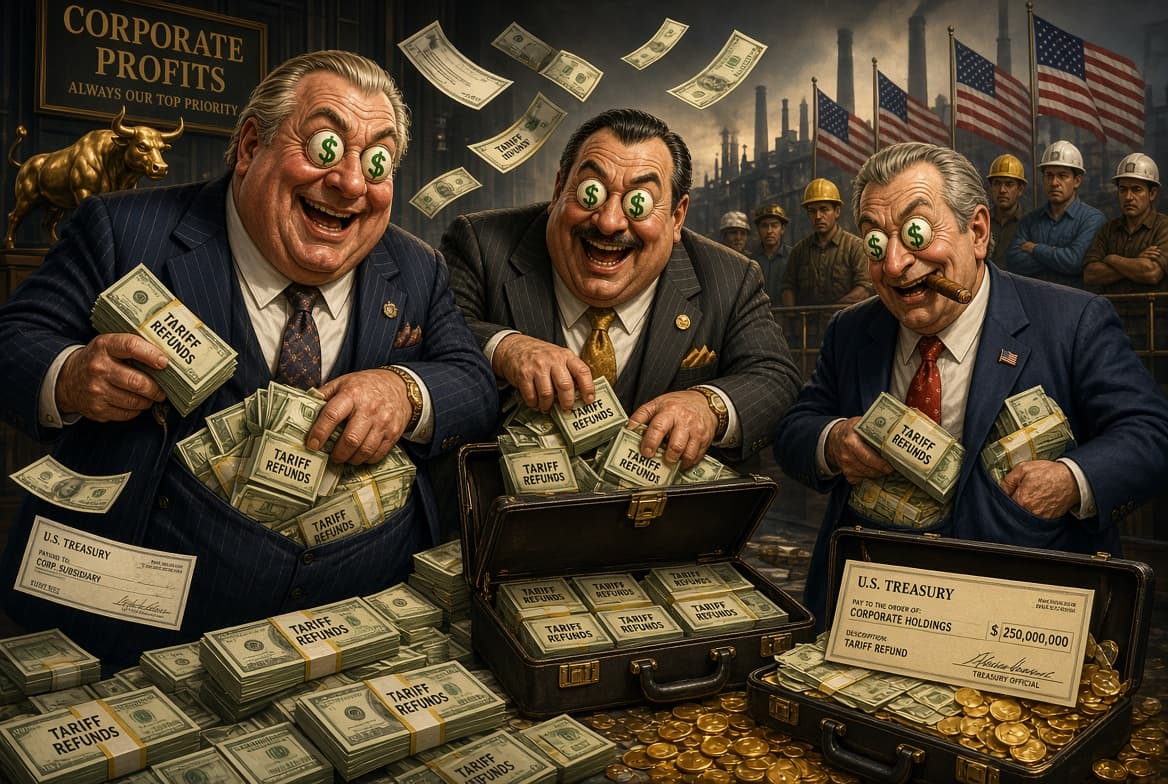
Buried in nearly every big retail earnings report released this week is the same footnote, formatted a little differently each time, disclosing tens or even hundreds of millions of dollars in tariff refunds flowing straight into gross margin. Kohl's got about $150 million, with $100 million hitting margin directly. Bath & Body Works got roughly $80 million, and by its own admission, without that refund its adjusted profit per share would have been half of what it reported. Abercrombie & Fitch's headline earnings included a $1.75-per-share boost, more than the entire quarter's underlying profit, from the same source. J.M. Smucker cited tariff refunds as a driver of its earnings beat too.
These are refunds tied to the IEEPA tariff regime. Yes, you read that right. Companies were tariffed and generally passed those costs on to you, the consumer, earlier this year. Then the Supreme Court ruled those tariffs to be illegal, and the government was forced to return that money to the companies. And the companies put the money right into their pockets. And you lose.
These refunds are a one-time source of profit also, and that distinction matters enormously right now. The retail sector is being read by markets as a referendum on the health of the American consumer, and this quarter's numbers are badly distorted by a government check that won't show up again next year.
Strip the refunds out and the underlying picture is far more mixed than the headlines suggest. Kohl's comparable sales still fell 0.9 percent. Bath & Body Works, excluding the tariff benefit, would have posted adjusted earnings of 31 cents a share instead of the reported 62 cents, and its own guidance for the current quarter is weak enough that Wall Street analysts were calling the report a negative catalyst for the stock even with the refund included. Abercrombie's comparable sales came in flat, missing expectations, despite the eye-popping headline profit number. These are companies whose core operating performance is softer than the accounting suggests, propped up temporarily by a government payment that has nothing to do with how many people walked into their stores or what they bought once inside.
Contrast that with what's happening in home goods and off-price. Williams-Sonoma posted comparable sales growth of 6.2 percent, well ahead of expectations, across every one of its brands, with margins that actually improved on their own merits rather than through a refund. That's a genuine read on a segment of consumers, generally higher-income, still renovating kitchens and buying furniture, still spending freely. It lines up with the pattern seen last week in the split between discount retailers serving strapped shoppers and off-price chains serving everyone else: the gap between the top and bottom of the consumer base keeps widening, and no accounting footnote changes that reality.
For Long Island shoppers and small retailers, the practical takeaway is to be skeptical of the next round of headlines trumpeting big retail earnings beats through the fall. Ask whether the number includes a tariff refund, because in this cycle, a shockingly large share of them do. It also means the true test of consumer health won't come from this batch of reports at all. It'll come next year, when the one-time refunds are gone and companies like Bath & Body Works and Kohl's have to show whether their underlying business, promotional intensity and all, can stand on its own. Given how promotional the athletic and apparel categories already look heading into the holidays, that's a test several retailers may not be eager to take.
You Might Also Be Interested In

Labor Department Suspends Microsoft, Adobe and Six Outsourcing Firms From Green-Card Labor Program

SpaceX's Filings Show AI Computing Power Being Financed Like a Credit Asset
Giunta's Meat Farms Completes Purchase of King Kullen