
From Red Light Robinhood to License Plate Reader Vigilante?
Arrest in Shirley rekindles debate over surveillance technology, privacy rights and how far citizens should go in opposing government cameras.
The arrest of a Shirley man accused of stealing two automated license plate readers has renewed debate over government surveillance technology and drawn comparisons to Suffolk County’s “Red Light Robinhood,” who targeted red-light cameras more than a decade ago.
Suffolk County police arrested 68-year-old Miguel Perez after he allegedly removed two Axon automated license plate readers from Moriches-Middle Island Road near Glen Drive in Shirley. Police said Perez was charged with fourth-degree grand larceny and was issued a desk appearance ticket.
The arrest comes as automated license plate readers have become the focus of an increasingly heated national debate over privacy, government surveillance and constitutional rights.
Authorities say the information captured by the readers assist criminal investigations and help locate stolen vehicles and other vehicles of interest.
Critics argue the cameras record information on countless law-abiding motorists who are not suspected of committing crimes, creating searchable databases capable of revealing where people travel and when. Privacy advocates have also questioned how long the information is retained, who has access to it and how broadly it is shared among law enforcement agencies.
Those concerns have reached Congress.
Last month, Rep. Tim Burchett, R-Tenn., introduced the Protection Against Mass Surveillance Act, legislation that would prohibit federal agencies from purchasing, using or accessing widespread surveillance technologies and would bar state and local governments from using federal funds to acquire or operate those systems. Burchett has argued that government should not force Americans to choose between public safety and the constitutional liberties guaranteed by the Fourth Amendment.
None of Long Island’s four members of Congress has signed on as a sponsor or cosponsor of Burchette’s bill
The proposal follows growing concern over the rapid expansion of automated license plate reader networks nationwide. Critics, including Knox County, Tenn., Mayor Glenn Jacobs, have warned that advances in artificial intelligence, networking and data retention have transformed what were once simple license plate readers into sophisticated surveillance systems capable of tracking vehicle movements and storing that information in searchable databases for weeks or longer.
The debate has also reached Long Island’s East End.
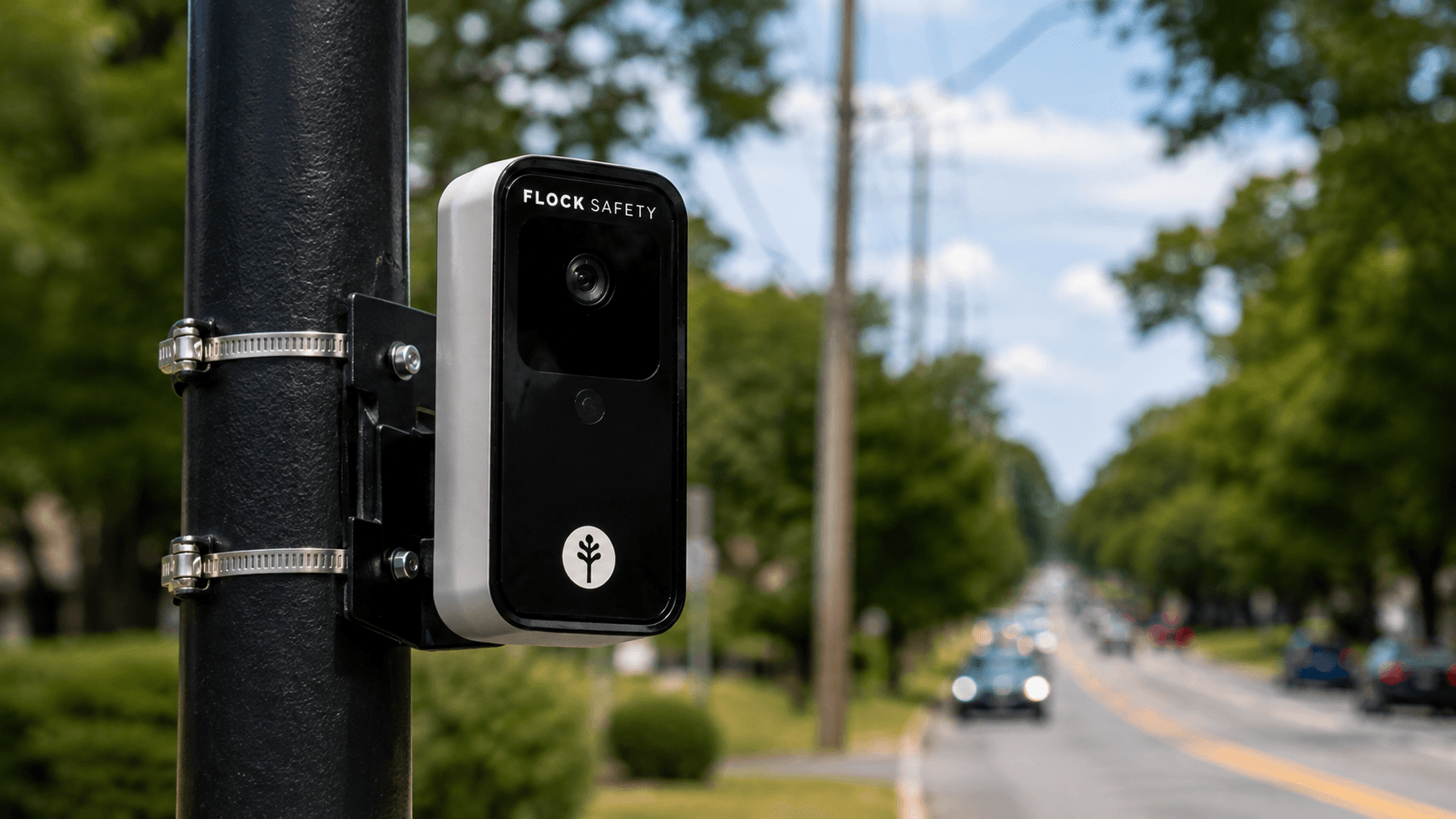
In Southold Town, the installation of Flock Safety cameras sparked concerns from residents over privacy, transparency and government surveillance. Public meetings included calls for tighter oversight and greater disclosure about how the technology is used, who can access the data and how long it is retained. Earlier this year, several of the cameras were vandalized amid the controversy.
Flock Safety says its cameras photograph vehicles, not their occupants, do not use facial recognition technology and generally retain data for 30 days, although retention policies may vary by agency.
The allegations against Perez have drawn comparisons to Steve Ruth, the man who became known as Suffolk’s “Red Light Robinhood” after cutting down a number of the county’s red light cameras. Ruth argued the cameras were unconstitutional, dangerous and designed primarily to generate revenue rather than improve safety. To supporters, he became a folk hero who challenged government overreach. To critics, he was a vandal who took the law into his own hands.
Whether Perez’s case follows a similar path remains to be seen. Unlike the controversy over red-light cameras, the debate surrounding automated license plate readers centers less on traffic enforcement than on balancing crime-fighting technology with concerns over privacy, mass surveillance and constitutional protections.
You Might Also Be Interested In
Suffolk Police Honor Heroes, Community Leaders
Smith Point Bridge Traffic Shift Starts Monday
Town of Brookhaven Free Rabies Clinics Vaccinate Record 1,254 Animals