

Industrial Fishing Fleets Threaten Ocean Food Chain
Conservationists and lawmakers are pushing to restrict industrial fishing operations accused of stripping Atlantic waters of menhaden, a vital food source for the Long Island food chain.
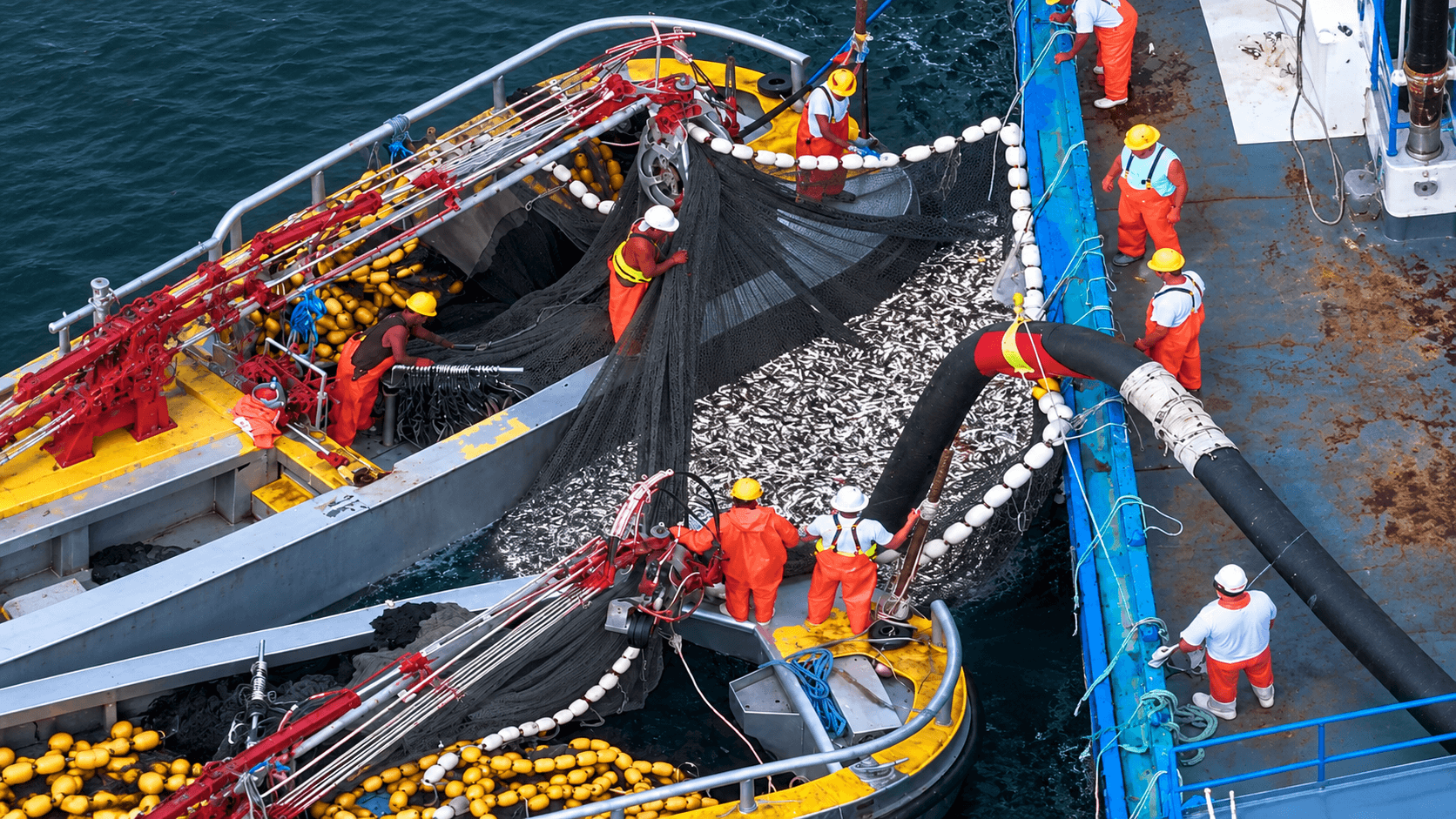
Massive commercial fishing fleets are harvesting enormous quantities of Atlantic menhaden, threatening a critical link in the ocean food chain and the marine species that depend on these essential baitfish.
Menhaden, commonly called bunker, are a primary food source for striped bass, bluefish, tuna, whales, dolphins, and ospreys. Their abundance is essential to marine ecosystems and recreational fishing industries.
The Forage Fish Campaign, a coalition of fishermen, charter captains, conservationists, and coastal businesses, is demanding an end to industrial-scale harvesting of these baitfish.
According to the organization, vessels equipped with drones and sophisticated fishing equipment capture entire schools of menhaden for processing into fishmeal and oil used in aquaculture, livestock feed, and other products. The group argues that removing so many baitfish disrupts the food chain.
Congressional pressure is mounting. On October 9, U.S. Senator Chris Van Hollen and Representative Sarah Elfreth of Maryland led 11 federal lawmakers in calling for stronger menhaden protections. The lawmakers urged the Atlantic States Marine Fisheries Commission to impose tighter harvesting restrictions.
New Jersey Senator Cory Booker and Congressman Frank Pallone also called for substantial reductions, citing a scientific assessment indicating that estimated menhaden biomass was 37% lower than previously believed.
The commission reduced the coastwide menhaden harvest quota by 20% for 2026, limiting catches to approximately 412 million pounds.
Although federal and interstate assessments do not classify menhaden as overfished, conservationists argue that existing regulations fail to address localized depletion and the needs of predator species.
For Long Island fishermen, declining baitfish populations could affect striped bass migrations, recreational fishing, charter boat businesses, and the coastal economy.
Center Moriches fisherman Capt. Bryan Hellmer, known locally as the Asphalt Angler, noted a scarcity of the fish over the last few years. “The massive schools of bunker we used to see are disappearing,” the Angler said. “Their decline has had a noticeable impact on the striped bass runs.”
You Might Also Be Interested In

DeStefano Secures $50,000 for Historic Preservation

Suffolk's Newest Fire Investigator Has A Nose For Arson

Pat-Med Students Turn Civic Lessons Into Action