

Just Across The Border, Pennsylvania Reaps Natural Gas Rewards
While New York continues to prohibit hydraulic fracturing, neighboring Pennsylvania has embraced natural gas development, generating billions of dollars for local communities, reducing emissions by replacing coal, and becoming one of the nation’s leading energy producers.
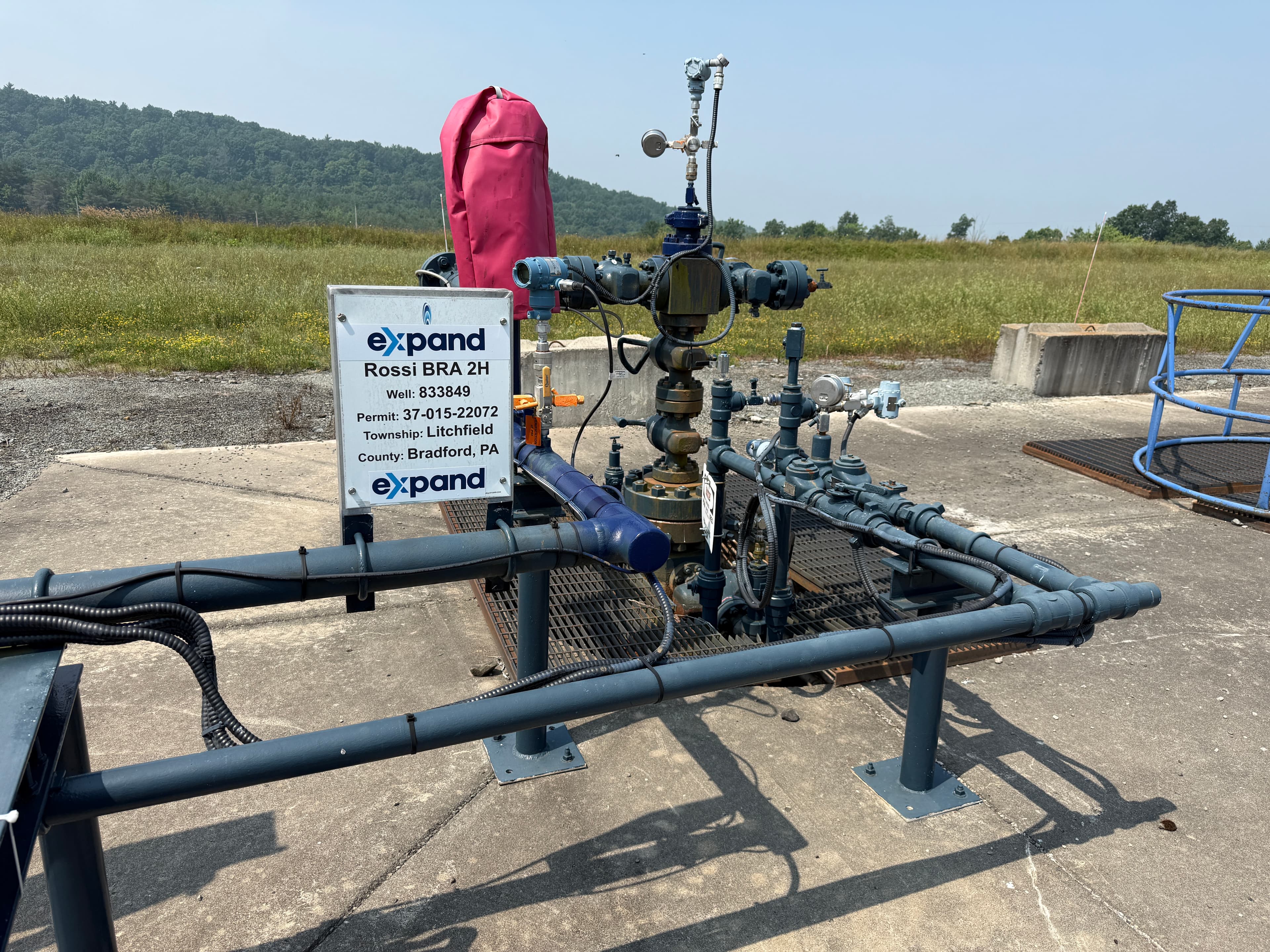
Pennsylvania’s vast natural gas fields have transformed the state’s economy, generated billions of dollars for local governments and environmental projects, and helped reduce carbon emissions by replacing coal-fired power generation—all while operating under one of the nation’s most stringent regulatory systems.
The contrast is especially striking along the New York-Pennsylvania border, where the same Marcellus Shale formation stretches beneath both states. On the Pennsylvania side, well pads quietly produce clean-burning natural gas that heats homes and powers electric grids. Just a few hundred feet away across the state line, New York continues to prohibit hydraulic fracturing, a process that uses water pressure to free the gas from the ancient rock.
The difference in public policy has produced dramatically different results.
Pennsylvania is now the nation’s second-largest producer of natural gas behind only Texas, with approximately 14,000 active unconventional Marcellus and Utica shale wells, according to the Pennsylvania Department of Environmental Protection.
Those wells have generated an enormous financial return for the Commonwealth. Matt Osenbach, executive director of the Pennsylvania Senate Environmental Resources and Energy Committee, said the state’s natural gas impact fee produced nearly $244 million in 2025 alone.
Since the impact fee was established in 2012, natural gas producers have contributed more than $3.1 billion that has been distributed to counties, municipalities and statewide programs.
According to Osenbach, $133.8 million from last year’s collections went directly to communities hosting the drilling activity, while another $89.2 million was deposited into the Marcellus Legacy Fund to finance environmental initiatives, greenways, stream restoration projects, parks, trails and infrastructure improvements. State agencies received the remaining $20.9 million to administer the program.
Beyond the direct payments to government, private landowners who lease their property for drilling receive royalty payments from natural gas production, creating another source of income throughout much of rural Pennsylvania.
Supporters also point to natural gas as an environmental success story.
Although opponents of hydraulic fracturing often cite environmental concerns, Osenbach said Pennsylvania’s experience has demonstrated that natural gas development and environmental protection can coexist.
“I think we do it the best and one of the most regulated states in the country,” he said. “Our folks work very well with the Department of Environmental Protection.”
He noted that Pennsylvania’s extensive regulatory oversight has allowed the state to remain one of America’s leading natural gas producers while maintaining strong environmental safeguards.
Perhaps most significantly, Pennsylvania’s embrace of natural gas has accelerated the transition away from coal-fired electricity generation.
“It’s helped reduce our emissions by close to 25 to 30 percent over the last 15 to 20 years,” Osenbach said. “Not only have we been able to produce more gas, but it’s also reduced our emissions in Pennsylvania while continuing to be the number two electricity exporter in the country because of our natural gas.”
Natural gas emits substantially less carbon dioxide and fewer pollutants than coal when used to generate electricity, making it an important bridge fuel as older coal plants are retired.
Standing near the Rossi Well in Bradford County, the policy contrast is impossible to miss. On one side of the border, natural gas production supports local economies, public infrastructure and environmental projects. On the other, New York leaves the same underground resource untouched.
Osenbach declined to criticize New York directly but suggested the Empire State could learn from Pennsylvania’s experience.
“They could certainly take a look to their neighbors just a little bit south and see how successful natural gas has made us,” he said. “Certainly the upper part of New York State could take a page out of our playbook if their Capitol would change its mindset.”
For supporters of hydraulic fracturing, the view from the Pennsylvania border serves as a vivid illustration of two neighboring states pursuing sharply different energy policies—and experiencing very different economic outcomes.
You Might Also Be Interested In

Data Centers Are the Lifeline New York Refuses to Grab

Powering Progress: How a New Data Center Deal Puts Local Families First

DA: Mastic Woman Violated Probation After Dog Mauled Toddler