

Mt. Sinai Mastermind of Fake Medicaid Taxi Ring Sentenced - Broader Questions Remain
Policy Insanity and Billions in Funds Meets Limited Oversight Meets Unchecked Criminal Behavior - Modern American Government at Work
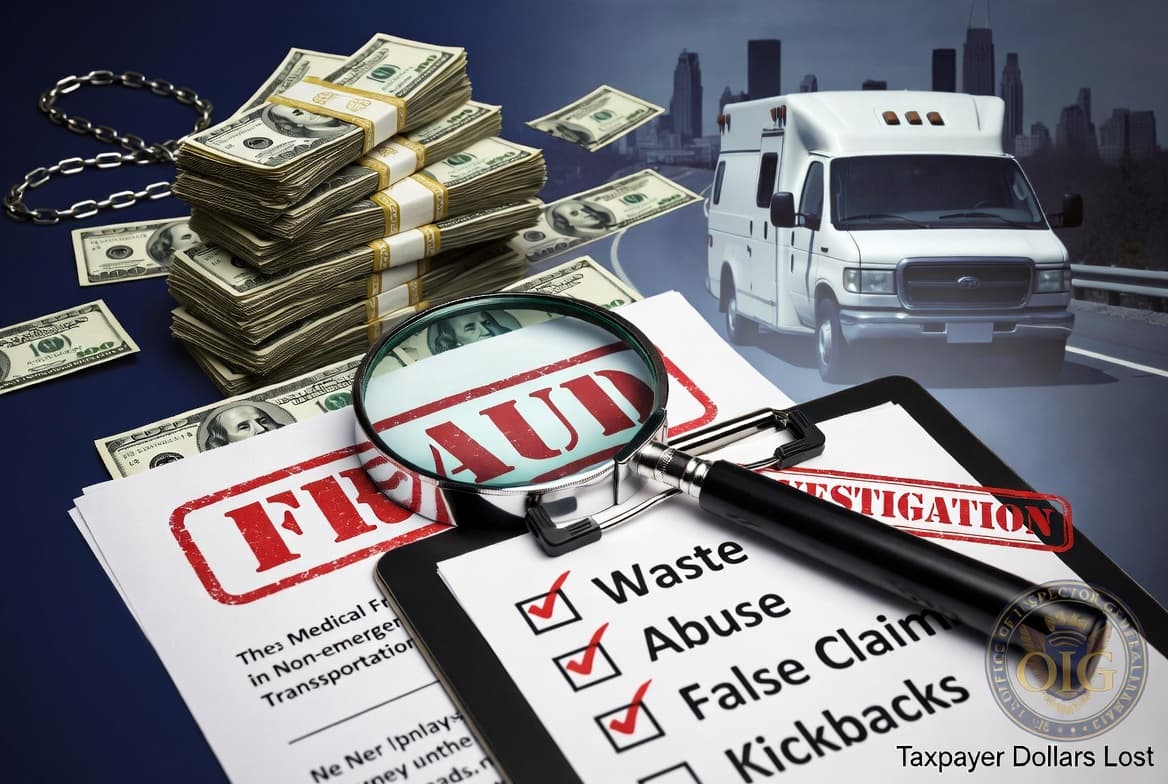
On July 22, 2026, Adnan Arshad, a 47-year-old Mount Sinai resident known as “Eddie,” was sentenced in federal court in Central Islip to 97 months in prison. He was ordered to pay roughly $19.7 million in restitution and forfeit homes and luxury vehicles bought with the proceeds. Arshad had pleaded guilty the previous year to conspiracy to commit healthcare fraud and conspiracy to commit money laundering. His companies, 668 MTK Taxi LLC in Montauk and All-Star Taxi LLC in Ronkonkoma, formed the backbone of an alleged scheme that drained more than $19 million from New York’s Medicaid program over roughly three and a half years.
Several associates and employees linked to the businesses have pleaded guilty and await sentencing, while others remain in various stages of legal proceedings. Prosecutors portrayed Arshad as the central figure who orchestrated the daily operations and kept most of the gains. The case, handled by the Eastern District of New York with support from federal and local agencies, exposed how easily transportation benefits could be turned into a profit center.
The mechanics were deceptively simple. Starting around December 2020, Arshad’s companies allegedly recruited Medicaid patients by offering cash kickbacks, sometimes reaching $300 per trip. These patients would request rides, most often described as transportation to methadone clinics for addiction treatment. Many of the billed trips never happened. Claims were submitted for patients who were deceased, hospitalized, or incarcerated at the time. To increase payouts, the group allegedly steered riders toward distant New York City clinics instead of nearby Long Island options and instructed them to use false pickup addresses so trips appeared longer on paper. Drivers sometimes took circuitous routes or staged fake trips to create supporting GPS data. In total, the companies billed over $16 million for rides to just three specific NYC treatment centers. The money funded more vehicles to grow the operation and financed an extravagant lifestyle that included multiple high-end homes, a Ferrari, and several luxury cars.
This fraud operated within New York Medicaid’s non-emergency medical transportation benefit, known as NEMT or ambulette services. The program uses a mix of state and federal dollars—Washington typically covers more than half—to pay for rides to medically necessary appointments when patients lack other transportation. Providers enroll, submit claims with basic trip details, and receive per-trip plus mileage payments. Much of the system depends on self-reported information, with audits and data reviews happening after payment. A transportation broker helps authorize trips and manage networks. The intent is to remove barriers to care for vulnerable populations, including those receiving addiction treatment. Yet in practice, this benefit allegedly became a vehicle for large-scale billing abuse.
The Arshad case forces larger questions about the policy itself. Is it sound public policy to use taxpayer money to pay for repeated long-distance taxi or ambulette rides from eastern Long Island to New York City methadone clinics? Proponents argue that reliable transportation improves access to treatment, reduces emergency room visits, and supports recovery, ultimately saving money in other parts of the system. Critics counter that subsidizing lengthy trips to distant facilities—when closer alternatives exist—creates unnecessary expense and invites exactly the kind of exploitation seen here. They ask how this became a standard covered service in the first place. The benefit grew over decades as Medicaid expanded to address transportation barriers for low-income and disabled residents. What began as help for essential medical visits gradually broadened to include addiction services, reflecting shifting priorities around harm reduction and chronic care. But with budgets already strained, many taxpayers wonder where the line should be drawn between genuine need and open-ended entitlement.
Beyond this specific scheme, the episode highlights deeper problems in administering massive government programs. Medicaid and Medicare consume enormous portions of federal and state budgets—hundreds of billions of dollars annually. Programs of this scale inevitably attract fraud because the volume of claims is so high and perfect real-time verification is impractical. Most oversight relies on post-payment audits, data analytics, and occasional whistleblowers. Sophisticated operators can blend fake claims with real ones, exploit mileage rules, and stay under the radar for years until a pattern triggers investigation. In Arshad’s operation, the fraud persisted long enough to generate substantial wealth before authorities intervened. Recovering the money afterward is difficult and incomplete.
This raises two intertwined challenges. First, how do we oversee enormous budgets without creating so much red tape that legitimate services suffer? Stronger data matching, GPS verification requirements, tighter mileage rules, and more frequent audits of high-volume providers could help, yet each layer adds cost and complexity. Second, and more fundamental, are these programs structured correctly from the start? When taxpayers effectively pay for long-distance rides for addiction treatment—services that some view as enabling rather than solving underlying problems—it prompts a broader conversation about priorities. Should public funds focus on core medical care, or extend deeply into social support, housing, and transportation? Reasonable people disagree, but the Arshad case shows how generous rules can be gamed when oversight lags.
The sentencing of Arshad and the guilty pleas from his circle deliver accountability in one instance. Yet similar transportation fraud rings continue to surface across New York and other states. The pattern suggests that without meaningful reforms—tighter eligibility for certain benefits, better real-time checks, or a rethinking of which services truly warrant public subsidy—the cycle of fraud, investigation, and partial recovery will repeat. Ordinary citizens footing the bill deserve both efficient care for those who need it and rigorous protection against those who treat taxpayer programs as personal revenue streams. As budgets grow ever larger, the tension between compassion and accountability becomes harder to ignore. The Long Island scheme is not just a story of one man’s greed; it is a window into how expansive government programs can drift from their original purposes and become difficult to control.
You Might Also Be Interested In

Romaine Details Suffolk Environmental Priorities
Infrastructure Investment Drives Romaine Agenda

Hispanic Heritage Celebration Coming To Patchogue