

The Asphalt Angler Reels in a Lifetime of Memories
With the fall striped bass run underway, angling legend Bryan Hellmer shares his observations on Long Island fishing.
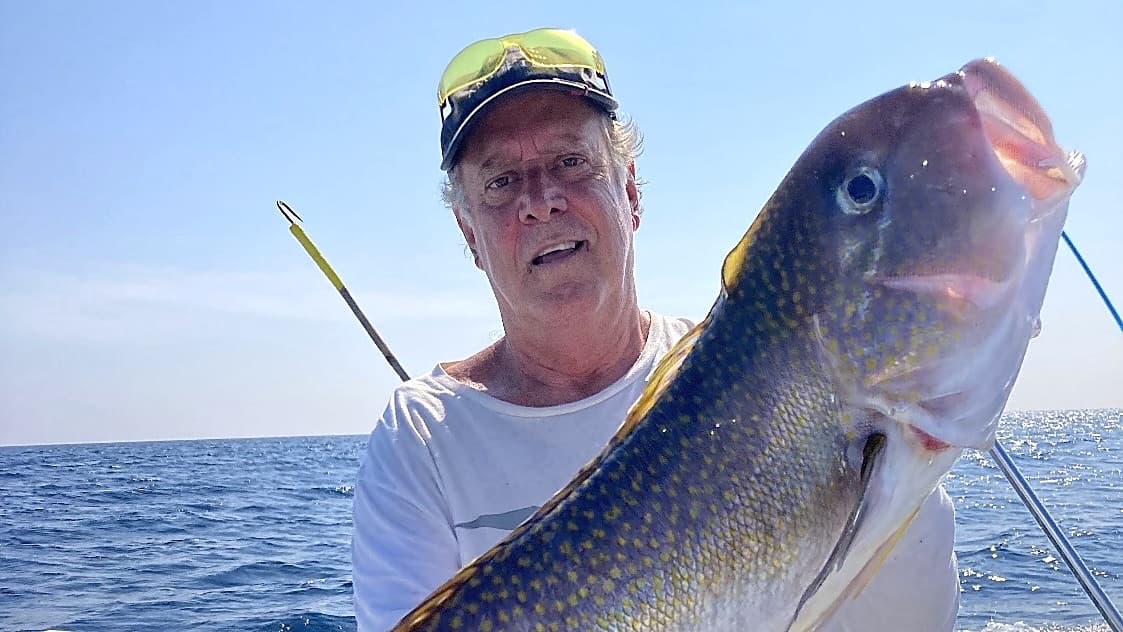
The South Shore Press caught up with the famed Asphalt Angler, Bryan Hellmer of Center Moriches, who, during a successful career in sales, found the time to ply the local waters for over 60 years.
South Shore Press: Mr. Hellmer, what can you tell us about the striped bass fishing this time of year?
Asphalt Angler: The fall run just started, and they're running all along the South Shore of Long Island. The slot size is between 28 and 31 inches, so it's kind of heartbreaking when you have to release a fish that's oversized. At least it can be a trophy fish if you take a picture of it.
They're hitting on eels, bunker and clams. The go-to for a lot of fishermen in this area is the bucktail; they do tend to like this type of lure.
South Shore Press: How are striped bass for those with culinary interests?
Asphalt Angler: It's one of the better fish to eat. It can be used as a fillet or cut into steaks. It's great barbecued or broiled. It's got a very good texture, a hearty texture compared to some of the other fish out there, and great flavor.
South Shore Press: You've been angling these local waters for years. How do you believe our region stacks up against other areas for fishing?
Asphalt Angler: I've been angling these waters for over 60 years now. Compared to other places I've fished, including the Gulf of America, Belize, Hawaii, and up and down the East Coast, catching a myriad of different fish—bluefish, grouper, mackerel, tilefish, flounder, blowfish—Long Island has always been one of the better areas for me.
South Shore Press: That's quite an endorsement of Long Island's fishing, especially considering all the places you've been.
Asphalt Angler: I think if you have a chance to get out there, it's always nice to be on the water. It's always nice to be back with nature, and the striped bass is almost a quintessential fish for Long Island.
It's an anadromous fish, so you can find it in freshwater also. They spawn in the upper Hudson River and then come down and move through the Sound and around Long Island as they head toward New Jersey and the Chesapeake, into the waters where they like to spend the winter.
South Shore Press: You've written previously about the "fishbone sky," which brings back memories and certain feelings about the fall season. Could you tell us a little more about that?
Asphalt Angler: It's a good time of year in the fall, but it's a different time of year. You can feel the difference in the air. The air grows a little cooler, and people are going back into the city. Long Island is kind of given back to the locals at that time of year, which always makes it a special time for me, having grown up in this area.
It's nice to share it with people from other places, but it's also nice when you have it to yourself.
South Shore Press: What is indicative of a fishbone sky?
Asphalt Angler: A fishbone sky is usually a cloud formation that lies like a herringbone across the sky. This time of year, the days get shorter, so you're coming back in earlier and earlier, especially when daylight saving time changes the clock.
As you're coming in, you can catch the fishbone sky during sunset as it gets a little red in it. It's a beautiful sky and a beautiful time of year.
South Shore Press: What's your favorite fish to land here on Long Island, and what are some of your memories of fishing here?
Asphalt Angler: I'd say my favorite fish to catch is probably a striped bass because they can be somewhat elusive. But I also love fishing for fluke, or summer flounder, because it's a more active style of fishing.
You tend to drift, and with sonar, you can watch the structures and look at the contours of the bay bottom. You look for certain parts of the area, not so much the flat areas, but places where there's an incline or decline, and you know the fish are down there.
I have my own secret spots, such as what I like to call the "Honey Hole," which is a nice spot off the back of Moriches Inlet, or the "Squeeze Box," which is a very small spot that always seems to produce fluke.
Snappers are always fun. I think that's one of the first fish children catch because they're very active and keep them engaged. Other fish, like fluke, are more of a waiting game and more methodical. But snapper bluefish, if you're getting young kids out there, are the fish that really get them to start loving fishing.
South Shore Press: You fish the Atlantic Ocean, the inland bays and streams, as well as freshwater here on Long Island. Can you tell us a little more about freshwater fishing?
Asphalt Angler: Freshwater fishing is a completely different animal because the water is usually calmer and you have to be more crafty in a more confined space. The selection of lures and bait is completely different. And you have fly fishing, where you have to present an insect.
Southaven Park was always a good place for me as a young man.
In fact, when fishing season started on April 1, my mother would give me a letter to give to the teacher so I could actually get out of school and go fishing. It's good fun to catch and release. You have the sunnies, the bluegills and the brown trout. Rainbow trout are always pretty fish and fun to catch.
South Shore Press: You're not only a finfish aficionado, but you've also done a lot of shellfishing in the area.
Asphalt Angler: Yes, I do a lot of clamming. The clams in this area are some of the best. We have the quahog variety in our waters, and it's a very good clam to eat.
We also have some local oyster farms. In fact, I was out after that big storm we had a couple of weeks back, over by Gull Island, an island in the back of the inlet. I let my dog, Jelly Bean, run around there when there's no one on the beach.
I came across an oyster trap that had washed up on the beach, and when I looked inside, I found maybe two dozen oysters that I got to enjoy. That's something rare around here. It's not something you can just pick up on your own. I was lucky enough to find what I guess we'd call flotsam or jetsam washed up on the beach.
I've also been scuba diving for many years. If I had to choose one, I would choose scuba diving over fishing because when you scuba dive, you get to see the fish in their environment and pick the fish you want, rather than waiting for them to pick you.
South Shore Press: What are some of the bounties you would find while scuba diving?
Asphalt Angler: I've been out there with a few friends at times and picked up some nice lobsters. You also get blackfish among the rocks, eels, fluke and flounder. Striped bass also hang out around the rocks. That's why they're also known as rockfish.
South Shore Press: On the topic of shellfishing, can you explain what types of shellfish are available in Long Island waters?
Asphalt Angler: We have scallops, which are very good. You find them farther east, and they're a little harder to catch because they can move around and scoot along.
Again, we have clams. The quahog clam is good. We also have sea clams. Going back many years, Doxsee had a processing operation on Long Island, and they would use the foot and lips of sea clams in clam chowder.
Right now, I think sea clams are mainly harvested for fishing bait. People use them on wrecks or when they're drifting for striped bass, blackfish and sea bass.
There are mussels out there, too, which are very good. They seem to be coming back. I've noticed in the places where I like to hang out that the mussels seem to be making a comeback.
South Shore Press: What about razor clams?
Asphalt Angler: Razor clams are out there, but you rarely come across them unless you're really looking.
When I was out the other day, I saw people harvesting them. They'll go out with a small outboard engine mounted on something almost like a hand truck or skid.
One person drags it through the sandbar, with the motor kicking up the sand, while two or three other gentlemen catch the smaller razor clams. Those are usually exported to Asian countries like China and Japan, where they're very popular.
They're very good sautéed or deep-fried. My warning to you is don't deep-fry clams without a shirt on because they can tend to explode!
South Shore Press: There are different size classifications of hard clams, such as cherrystones. Could you review some of the names for our readers?
Asphalt Angler: It's basically the same clam, but they're classified by size. You have littlenecks, which are the smallest, followed by topnecks, cherrystones, and then chowders, the quahogs, which are the biggest ones.
The larger clams are used for things like baked clams. Most people like the cherrystones. If you go to a restaurant, you're usually getting cherrystones, topnecks or littlenecks if you're ordering clams on the half shell.
South Shore Press: Can you reminisce a little about Long Island's scallop industry and how they're harvested?
Asphalt Angler: Scallops are a little tougher to catch. You have to go out and really look for them. Sometimes, from a boat, they'll use what they call a comb or drag, and you can pick them up that way.
Out east, they'll take a bucket, remove the bottom and put a clear bottom in it. Then they'll walk around with the bucket in the water and push it down.
I've seen this happen in Shinnecock and Montauk, where they'll walk out into the tidal waters and look through the clear bottom of the bucket. They can see the scallops down there and pick them up.
They're very good eating. I've also gone after ocean scallops, but for those, you really need to get offshore. I've been out 25 miles picking up sea scallops, as they call them, but that's not something you'll find just walking around. Sadly, the Long Island scallop beds have taken a hit in recent years, and they are becoming more and more rare.
South Shore Press: You've been a veritable font of information for our readers regarding your experiences and knowledge of local fishing. Is there anything else you'd like to add?
Asphalt Angler: It's always a pleasure. I think the South Shore Press is one of the better papers out there. They do a great job, and I appreciate the opportunity to share my experiences with people.
You Might Also Be Interested In

Tina Peters Gets Hero’s Welcome at America First Warehouse

Investigators Describe Battle to Expose Election Fraud

Democrat Candidates Toe Far-Left Line