
What Do Our Elected Officials Actually Do?
From Albany to Suffolk County, a guide to the powers, responsibilities and terms of the elected officials on November’s ballot—and how their decisions affect taxpayers and everyday life.
Every election season, voters are asked to decide who will run their government, manage their tax dollars and represent their interests. Candidates make promises, tout their experience and ask for the public’s trust.
But how many voters really understand what each office does? From Albany to Suffolk County, here’s a look at the responsibilities of the people voters put in charge of their government—and how their decisions affect everyday life.
Most people know the governor runs the state and legislators make laws. But what exactly does a comptroller do? How is an assembly member different from a senator? Why is the county clerk important?
As voters prepare for the November 3 election, the South Shore Press explains the responsibilities of these offices, how long their terms last and who’s running this year.
New York State Governor
Think of the governor as the chief executive officer of New York State, responsible for running state government, directing agencies and making sure laws are carried out.
The governor proposes a state budget determining how billions of taxpayer dollars will be spent on education, healthcare, transportation, public safety and other services. The governor also signs bills into law or vetoes them, appoints top government officials and mobilizes state resources during emergencies.
Governors serve four-year terms and work with the State Legislature, which must approve budgets and legislation.
This year, voters will decide whether to give Democrat Kathy Hochul another four-year term or send Republican Bruce Blakeman, the Nassau County executive, to Albany.
New York State Comptroller
If the governor is the chief executive, think of the comptroller as the state's chief financial watchdog.
The comptroller monitors how public money is collected, spent and invested, auditing state agencies and local governments for waste, financial mismanagement and improper procedures.
Another major responsibility is managing New York's public employee pension fund, which provides retirement benefits to hundreds of thousands of workers and retirees.
The comptroller also reviews government contracts and reports on the state's financial condition.
Comptrollers serve four-year terms. This year, Democratic incumbent Thomas DiNapoli faces Republican Joseph Hernandez, a businessman seeking to take over the state's financial oversight responsibilities.
New York State Attorney General
The attorney general is essentially the state's top lawyer, but the job involves much more than representing New York in court.
The office investigates and takes legal action involving consumer fraud, deceptive business practices, civil rights violations and other matters affecting the public. It can pursue companies that cheat consumers, challenge unlawful activities and defend state laws.
Unlike a district attorney, who generally prosecutes criminal cases within a particular county, the attorney general has statewide responsibilities, including criminal prosecution authority in certain cases.
The attorney general serves a four-year term.
This year's race pits Democratic incumbent Letitia James against Republican Saritha Komatireddy, a former federal prosecutor whose experience includes terrorism, cybercrime and drug trafficking cases.
State Senate
A state senator is one of the people voters send to Albany to represent their communities and help make the laws everyone must follow.
New York has 63 state senators, each representing a geographic district. Senators introduce legislation, debate proposed laws and vote on whether those proposals should become law.
They also help negotiate and approve the state budget, determining funding for schools, highways, local governments and community programs. The Senate also confirms certain appointments made by the governor.
Closer to home, senators assist residents with state agencies and advocate for projects benefiting their districts.
Senators serve two-year terms, meaning every Senate seat is up for election this year.
In Suffolk County, Republican incumbents Anthony Palumbo and Mario Mattera face Democrats Chris Murray and Harjot Singh, respectively. Republican Sen. Dean Murray faces Democrat Antonio Vargas-Ayala.
State Assembly
An assembly member performs many of the same legislative duties as a senator but serves in the other chamber of the State Legislature.
New York has 150 Assembly districts, meaning assembly members represent smaller geographic areas than senators and can focus on more localized concerns.
They introduce bills, debate legislation, vote on proposed laws and participate in determining the state budget.
For residents, an assembly member can be an important contact when dealing with unemployment benefits, state agencies, licensing problems and other government matters.
A proposal generally must pass both the Assembly and Senate before being sent to the governor for approval.
Assembly members serve two-year terms, and all 150 seats are on the ballot this year.
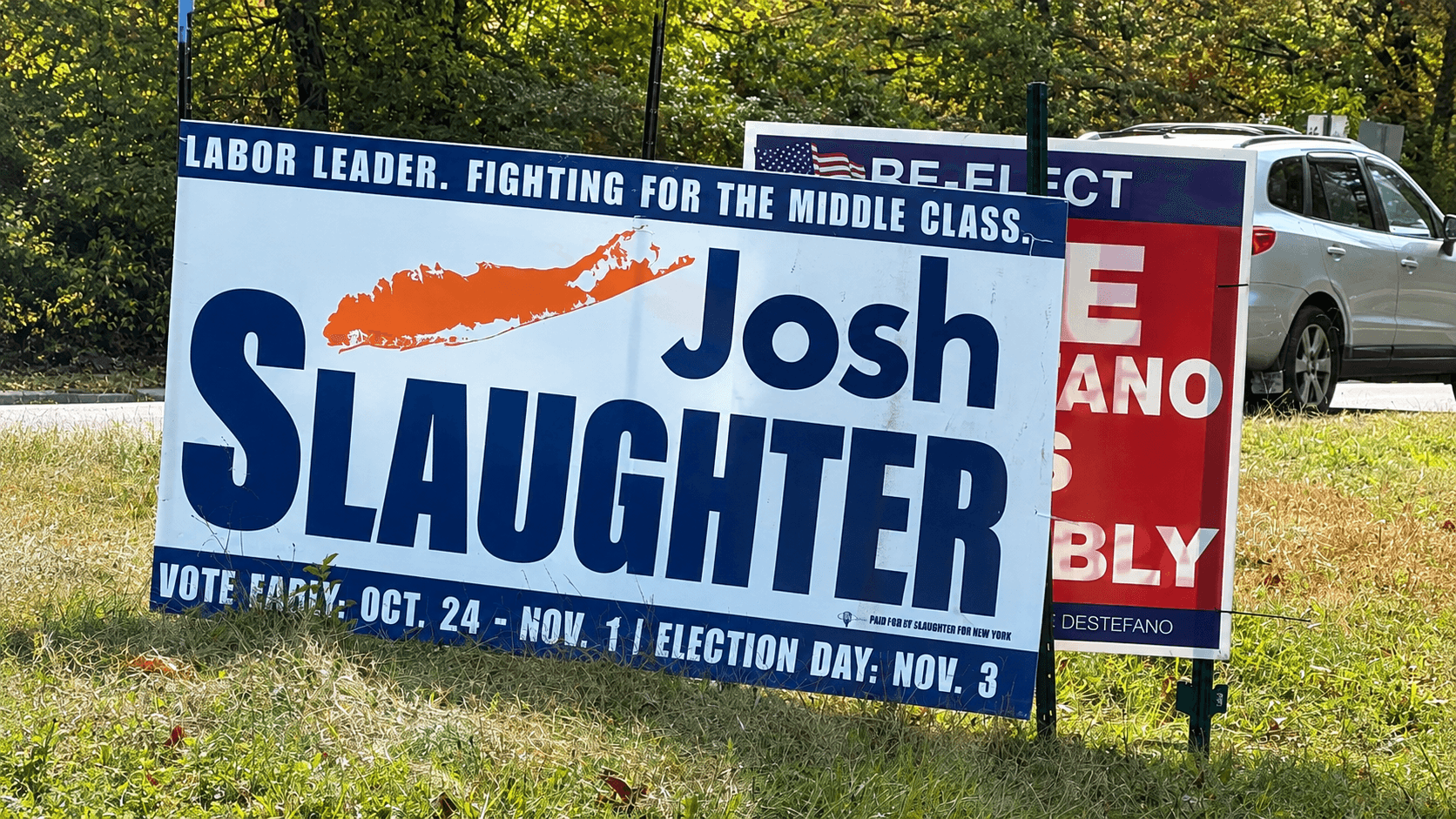
Locally, Republican Assemblywoman Jodi Giglio faces Democrat Michael Szika and Voter Options candidate Kimberly Wilder. Republican Assemblyman Joseph DeStefano faces Democrat Josh Slaughter, while Democratic Assemblywoman Rebecca Kassay is challenged by Republican Will Sussman.
Suffolk County Comptroller
While the state comptroller oversees finances throughout New York, the Suffolk County comptroller focuses on money handled by county government.
The comptroller reviews expenditures, conducts audits and helps ensure public funds are properly accounted for.
The office oversees financial reporting, payroll, investments and county spending. It also handles the collection of delinquent property taxes.
With Suffolk County managing billions of dollars annually, the comptroller has an important responsibility to identify financial problems, question questionable expenditures and promote transparency.
The county comptroller serves a four-year term, with a limit of 12 consecutive years in office.
This year, Republican Dan Losquadro, Brookhaven's longtime highway superintendent and a former state assemblyman and county legislator, faces Democrat Jonathan Estreich, a Dix Hills attorney, former prosecutor and MTA investigator.
Suffolk County Clerk
The county clerk may not attract the political attention given to other offices, but it performs functions touching the lives of virtually every Suffolk resident.
When someone purchases a home, takes out a mortgage or transfers property, the related documents are recorded and maintained by the county clerk.
The office also handles business certificates, liens, court filings and numerous other public records.
These documents help establish legal ownership, protect property rights and provide a permanent history of important transactions.
The clerk also makes records available to the public while maintaining their accuracy and security, particularly important in an era of identity theft and property fraud.
County clerks serve four-year terms, with a limit of 12 consecutive years in office.
This year, Republican incumbent Vincent Puleo is seeking another term and has no Democratic challenger.
You Might Also Be Interested In

Murray’s Experience Makes a Difference in Albany
For Giglio, People Come Before Politics

Sussman Offers a New Generation of Republican Leadership