

Judge Permanently Bars California From Enforcing Mask and ID Laws Against Federal Officers
Christina A. Snyder signed the order Tuesday after California agreed to end the case. The Justice Department announced the result this week.
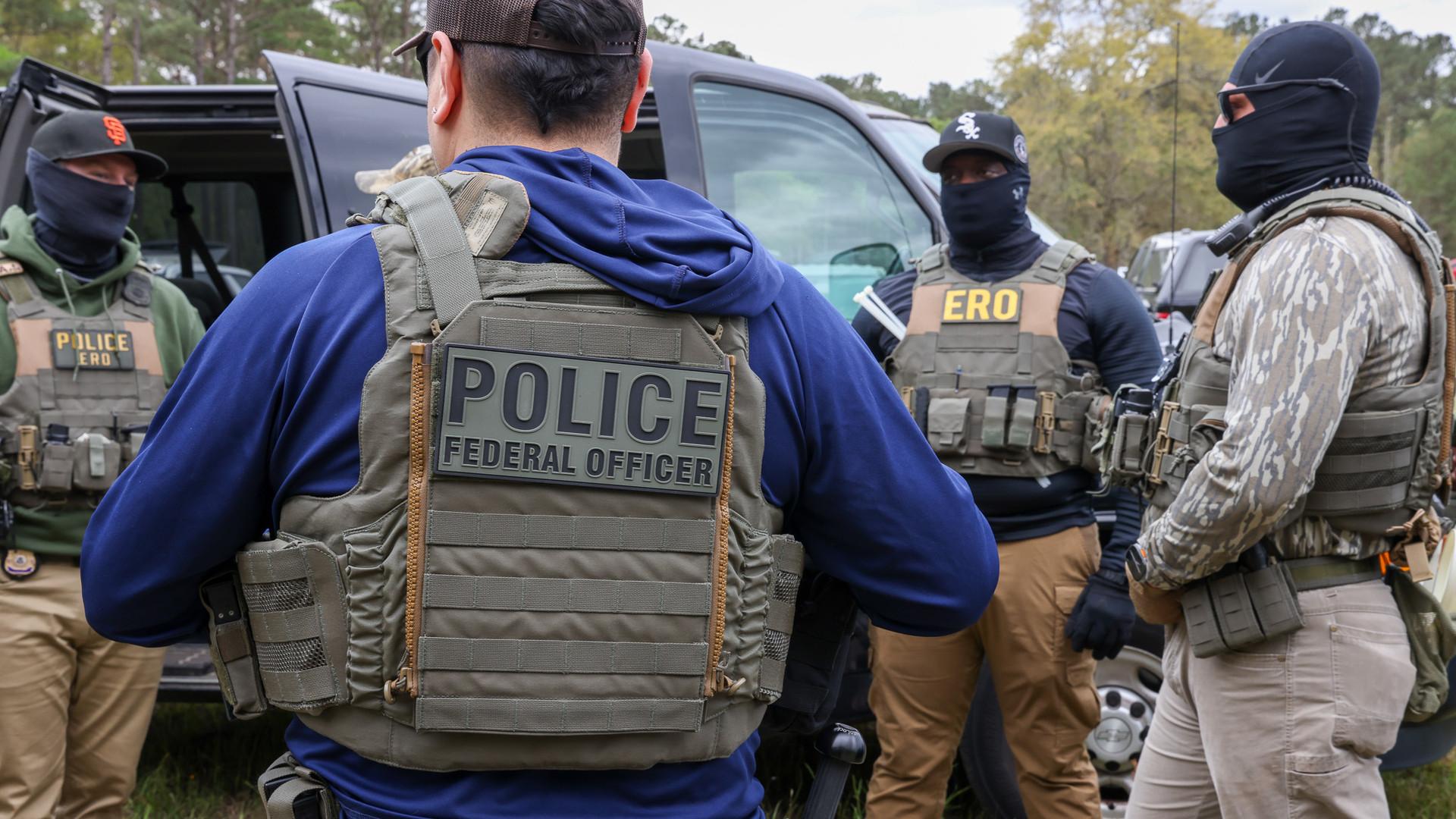
California's effort to force federal immigration agents to show their faces and identify themselves ended this week in federal court. Judge Christina A. Snyder, who sits on the federal bench in the Central District of California, on Tuesday signed an order permanently barring the state from enforcing its mask ban and identification requirement against federal officers, after California agreed to stop fighting the case. The Justice Department has since announced the order.
The order covers two laws Gov. Gavin Newsom signed on Sept. 20, 2025. Senate Bill 627, the "No Secret Police Act" written by state Sen. Scott Wiener, made it a crime for officers to wear a facial covering that hides their identity on duty. Senate Bill 805, the "No Vigilantes Act" by state Sen. Sasha Renée Pérez, required officers out of uniform to display their agency along with a name or badge number. Snyder's order bars the governor and Attorney General Rob Bonta, along with their successors, from enforcing the four code sections at issue against federal officers and agencies, and dismisses the case with prejudice.
The order rested on a joint stipulation. In a court filing, state lawyers wrote that the "State Defendants continue to dispute the United States' claims." California agreed to conclude the case without further appeals.
The Justice Department sued on Nov. 17, 2025. On Feb. 9, Snyder blocked the mask ban, finding it likely discriminated against the federal government because it reached federal and local officers while exempting California's own state officers. She let the identification rule stand at that stage.
The United States appealed the identification ruling. In April, the 9th Circuit granted an injunction pending appeal, blocking California from enforcing that requirement while the appeal proceeded. On Oct. 14, Judge Mark J. Bennett, writing for all three judges, held that the law violated the intergovernmental immunity doctrine rooted in the Constitution's Supremacy Clause, because it tried to regulate the federal government directly as it carried out its own functions without any authorization from Congress. Bennett wrote that the United States was "certain to succeed" on that claim.
Stanley E. Woodward Jr., the associate attorney general, said the injunction "confirms a basic constitutional principle: states do not have the authority to regulate the Federal Government or dictate how federal law enforcement officers perform their official duties." Jonathan D. Guynn, the acting assistant attorney general over the Civil Division, said, "The Federal Government, not the states, gets to decide what equipment federal officers may use and what measures they may take to protect themselves while performing their official duties."
In its lawsuit, the department argued that federal officers face an unprecedented wave of harassment and doxxing, and that unmasking them would endanger their families and expose sensitive operations.
After the February ruling, Bonta said, "Transparency and accountability are the foundation of good law enforcement." After the April appellate loss, Newsom spokesperson Diana Crofts-Pelayo said, "These laws shouldn't even be necessary. We shouldn't have unidentified, masked men terrorizing our communities."
In May, Gov. Kathy Hochul signed the MELT Act, sponsored by state Sen. Pat Fahy and Assemblymember Tony Simone, as part of the state budget. It barred officers, federal agents included, from covering their faces while dealing with the public, with medical and tactical exceptions, and required visible identification. In August, Mae D'Agostino, a federal trial judge for northern New York, issued a preliminary injunction blocking the mask and identification rules as applied to federal officers. She wrote that "settled law establishes that federal, not state, authorities make the policies that animate the enforcement of federal immigration laws."
Masked agents have become a familiar presence at 26 Federal Plaza in Manhattan, home to ICE's New York City field office. Homeland Security officials said after the law was signed that their officers would not comply. "The Supremacy Clause makes it clear that New York's sanctuary politicians do not control federal law enforcement," the agency said. In a joint statement, Hochul and state Attorney General Letitia James said that "masked agents do not make New York safer" and that their offices were reviewing legal options. At a rally across the street from the field office, Simone said, "If these agents are doing nothing wrong, if they're following due process and the law and a judicial warrant, there's no need to hide behind a mask."
The joint stipulation and the Tuesday order close the California case a year after the Justice Department sued. The mask ban and the identification requirement cannot be enforced against federal officers or agencies in California, and the state has agreed to bring no further appeals.
You Might Also Be Interested In
DHS Says Wife of Minnesota Lawmaker-Elect Abdi Daisane Crossed the Border Illegally in 2023
The real threat to democracy stems from the left
U.S. Army Officer Arrested in Britain Is Moved Into American Military Custody