
Supreme Court Agrees to Decide Whether Congress Can Ban Home Distilling
The justices took up the government's appeal of a ruling that struck down an 1868 law barring stills in homes, after two appeals courts split
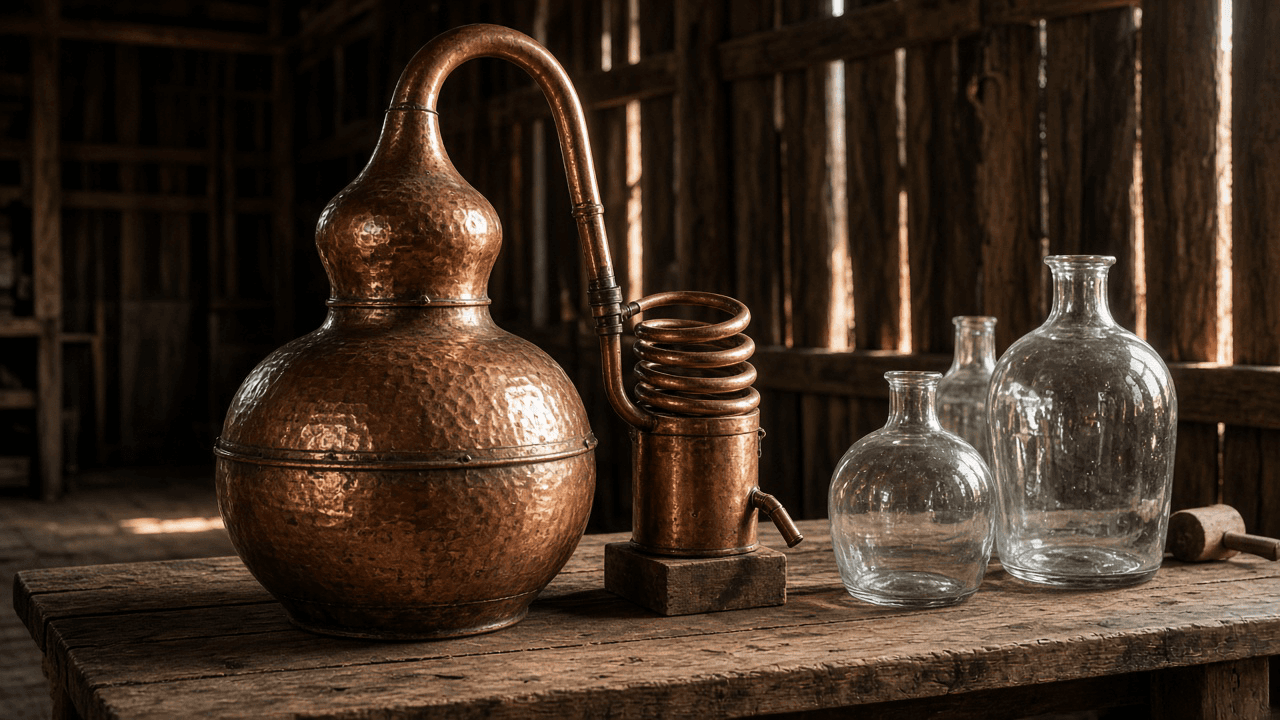
The Supreme Court agreed Monday to decide whether Congress can ban people from distilling liquor in their homes, taking up a federal prohibition that dates to 1868 and that a federal appeals court in Texas struck down in April.
In an order list issued Monday, the justices granted the Justice Department's petition in Department of Justice v. McNutt, No. 26-204. The order did not say when the case would be argued.
The law at issue, 26 U.S.C. 5178(a)(1)(B), bars a distilled spirits plant from being located "in any dwelling house, in any shed, yard, or inclosure connected with any dwelling house," among other places. A violation carries a fine of up to $10,000, up to five years in prison, or both, under a companion provision, Section 5601(a)(6).
Congress adopted the restriction in the Act of July 20, 1868, a law of 109 sections that imposed excise taxes on distilled spirits and tobacco. A House select committee had concluded a year earlier that "the most stupendous frauds are practiced against the government in the collection of its revenue," adding that "it is believed that at least seven-eighths of the entire amount of spirits manufactured under the present law have escaped taxation."
The challengers are the Hobby Distillers Association and four of its members, who sued in federal court in Fort Worth in December 2023. Rick Morris, who founded the group, owns a company that makes stills and wants to distill bourbon at home. Scott McNutt distills fuel alcohol under a permit in a shed 261 feet from his house and wants to make beverage spirits. Shortly before the suit, an employee of the Treasury Department's Alcohol and Tobacco Tax and Trade Bureau told the challengers' lawyer that they could not get permits to distill at home because doing so is "against the law," the appeals court said.
A three-judge panel of the U.S. Court of Appeals for the Fifth Circuit ruled for the challengers on April 10. Judge Edith Hollan Jones wrote that the ban exceeds Congress's power to tax and is not "plainly adapted" to carrying out that power under the Constitution's Necessary and Proper Clause. "The provisions operate to reduce revenue instead of raising it," the opinion said. It added that "preventing activity lest it give rise to tax evasion places no limit whatsoever on Congress's power under the taxation clause." The court affirmed, as modified, an injunction barring enforcement against the challengers.
Eleven days later, the Sixth Circuit, in Cincinnati, reached the opposite result in a suit brought by John Ream of Ohio. In a 2-1 decision, Judge Raymond Kethledge wrote that "the ban is a necessary and proper means of collecting the federal excise tax on distilled spirits," and that its rationale "is almost self-evident: stills are more easily hidden in homes than in" licensed premises. Judge Andre Mathis dissented. Ream filed his own petition with the Supreme Court in July; the court took no action on it in Monday's order list.
In its petition, filed in August by Solicitor General D. John Sauer, the government argued that a law is necessary and proper if it is "convenient" or "useful" for carrying out a power and "plainly adapted" to that end. "Congress restricted home distilling because a distiller can more easily conceal a distilling operation or thwart necessary inspections - thereby evading the requisite tax - if the still is located in a dwelling-house or connected structure," the petition said. It also noted that the Fifth Circuit had struck down a federal statute and that the circuits were in direct conflict.
The challengers, represented by Andrew Grossman, agreed the court should take the case but urged it to uphold the Fifth Circuit. They said the case "presents fundamental questions of the extent of federal power and the powers reserved to the states and the people." They argued the ban does nothing to prevent tax evasion because federal law already requires every distilled spirits plant to register with the government. They had also asked the justices to grant Ream's petition and consolidate the two cases.
Under current law, licensed distillers must register their stills and plants, obtain a federal permit and give internal revenue officers keys to their premises, the government's petition said.
You Might Also Be Interested In
President Trump puts GOP back in the fight as he returns a GOP Rally Chairman
Trump Drops Bomb On Socialist Democrats
Before you vote this November, remember these illegal immigration stats