

The Life Experiences and Sacrifices of Our Founding Fathers
The fifty-six signers of the Declaration of Independence risked their lives to free the colonies from England’s King George III and Parliament’s control. Since the end of the French and Indian War in 1763, these leaders grew increasingly defiant toward the incessant taxation, lack of representation, quartering of British soldiers, and hostility of the Crown. Once these “Patriots” committed to separation, they were constantly targeted by the British authorities. While these men were all notable for their bravery, many of them came from different backgrounds.
From 1775 to 1783, these leaders of the independence movement established the foundations of the rebellion. One of them was a fellow Virginian of Thomas Jefferson and an advocate of freedom, Carter Braxton. After the Braxton family arrived from England in 1690, they were given large parcels of land by King George II and served in the Virginia House of Burgesses. Born on September 10, 1736, his mother died shortly after his birth, and his father passed away when he was a teenager. For three years after his wife passed away, Braxton moved back to England and learned from his friends in government about the continued plans of the empire to excessively tax the colonies.
Arriving back in Virginia, Braxton became a representative in the House of Burgesses. He gravitated toward independence, opposed the continued taxation, and played a pivotal role in the Virginia Colonial Convention to discuss independence. After the fighting at Lexington and Concord, the British captured colonial gunpowder from Virginians, and these Patriots wanted to fight against the Royal Government. Braxton established a deal that prevented bloodshed by pushing the government to pay for the seized Virginian gunpowder. Not originally as eager as other leaders to break away from England, Braxton was considered one of the more cautious Founding Fathers until July 1776.
Braxton agreed with his fellow members of the Continental Congress but held conflicting views over the democratic direction of the American government. Like other signers, he sacrificed greatly by giving money to aid the Continental Army, and his ships and plantations were destroyed by the British under the direction of traitor Benedict Arnold. Combined with these losses and the inability of others to pay off their debts to Braxton, he faced financial ruin. This Founding Father was a likable figure who did not favor New Englanders, was considered a gentleman, and was a capable public servant. Although these financial losses occurred during the war, they plagued him for the rest of his life. He suffered two strokes, and creditors hounded him for money until he died in 1797.
It is believed that John Hart was born in 1713 in Hopewell Township, New Jersey. His grandfather originally settled on Long Island, was a carpenter, and his father was a Justice of the Peace and a farmer. This leader was not highly educated, but Hart was thought to be guided by common sense in all legal and business affairs. Hart was married to Deborah Scudder, and together they had thirteen children. Her Uncle John landed in America in 1635, where he lived in Southold and Huntington. In 1740, Hart purchased the “Homestead Plantation” of 193 acres and a mill, and later owned more than 600 acres, making him a large landowner. Hart became a Justice of the Peace and later represented Hunterdon, Morris, and Sussex counties in the Colonial Assembly.
Before the war, he gravitated toward independence, opposed the Tea Act, was a member of the First and Second Continental Congresses, and was elected to the New Jersey Committee of Correspondence. By 1776, Hart held New Jersey’s authorization to approve the Declaration of Independence, becoming the thirteenth leader to sign the patriotic document. Hart was elected Speaker of the New Jersey State Assembly but endured the death of his wife on October 8, 1776. For several months, this successful landowner was forced to hide in the woods and caves from the British authorities. After General George Washington’s victories at the Battles of Trenton and Princeton, Hart returned home and quickly won re-election to the state assembly. Before the Battle of Monmouth, Hart allowed Washington to encamp his army on his land, where American soldiers were fed from his farm.
During the middle of the Revolutionary War, Hart lost his battle with kidney stones and died on May 11, 1779. Once a prosperous farmer, he fell into debt and was forced to sell most of his land. A colonial peer described Hart as a “plain, honest, well-meaning Jersey farmer, with but little education, but with good sense and virtue enough to pursue the true interests of this country.”
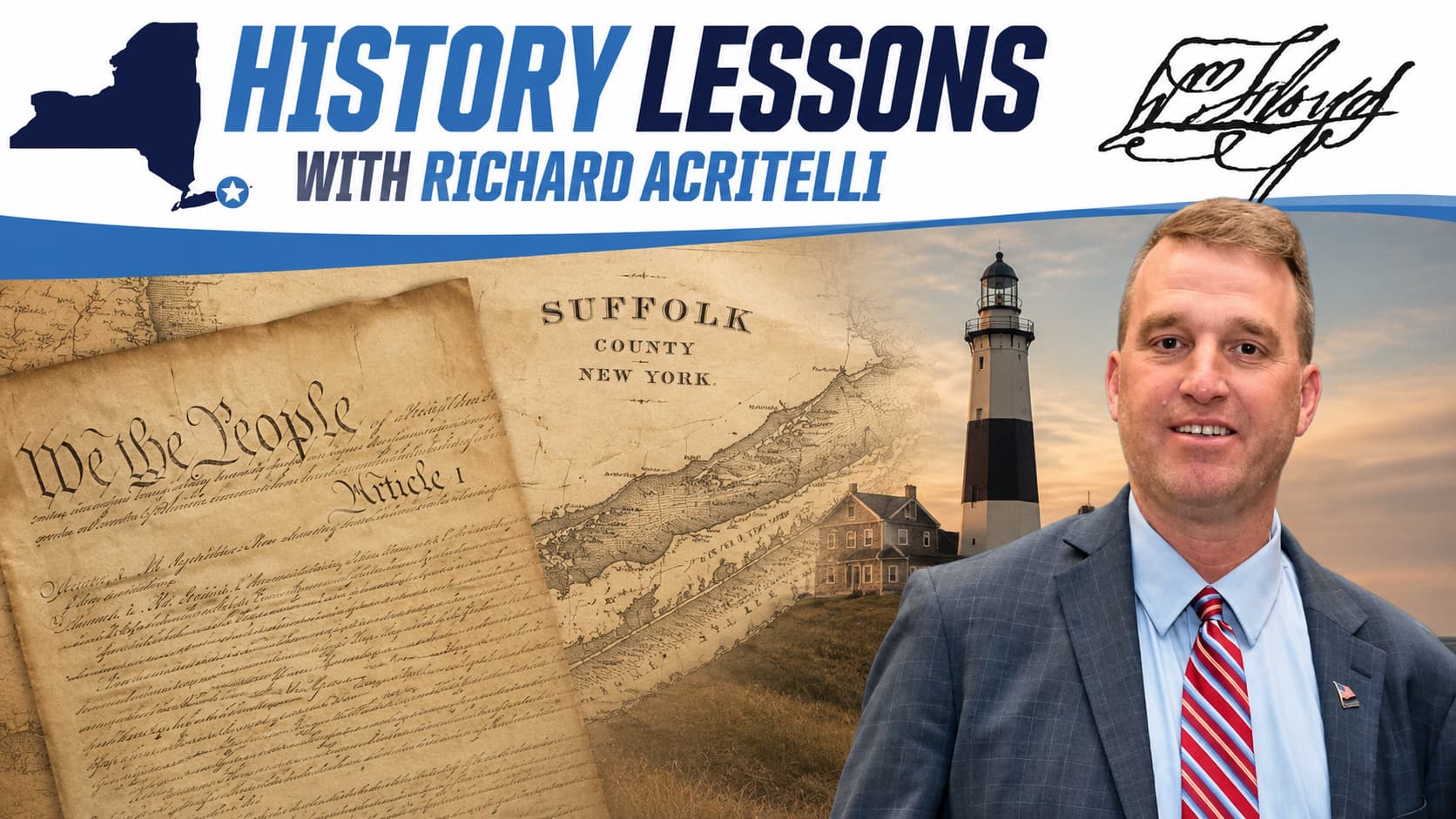
About sixty-five miles east of Manhattan, another major proponent of the Declaration of Independence has been remembered through a major road and school district. On December 17, 1734, William Floyd was born on the 4,400-acre estate that was later named in his honor. The Floyds traveled to America around 1680 and purchased land from Tangier Smith. With a family of nine children, Floyd had a minimal formal education, was groomed to run the farm, and inherited the property in 1755. At eighteen years old, Floyd oversaw indentured servants and slaves harvesting wheat, rye, oats, corn, fruit, and flax, while also caring for sheep, cattle, and pigs. By the late 1760s, Floyd was wealthy, enjoyed hunting, hosted parties, was an elected official, and received the rank of colonel in the Suffolk County Militia. He raised money and supplies for the Continental Army, monitored the activities of the British, Loyalists, and Native Americans on Long Island, and dispatched reports to local colonial government leaders.
Floyd was married twice and had five children. His sister married Setauket native and Washington’s spymaster, Colonel Benjamin Tallmadge. In 1780, Tallmadge led a secret attack near Floyd’s property by capturing the Manor of St. George near Smith’s Point. Marching back toward the North Shore, Tallmadge’s soldiers set fire to hay in Coram and fled by whale boats from Mount Sinai back to Connecticut with prisoners and supplies captured from the base. A staunch patriot, Floyd represented this part of Long Island in the First and Second Continental Congresses. While Floyd was the first New Yorker to sign the Declaration of Independence, he lost his estate to the enemy once the war reached Long Island in July 1776. His wife and children fled across Long Island Sound and were forced to live in Middletown during the war. Occupying the area for most of the conflict, the British seized Floyd’s home, stationed their cavalry at the estate, and ruined the interior of the landmark house.
During the war, Floyd served in the New York State Assembly and represented his constituents in the Continental Congress. His wife died in 1781, and after the British left Long Island in 1783, he rebuilt his home, remarried, had two children, later served as a representative in the First Congress from 1789 to 1791, and lost as the Democratic-Republican candidate for lieutenant governor of New York. Floyd helped rewrite the New York State Constitution and purchased land on the Mohawk River near Lake Oneida. In this new endeavor, Floyd, his servants, and his slaves made the farmland profitable, and an upstate town was later named in his honor. Never leaving politics, Floyd moved from Long Island to a new home at Westerville, located eight miles from Fort Stanwix. In 1808, while practically living on the frontier, the seventy-four-year-old Floyd was elected to represent northern New York in the State Senate.
You Might Also Be Interested In

Trump Launches Economic Asphyxiation Campaign Against Iran

Photons Fly Across Long Island in Quantum Breakthrough
Trump Makes Economic Case For Data Centers