Washington's Next Health Plan Starts at Age 55, and Albany Wants to Finish the Job
Sanders calls age 55 the first of four years, and neither of Suffolk's House Republicans has commented on the proposal
Democrats are rallying around a health plan that would open Medicare at 55 instead of 65. Senator Bernie Sanders, in line to chair the Senate health committee, says that is only the first year.
The package would also add dental coverage and other benefits the program has never offered and cover every child in the country. Sanders describes it as the opening year of a four year transition to one government plan for every American, and House Democratic leaders have endorsed lowering the eligibility age and expanding the benefits, an approach he says amounts to that same first year.
Suffolk families have reason to take that timetable at its word, because a program that starts at 55 and ends with everyone enrolled would slowly replace the coverage working households here earn through their jobs. The Congressional Budget Office has not published a cost estimate for a drop to 55. Its most recent look at a smaller change, opening Medicare at 60, concluded in 2022 that the move would add about $155 billion to the deficit across six years. Of the roughly seven million people expected to join, fewer than half a million had been uninsured, so most of the new enrollees would be moving to the federal program from private and Medicaid coverage they already had.
The trustees who oversee Medicare project that its hospital trust fund will be exhausted in 2033, after which incoming revenue would cover only about nine of every ten dollars in promised benefits. New enrollees and new benefits would arrive at a fund that cannot meet its current obligations, an odd way to honor retirees who paid in for decades.
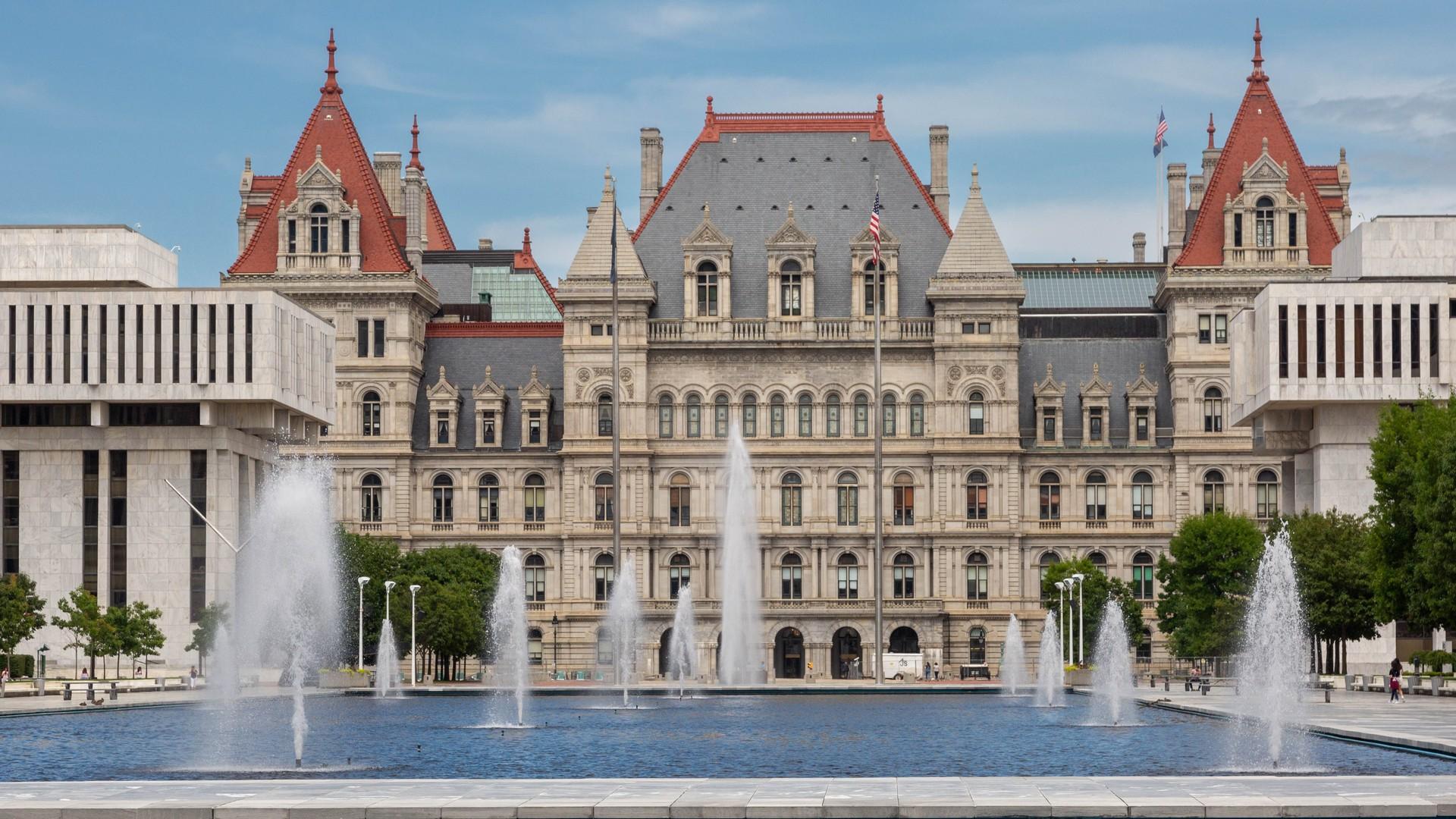
Washington's version must still get past a president who holds a veto. Sanders wants the first year to move through budget reconciliation, which lets certain bills clear the Senate on a simple majority, and House Democratic leaders have not ruled that out. Albany faces no comparable check. Democrats now hold more than two thirds of the seats in both houses of the Legislature, enough to override the governor. Those majorities put a state single payer bill, the New York Health Act, within reach.
That bill would enroll every resident in a single state plan and bar private insurers from selling coverage that duplicates it. In place of premiums, the state would collect a graduated payroll tax, with employers paying at least 80 percent, along with a tax on investment income.
A RAND study commissioned by a New York health foundation, the last independent analysis of the program's cost, is now eight years old. Published in 2018, it projected that the plan would need about $140 billion in new state taxes in 2022, at a time when every state tax combined was expected to bring in about $90 billion, and about $210 billion a year by 2031. RAND also found total health spending would come out slightly lower, since the new taxes would stand in for what families now pay out of pocket and in premiums. Supporters have since circulated newer figures of their own showing larger savings, yet no independent analyst has replaced the 2018 numbers.
A Suffolk contractor with a dozen employees would stop shopping for a plan and start remitting a payroll tax that no broker could negotiate down and no competitor could undercut. Workers who like the plans their unions bargained for would find those plans barred from duplicating any service the state plan covers. The bill's Senate sponsor has argued that unions would no longer have to negotiate health plans in their contracts, leaving them free to seek gains elsewhere. A household that moves away stops paying, leaving those who stay to carry the program through the next downturn.
Governor Hochul has not taken a public position on the bill, for or against, and the majorities now in place are large enough to override her if she vetoes it. Voters on Long Island are owed a plain answer before the session opens in January.
Neither of Suffolk's Republican members of Congress, Rep. Andrew Garbarino and Rep. Nick LaLota, has commented publicly on lowering the Medicare age to 55, and the House has held no vote on it. LaLota wrote on Nov. 25 that health care and housing "should be more affordable" and ended the post with "Socialism is the wrong answer," without mentioning the proposal. Garbarino's recent health work has focused on narrower Medicare fixes, among them payment for mobile stroke units and an end to waiting periods for patients with metastatic breast cancer.
Both men will serve in the minority next year, which leaves them little power over the first step of the Sanders timetable and every reason to ask for its price now. They should demand a formal cost estimate for the age 55 change and say on the record how they would vote. In Albany, the county's senators and Assembly members should insist that no single payer bill come to the floor until an independent analyst prices it with today's numbers and the governor states where she stands. A plan pitched as the first year of four deserves a price for all four, and Suffolk taxpayers should see it before anyone asks them to pay for the first.
You Might Also Be Interested In
Biden Memoir's Opening Sales Trail Obama, Clinton and Harris

Trump Says All but 2 Percent of Somalis Should Be Thrown Out
Strobe Talbott, Clinton Deputy Secretary and Brookings President, Dies at 80