
Now Trending: The Abraham Accords' "Next Phase"
Congress just spent a Wednesday afternoon debating whether the Trump-era Middle East peace framework can survive a war with Iran and a cooling Saudi Arabia — while X users argue over whether the whole project was ever what it claimed to be
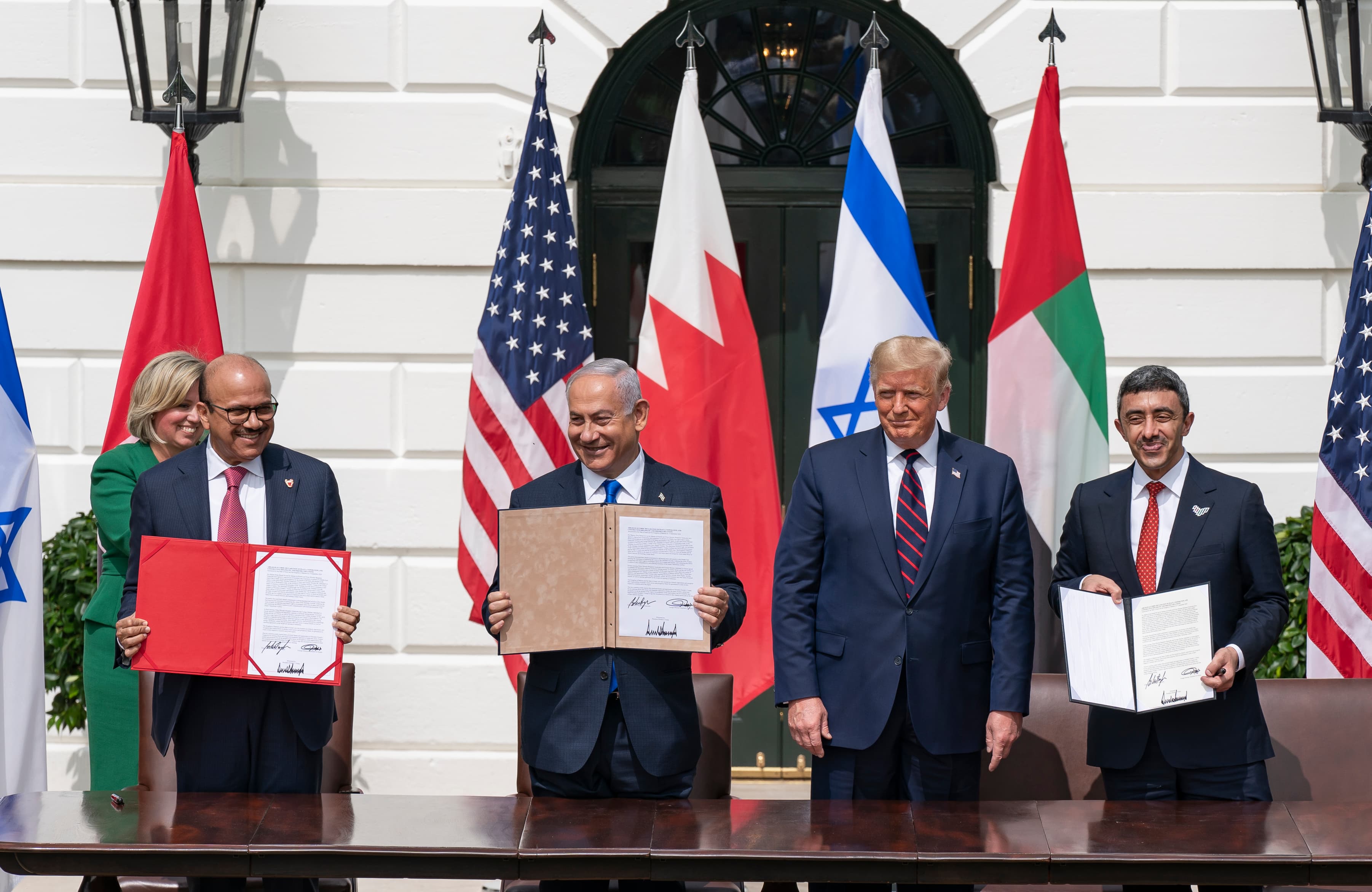
If you were scrolling foreign-policy Twitter this week, you saw a lot of chatter about a House hearing with a mouthful of a title: "Building a New Regional Security Architecture: The Next Phase of the Abraham Accords." The Abraham Accords, for anyone who tuned out of 2020, are the U.S.-brokered deals that normalized diplomatic relations between Israel and a handful of Arab and Muslim-majority nations — the UAE, Bahrain, Morocco, Sudan, and more recently Kazakhstan. The pitch was always that peace didn't have to wait for the Israeli-Palestinian conflict to be solved first; countries could just decide to be friends and do business.
On Wednesday, the House Foreign Affairs Subcommittee actually held that hearing, and it wasn't just posturing — real people showed up and said real things. Rep. Michael Lawler, the Republican chairman of the subcommittee, said the Abraham Accords "fundamentally change" the trajectory of the Middle East and demonstrated that peace and cooperation are possible when countries choose shared interests over open divisions. Meanwhile Trump's own envoy to Israel during his first administration dismissed accusations from Democrats that the war with Iran has strained the Abraham Accords. That last line tells you exactly where the argument is: is this framework being expanded, or is it quietly cracking?
What kicked this into the news cycle wasn't just the hearing — it was timing. Just two days before the hearing, Trump was asked whether Lebanon would join the Abraham Accords despite laws criminalizing contact with Israel, and he said Beirut has "a very important place" with the agreement, adding "I think you're going to see a lot of countries joining pretty soon," and hailing the Accords as a "tremendous success." That happened during the first visit by a Lebanese head of state to the U.S. in nearly twenty years, and Trump used it to announce the resumption of direct U.S.-Lebanon flights. Add in the fact that Kazakhstan joined back in November as the first expansion of Trump's second term, and you can see why the "who's next" guessing game is back in full swing — Polymarket bettors are literally taking odds on which country joins next, with Saudi Arabia the favorite and Lebanon and Somaliland floated as long shots.
But scratch beneath the celebratory tweets and you find real tension, which is exactly what the hearing was quietly wrestling with. Lawmakers are examining efforts to build a new regional security architecture in the Middle East, but the window for assembling such a coalition may be narrowing, because key players had viewed Saudi Arabia's entry as the centerpiece of a broader postwar settlement — an assumption recent events have significantly undermined. In plain English: the whole "next phase" was supposed to be crowned by Saudi Arabia signing on, and that now looks shakier than it did a year ago, thanks to the unresolved Iran war and Riyadh's own hedging. One tweet in the mix put it more darkly, claiming the Saudi-Iran rapprochement pushed Israel toward what the poster called a "kinetic route" — essentially arguing the diplomatic track was quietly abandoned for military ones, and that Gulf states were never meant to come out of this intact. That's an unverified claim, not a confirmed fact, but it's exactly the kind of conspiracy-flavored read that spreads fast when governments go quiet about what they're actually negotiating.
In my opinion, this is one of those stories where the "trending" version and the real version are almost the same thing, which is rare and worth noticing. The tweets aren't wrong that something big is being negotiated behind closed doors — a hearing titled "Next Phase" doesn't get scheduled for nothing, and Trump doesn't float Lebanon's name to reporters by accident. Where I get skeptical is the assumption, pushed by some posters, that this is all theater for a hidden plan to "destroy" Gulf states or that Riyadh's cooperation is guaranteed. Nobody outside a small circle in Washington and Riyadh actually knows how Saudi Arabia's calculus shakes out, and Polymarket odds are not intelligence briefings — they're vibes with a betting line attached. What I'd tell readers is simple: watch what Congress funds and what treaties actually get signed, not what gets floated at a podium. The accords have real, measurable successes — trade deals, security cooperation, diplomatic recognition that didn't exist five years ago. Whether the "next phase" delivers Saudi Arabia, or just more press releases, is the actual story, and it's going to take months, not tweets, to find out.
You Might Also Be Interested In

The Decision That Matters Most: Why Asset Allocation Drives Everything Else

Burner Prudenti: Business Succession Planning: Protecting What You’ve Built

The Terrorist 9/11/01 Attack on the United States