

One Ruling Jacks Up Power to Political Parties
While partisanship in today’s politics may be rampant, the political parties as institutions have never been weaker.
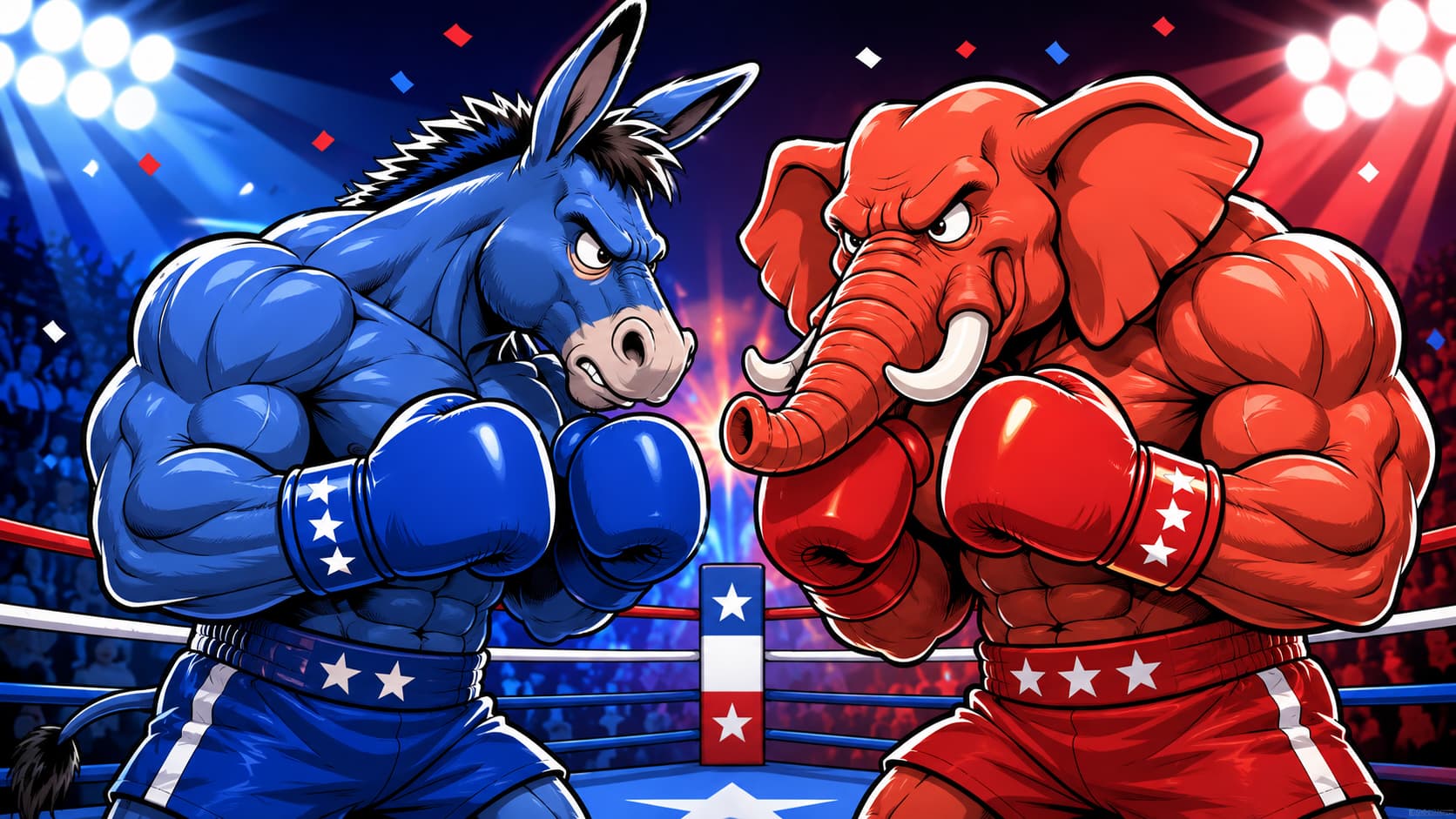
While overshadowed by decisions on birthright citizenship and the President’s ability to fire members of independent federal agencies, the Supreme Court’s decision in NRSC v. FEC may have a larger impact on the future of the Republic than any of the more high-profile cases decided this year. Legal commentators are calling it a campaign finance decision, and it certainly is that. But it’s also something far more significant: a first step toward the revitalization of America’s political parties.
The case concerned caps on the political parties’ ability to coordinate spending with their candidates. In a 6-3 decision, the Supreme Court found that these limits were an unconstitutional restriction on political speech.
Many are portraying this as a win for Republicans, and in the short term, it may be. The GOP’s party committees are better funded than their Democratic counterparts. That, however, misses the fact that a constellation of well-funded left-wing nonprofits, unions, and independent expenditure committees do for Democratic candidates what the party committees can now do for the GOP ticket.
But this decision is bigger than which side may benefit from it as we head into the 2026 midterms. It may signal the beginning of a revitalization of America’s political parties.
While partisanship in today’s politics may be rampant, the political parties as institutions have never been weaker.
Over the last century, the influence of the political parties has been on a steady decline. Decisions by party leaders on what candidates to nominate were replaced with primaries open to any voter that checks a box on a registration form. Government at the state and federal levels, in the name of combating corruption, imposed restriction after restriction on a citizen’s ability to contribute to a party and a party’s ability to spend on behalf of its candidates. National party conventions went from being decision-making bodies to highly scripted infomercials.
The parties, as institutions, disappeared; partisanship remained. Party became more about the car you drive, the coffee you drink, and the brand of clothes you wear. But that isn’t party. That is identity.
“Power abhors a vacuum” is a well-known cliché; it is also true. As the party organizations decayed, nonprofits, independent expenditure committees, and the media moved in to fill the roles once filled by the political parties. Regardless of where one stands on the political spectrum, few would argue that this has improved our political system.
The NRSC decision, however, might be the first step on a long journey toward reversing this trend and rejuvenating our parties.
In the immediate aftermath of the decision, parties will now have a freer hand in how they support candidates. The obstacles in the way of political parties doing what they’re supposed to do – financially backing their own candidates – are now gone. Messaging, advertising, and everything else that goes into a winning campaign can now be done more efficiently and smartly.
The party committees may also be able to play a larger role in the outcome of their own primary elections. In recent weeks, we’ve seen unexpected wins by radical, outsider, Democratic Socialists of America-backed candidates over more mainstream opponents – who are in some cases incumbents – in Democratic House primaries. With this new legal tool, will Democratic committees now take a stand against these extreme, hard left socialists and, with money and manpower, bolster more centrist candidates in primary races?
While the Supreme Court certainly got the NRSC decision right, the country has a long way to go before it sees a complete renewal of the political parties. More legal and policy changes must occur before the parties are again major players in the American political arena.
For instance, contributions to party committees may still be limited, putting them at a serious disadvantage over other entities like independent expenditure committees that are not subject to contribution limits. Eliminating these restrictions on party fundraising will go a long way toward strengthening party operations.
But more important than fundraising is the ability of the parties to exercise some control over their nomination process. America is the only major democracy that forces its political parties to pick their general election standard-bearers in anything like a primary election. In the 21st Century, a party’s candidates are fundamentally the ones who set the party’s policy agenda and determine what will be prioritized when in power. Returning some control over nominations to the party committees will restore the parties’ ability to have a major say in the direction of the country.
For too long, America’s parties have been bit players in the American political drama; America is worse off because of it. The Supreme Court did right by the Constitution and the country with the NRSC decision. We’ll all be better off if we continue to work to strengthen our political parties and make them into the institutions they once were.
Joseph Burns is a Republican attorney and Partner in the law firm Holtzman Vogel.
You Might Also Be Interested In

Three Memorials. One Nation. One Promise: Never Forget
Give Our Kids the Tutor Every Wealthy Child Already Has

The Decision That Matters Most: Why Asset Allocation Drives Everything Else