
Marlon Humphrey Lost a Game for a Joke a Mayor Disliked
The Ravens sent Marlon Humphrey home for a crude podcast line about Baltimore crime after the mayor called his apology not enough. Hours later a Texans cornerback shouted a racial slur on a live national broadcast and drew silence from his team and the league.
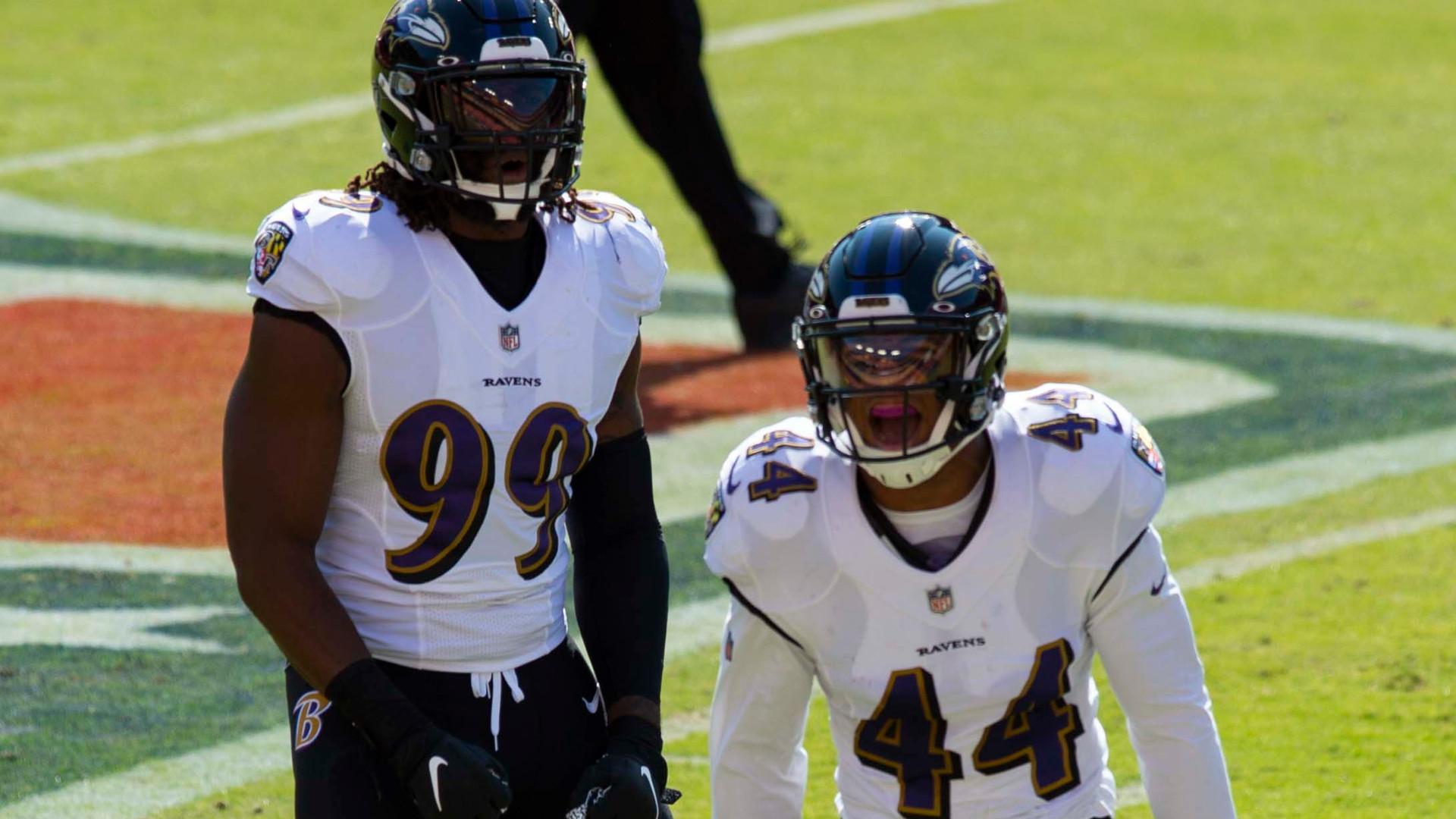
Marlon Humphrey has worn a Baltimore Ravens uniform for all 10 of his professional seasons and, by his own description, invested in the city. On Nov. 19 the Ravens sent him home and ruled him out of the next game over one crude line on his own podcast. That same night, a Houston cornerback screamed a racial slur into a camera during a live national broadcast, and by the following morning no one involved had offered any public response.
Humphrey's offense came during an episode of his show, "The Marlon Humphrey Show." Asked what Baltimore does best, he answered, "They're best at making criminals." The episode was pulled from his YouTube channel, and on Nov. 18 he apologized to reporters in the locker room. "I do know the effect that words have," he said.
Mayor Brandon Scott answered on Nov. 18. "While we acknowledge Marlon's apology, a verbal apology is not enough," the mayor wrote. He added that "Baltimore is a city full of young Black boys who look to the Ravens as a beacon of light in their lives and to have someone that looks like them who wears a Baltimore Ravens jersey relegate them to becoming criminals cuts deeper." Scott also asked the player to meet him alongside residents who have returned to the community after incarceration and now work to keep others from repeating their mistakes.
The next day, coach Jesse Minter announced the deactivation. He described Humphrey as "very remorseful" and said the decision followed internal conversations with team leadership. The team may well have reached its judgment alone. An elected official publicly declared a private citizen's apology insufficient, and his employer imposed a penalty the following day. When a mayor uses the authority of his office to signal that words require more than contrition, an employer that depends on the city's goodwill hears the message clearly.
The line itself was a cheap shot. Most Baltimoreans live honest lives, and a veteran star who earns his living in their stadium owed them better. The subject he stumbled into is one the city's own leaders discuss constantly. Baltimore recorded 133 homicides in 2025, down from 194 the year before and the lowest count in nearly half a century. Scott has earned credit for that decline, and he has claimed it loudly. In January he recalled that five years earlier "we were losing 300 people to homicide every year." His joint statement with the police commissioner on New Year's Day said "133 homicides is still 133 too many." A player who joked about that same toll, clumsily, lost a game for it.
On the night of Nov. 19 in Houston, with the Texans on their way to a 26-3 rout of Indianapolis, Houston cornerback Kamari Lassiter picked off a Daniel Jones pass in the second quarter, sprinted toward a camera behind the end zone and shouted "It's me," then the N-word, twice. Viewers heard it live on Thursday Night Football. Parents complained online that their children heard it too. As of the morning of Nov. 20, Lassiter, the Texans and the NFL had said nothing in public about the remark, and no fine had been announced. The same league fined Lassiter $13,659 earlier this season for a hit, which shows it has no trouble reaching for the checkbook when it chooses.
Plenty of people will argue that the two cases differ. Humphrey insulted a city, the argument goes, while Lassiter used a word that many Black Americans use among themselves. That defense names the standard actually in force. If the slur passes without consequence, the reason will be that the people who enforce taste in sports have decided it belongs to a protected vocabulary. The joke tying a city to its crime problem appears to have failed because it offended the political class that runs the city. Neither outcome rests on any principle a fan could predict in advance.
A league can handle the two cases separately. A league that wants family audiences can set a clear rule for what players say into its cameras and apply it to everyone. A team can bench a player for embarrassing the franchise, and it should explain that choice plainly to the fans who pay for tickets. Fairness requires that the same rule reach a crude joke about crime and a slur on a live national broadcast.
Cities that want to beat crime need public figures willing to talk about it bluntly, even badly. Baltimore has made real progress precisely because its leaders stopped pretending the killing was normal. Punishing an athlete for an ugly joke about that same problem teaches every public figure in the city to stay quiet about it.
You Might Also Be Interested In
Coors Field Calling: Luis Castillo and Davis Martin Head to the Rockies
Teruaki Sato's Triple Crown Bat Faces a Dec. 1 Deadline

Patchogue-Medford Freshman Niles Emmer Will Cheer in the Philadelphia Thanksgiving Day Parade