

Micron Needs Power Albany Is Rationing
The governor courts the biggest power user in state history while freezing the next ones in line.
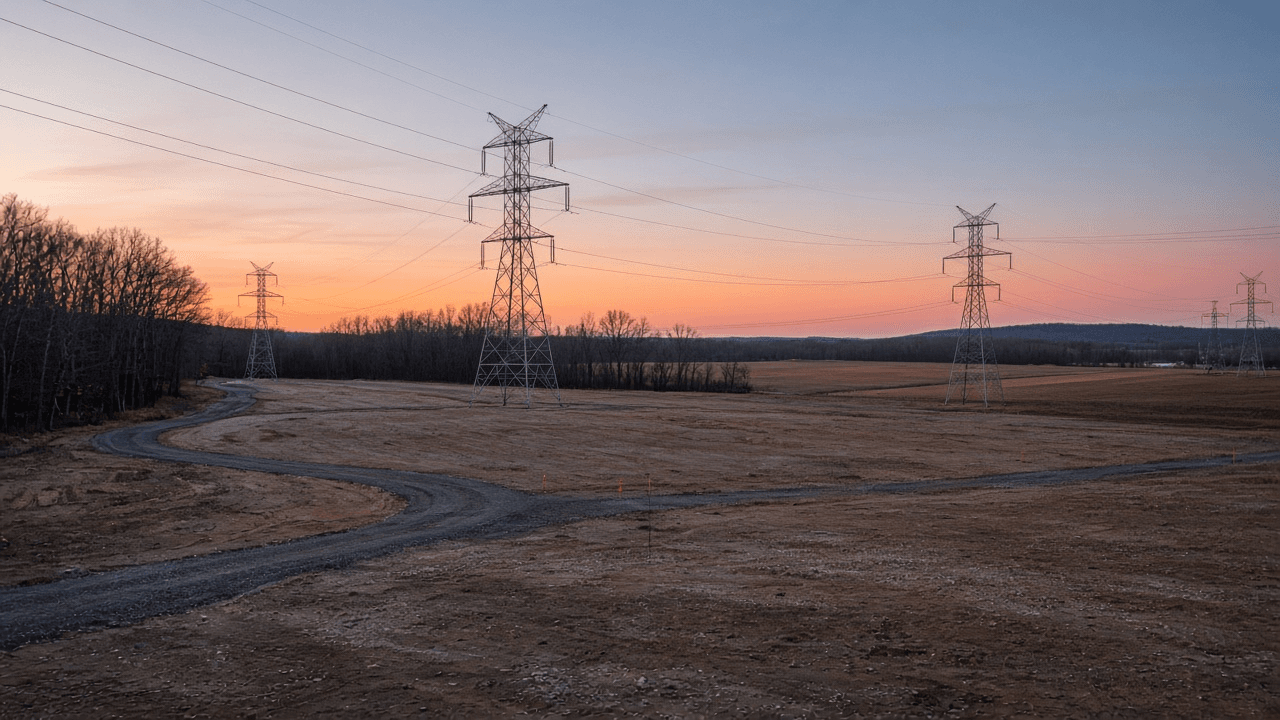
By 2041, one factory in Clay is projected to consume 15,674 gigawatt-hours of electricity a year. That is the federal government's own estimate for Micron's chip campus in Onondaga County, up from 3,261 gigawatt-hours in its first year of operation. Gov. Kathy Hochul treats the plant as proof New York wants industry. The electricity figure is the better test of whether that is true.
Central New York's grid, the review found, ends up roughly 2 percent short once Micron reaches full size, and that is "assuming no other increase in demand." The state grid operator counts 2,567 megawatts of new large-load projects queued statewide by 2035.
So where does the power come from? Part of the answer is already on paper. The New York Power Authority awarded Micron 140 megawatts under ReCharge NY, half of it hydropower, plus a separate ten-year block of 404 megawatts meant for round-the-clock users. National Grid wants permission from state regulators to string 345-kilovolt lines from the substation it owns in Clay, and fab two will require another switching station of its own. The rest is open, and the review is blunt that answering it is not Micron's job. Neither the company nor the agencies that wrote the review, it says, "have jurisdiction over regional or statewide planning for future electricity demand." That job belongs to Albany.
Here is what Albany has done with it. The 2019 climate law pushes the state off fossil generation on a fixed schedule. The grid operator's 2025 outlook warns that "reliability margins on the grid are eroding" and lists plants "forced out of service by policy mandates" among the risks. Critics of the law make a simple argument from that warning: a state that retires dispatchable plants on a legislative calendar, before replacements are running, cannot also promise gigawatts to new industry. The Micron review itself calls burning natural gas at the site "an unavoidable necessity," and state environmental officials have reserved the right to demand further climate mitigation before they are done.
Fairness requires one correction to a common complaint. New York's ban on gas hookups in new buildings, passed in 2023, does not touch the fab. Factories are expressly exempt, and so are fuel cells. Micron's problem is supply on the wires, not a stove in the cafeteria.
The supply squeeze explains the governor's other choices better than any speech does. On Nov. 22, 2022, weeks after the Micron announcement, she signed a two-year halt on new permits for cryptocurrency miners that run on fossil power generated on site. The pause ran out in November 2024, yet the state's study of the industry was still open for comment in September 2025. Then on July 14 of this year she signed Executive Order 62, which tells the Department of Environmental Conservation to stop acting on discretionary permits for new or expanded data centers while the state studies them. Her office says the study "will take up to a year."
Taken one by one, each looks cautious. Together they describe a state that knows it lacks spare electricity and has chosen to ration it by executive order rather than build more of it.
Micron's calendar has stretched too. The company said in October 2022 that site work would begin in 2023 and construction in 2024, with chips flowing later in the decade. The project then went through a joint federal and state environmental review, a requirement that came with the federal CHIPS grant, with the county's industrial development agency sharing the lead. The final review came out in November 2025, a federal record of decision followed in December, and the groundbreaking took place on Jan. 16, 2026. The review's summary had the first fab operating in 2029. Under the record of decision, fab one is finished in 2030, fab two in 2033 and fab four in 2041, with the campus not producing at capacity until 2045. Micron says production is "expected to start in 2030."
Some will point to Amazon. That company abandoned its Queens headquarters on Feb. 14, 2019, blaming opposition from "state and local politicians," but Andrew Cuomo was governor then, and the episode belongs to him and the Legislature.
On the day Micron came, the governor called New York "the most business-friendly and worker-friendly state in the nation." A business-friendly state would be building generation ahead of the load it has invited, not freezing the next customer in line. Until Albany has a plan for the power, the Micron promise rests on hydropower allocations and hope.
You Might Also Be Interested In

Albany Retreats on One Piece of Its Native Mascot Ban

Soros-Backed Group Maps New York for Migrants

Public Urged to Weigh In on New Census Rules