
Google's Cash Machine Just Went Negative. That's the Whole AI Story in One Number
Alphabet posted its best cloud quarter ever and still burned cash for the first time since its 2004 IPO — a preview of what the AI buildout is about to do to corporate balance sheets everywhere

Alphabet's second-quarter earnings this week contained a genuinely startling data point, one that got buried under the usual parade of beat-and-raise headlines: free cash flow went negative. For a company that has generated cash like a utility prints electricity for two decades, that is not a rounding error. It is the clearest signal yet of what the AI infrastructure race is actually costing the companies waging it.
The headline numbers were fine, even good. Cloud revenue grew 82% year over year, up sharply from 63% growth just the prior quarter, and cloud backlog swelled by $50 billion in three months to $514 billion. Search held up better than feared. But the company also raised its 2026 capital spending forecast by roughly $15 billion to a $200 billion midpoint, and warned that 2027 spending will increase significantly — some estimates on Wall Street put next year's number north of $300 billion. That is capital spending, in a single year, from a single company, larger than the entire annual GDP of most countries on earth.
Alphabet is not unusual here; it is just further along and more transparent about it. Microsoft is expected to guide toward roughly $250 billion in its own fiscal year capex when it reports next week. Tesla's profits tumbled even as its core auto business held up, pressured by its own AI and robotics spending. Every hyperscaler is making the same wager: that the returns on artificial intelligence infrastructure will eventually justify capital outlays of a scale the tech industry has never before attempted, financed increasingly by debt rather than the free cash flow that used to fund it internally.
The bulls have a real argument. Alphabet's cloud customers are reportedly drawing down committed capacity more than 50% faster than they are technically obligated to, which suggests genuine, not speculative, demand. Enterprise adoption of AI tools is accelerating in measurable ways — ServiceNow, for instance, reported AI-related annual contract value crossing $1 billion this quarter, and its bookings growth eased fears that AI would cannibalize its own software business before it could grow into it. These are not the signs of a pure bubble.
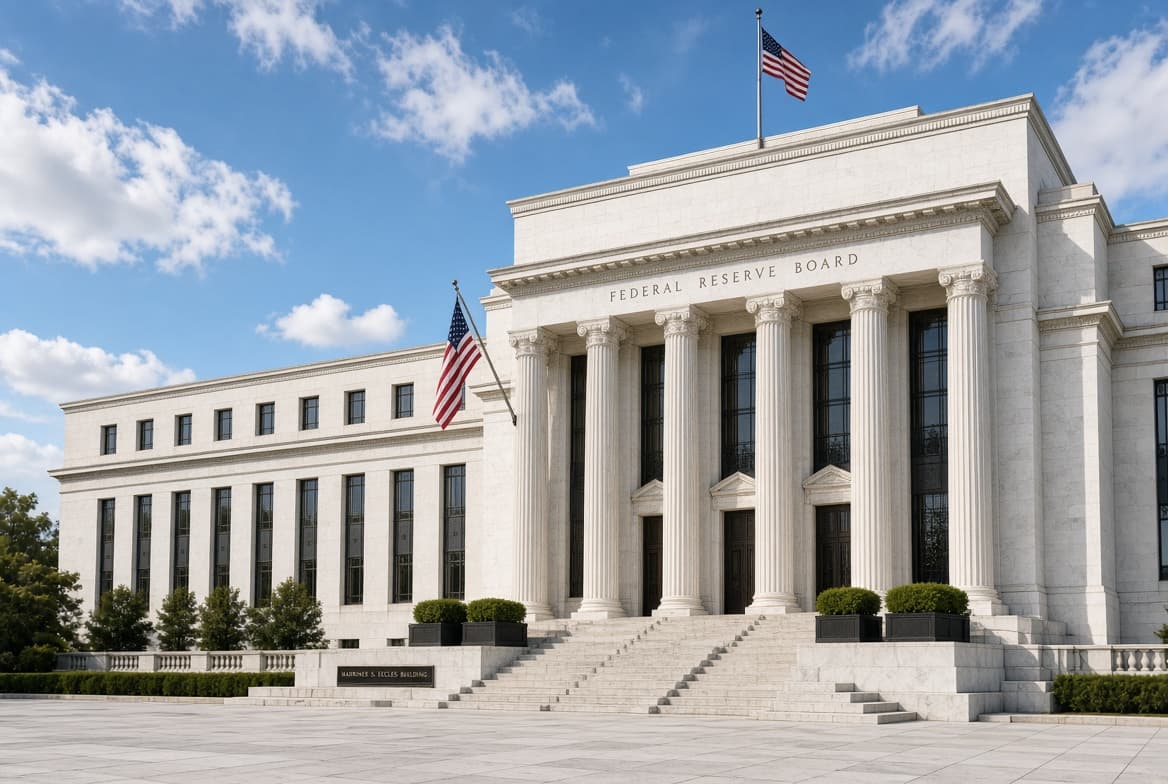
But the math is getting harder to wave away. A Federal Reserve research paper circulated in recent weeks found scant evidence that AI capital spending to date is producing the productivity gains that would justify its scale. Meanwhile, the capital being deployed is increasingly circular: chipmakers investing directly in the AI labs that buy their chips, cloud providers financing the very customers whose usage justifies more data centers. When the customer and the financier start to blur into the same balance sheet, it becomes harder to know whether demand is organic or manufactured.
For ordinary households, the mechanism that matters is more mundane than a stock chart. This spending flows through the memory chip market, the electricity grid, and eventually the price of a laptop or a data center's neighboring utility bill. Long Islanders already got a preview of the memory-chip angle in this column weeks ago; the capex escalation now underway all but guarantees that pressure continues into next year's device-replacement cycle, and it raises a less-discussed question about grid capacity and electricity pricing in regions, including parts of the Northeast, where new data center construction competes with residential demand for power.
None of this means the AI buildout is a mirage. Cloud backlogs are real contracts, not vapor. But investors and, more importantly, voters evaluating candidates on economic stewardship should understand what is actually happening beneath the surface: the country's largest, most profitable companies are borrowing and burning cash at a pace with no historical precedent, betting that a technology still unproven at scale will eventually pay for itself. That bet may be right. It has also, historically, been the kind of bet that ends a boom before it ends a bubble.
You Might Also Be Interested In

The Decision That Matters Most: Why Asset Allocation Drives Everything Else

Burner Prudenti: Business Succession Planning: Protecting What You’ve Built

OpenAI Says Its New Model Might Be AGI. Wall Street Is Already Asking Who Gets Hurt.