

Iran, Oil and the Bond Market's Bad Week
A collapsed ceasefire sent crude up 5% and rattled a Treasury market already flashing warning signs

President Trump declared this week that the ceasefire with Iran is "over," a day after fresh American strikes on Iranian military targets and Iranian retaliation against commercial shipping in the Strait of Hormuz. Oil responded the way oil always responds to Gulf tension: West Texas crude jumped more than 5% in a single session, touching the mid-$70s, its sharpest one-day move in months. Six tankers reportedly still crossed the Strait early Wednesday, a reminder that markets often treat these flare-ups as noise until they aren't.
For Long Island, the arithmetic is uncomfortably direct. New York already pays some of the highest retail gasoline and home heating oil prices in the country, and a sustained move in crude flows through to the pump and, eventually, to winter heating bills for the many South Shore households still burning oil rather than gas. A geopolitical event thousands of miles away becomes a household budget line by Labor Day if the escalation holds.
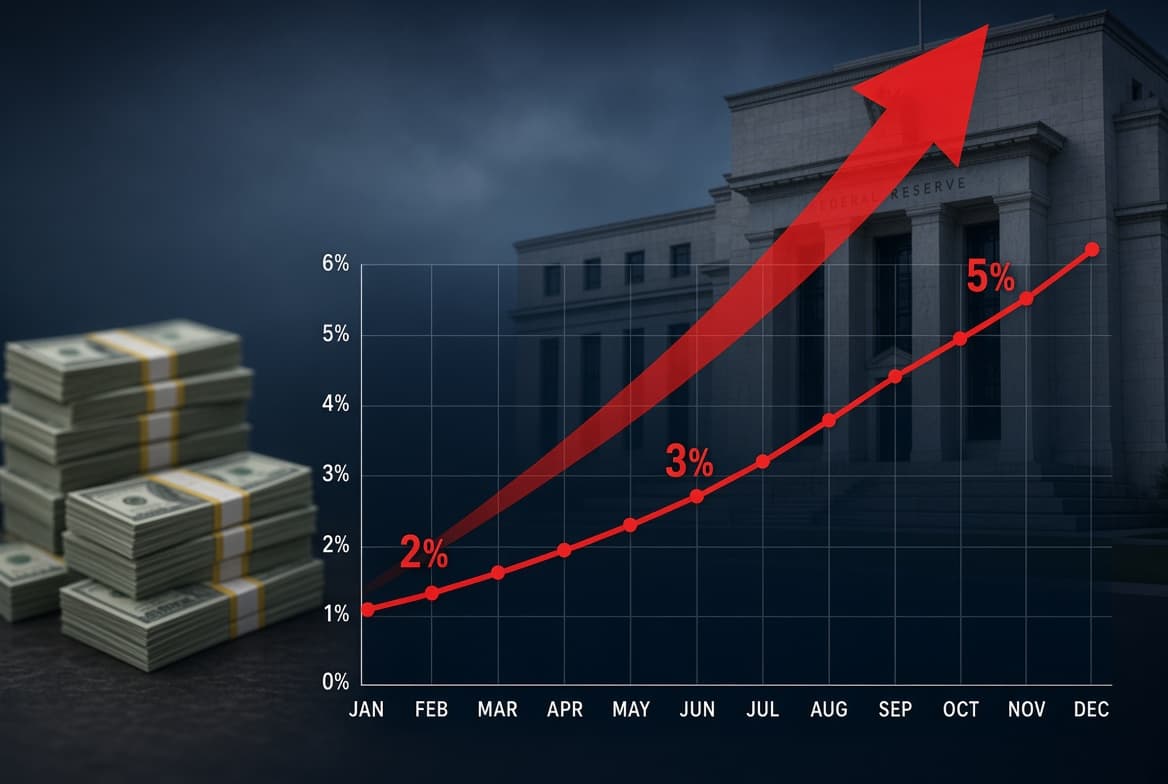
The more interesting story, though, is what's happening in the bond market, largely independent of the Iran news. The 2-year Treasury yield — arguably the most sensitive gauge of what traders expect the Federal Reserve to do — has been grinding higher for months, and one long-time chart watcher's call for it to reach 5% no longer looks like a fringe view. More telling: every maturity on the Treasury yield curve, from 3-month bills out to 30-year bonds, currently sits above the Fed's benchmark funds rate. Historically, when the entire curve trades above Fed funds, the Fed has eventually been forced to raise rates rather than cut them, because the market is pricing in inflation risk the central bank has not yet acknowledged.
That's an uncomfortable setup heading into a week when oil-driven inflation risk just got a fresh jolt. Higher energy costs feed into headline CPI quickly, and if crude stays elevated for weeks rather than days, it complicates any Fed hope of cutting rates later this year. Mortgage rates, which track the 10-year Treasury more than the Fed funds rate directly, have already ticked up alongside the yield move — a genuine concern for a Suffolk County housing market where affordability is already stretched thin and every eighth-of-a-point move on a jumbo loan matters to a buyer in Babylon or Islip.
Wall Street's dominant read on all this, at least so far, is that markets are absorbing the shock rather than panicking. Trading desks note that even amid the selloff, officials on both sides say negotiations "can continue," and there's real skepticism that a full kinetic re-escalation is imminent. But skepticism is not certainty, and the combination of a stubbornly hawkish yield curve with a live geopolitical flashpoint in the world's most important oil chokepoint is exactly the kind of setup that turns a temporary price spike into something stickier. Voters weighing the state of the economy this fall should watch the 2-year yield as closely as they watch the price at the pump — the bond market is often the first to tell you when the inflation fight isn't over.
You Might Also Be Interested In
The FOMC Minutes Just Quietly Floated Rate Hikes. Nobody's Pricing That In.

Lowe's Bad Quarter and TJX's Good One Are Telling the Same Story

The Chip Industry's Buyback Boom Is a Warning Sign, Not a Victory Lap