
Meta's Capex Just Doubled (Again), and Wall Street Can't Agree If That's Good News
Reports that Meta plans to double its AI computing capacity next year — funded by tens of billions more in spending than analysts had modeled — reopen the debate over whether Big Tech's AI buildout is disciplined investment or a bet the whole economy is now leaning on.

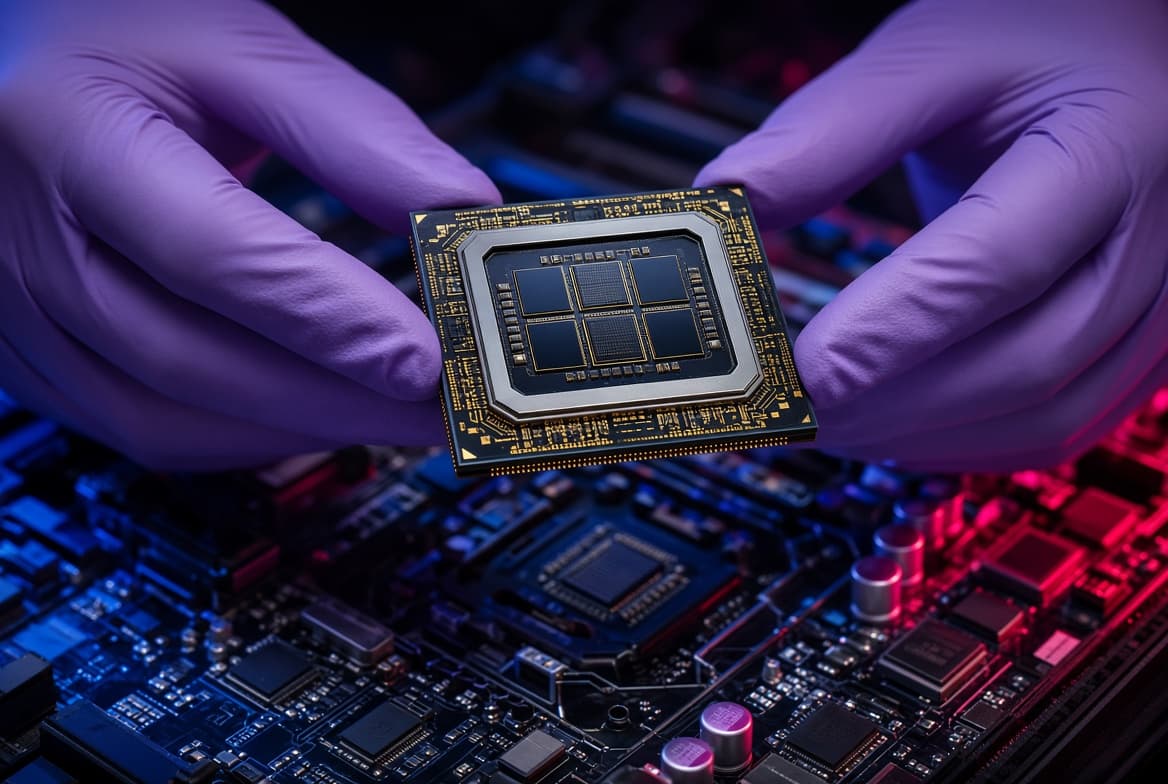
Meta is reportedly planning to deploy roughly 7 gigawatts of AI computing capacity this year and double that to 14 gigawatts in 2027, according to an internal memo described in press reports this week. To translate that into dollars: Wall Street's own capital-spending models for Meta's 2027 budget had clustered somewhere between $175 billion and $225 billion; the new numbers reportedly imply something closer to $250 billion, and some investors are already bracing for estimates to drift even higher. This is on top of Meta's confirmation that it's moving its own custom AI chip, developed with Broadcom and manufactured by TSMC, into production this September — a step toward doing what Google and Amazon have already done: reduce dependence on Nvidia by building silicon in-house.
This matters well beyond one company's earnings call. Capital expenditure by a handful of hyperscalers — Meta, Microsoft, Amazon, Google, and now increasingly Meta's expanding data-center footprint abroad, including a newly announced $13 billion facility in Alberta, its largest outside the U.S. — has become one of the more significant swing factors in American economic growth. Data-center construction has been a standout category in commercial building activity for over a year, and equipment makers, power generation companies, and specialty contractors are all now embedded, whether their investors realize it or not, in the assumption that this spending keeps accelerating. Semiconductor equipment manufacturers are already penciling in industry-wide spending climbing from roughly $145 billion this year toward $200 billion in 2027 and $250 billion in 2028, numbers that only make sense if Meta, Microsoft, Google, and Amazon all keep raising, not trimming, their own budgets in lockstep.
The bull case, made forcefully by several prominent money managers this week, is that this isn't reckless spending but a rational land grab: whoever controls the most compute controls the most valuable input of the next decade, and the returns on that infrastructure — in advertising targeting, in enterprise AI tools, in entirely new products — are already showing up in the numbers. The bear case, equally forceful, is that this is exactly what late-cycle capital spending manias look like from the inside: implied 2027 numbers that keep getting revised up faster than anyone can build a model to justify them, funded increasingly by debt rather than free cash flow, on the assumption that demand for AI services will grow to match supply that hasn't been built yet.
What should worry a general reader isn't which camp is right — that will take years to sort out — but how concentrated the economy has become on the answer. A handful of companies now account for an outsized share of U.S. corporate capital spending, and their capex decisions ripple into industrial production, into electricity demand and grid investment (utilities and power-equipment makers are already flagging that data-center demand is outrunning official estimates), into the job market for construction and skilled trades, and into the earnings that have propped up a large chunk of stock market gains this year. A pullback in that spending — whether from a change in Fed policy, a credit event, or simply management teams losing their nerve — would not stay contained to one sector.
For now, the direction of travel is unambiguous: spending is going up, not down, and the companies doing the spending are getting more aggressive, not more cautious, even as some of their own stocks have wobbled on AI-fatigue worries in recent weeks. Long Island has its own small stake in this story, however indirect — pension funds, 401(k)s, and retirement accounts across the region carry meaningful exposure to the mega-cap technology names driving this buildout, and regional utilities are watching the same data-center demand signals that are reshaping capital plans nationally. Whether this capital cycle ends in a productivity boom or a valuation reckoning, it is worth understanding that the bet is being placed with real money, at a scale that now rivals entire national infrastructure programs, on the assumption that someone, somewhere, will want to use all this compute.
You Might Also Be Interested In

$40 Trillion Later, Washington Still Hasn't Learned to Balance a Budget
The FOMC Minutes Just Quietly Floated Rate Hikes. Nobody's Pricing That In.

Lowe's Bad Quarter and TJX's Good One Are Telling the Same Story