

Texas Just Showed What Happens When the Grid Says No to AI
A governor's order to audit data-center power demand is a preview of the local backlash that could do more to slow the AI buildout than any Fed rate decision
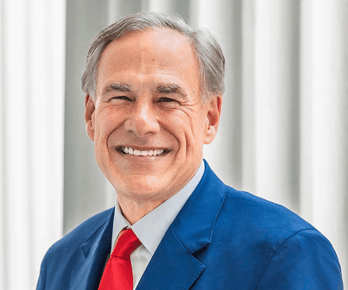
Every conversation about the artificial intelligence boom eventually turns to the same bottleneck: power. Chips can be built, capital can be raised, but electrons still travel over wires strung by utilities answerable to state regulators and, ultimately, voters. This week Texas offered a preview of what happens when that political reality catches up with the AI industry's growth assumptions. Governor Greg Abbott called for a 40-to-60-day audit of data-center development in the state, effectively a quasi-moratorium on new projects while officials sort out how much strain the buildout is putting on the grid.
Texas matters here because it has been ground zero for the AI infrastructure race. Cheap land, a permissive regulatory culture, and an independent grid operator eager for load growth made it a magnet for hyperscale data centers. That a Republican governor, in an election year, is now the one hitting pause tells you something Wall Street has been slow to price in: the coalition supporting unlimited data-center growth is not as durable as the capital spending plans assume. More than 300 local moratoria on data-center projects have been enacted nationally since 2023, mostly framed as temporary pauses for impact studies, but each one adds friction, delay, and cost to a buildout that was already running on razor-thin power margins.
The economic logic driving these fights is straightforward. Data centers are enormous electricity consumers, and in many regions their new demand is arriving faster than utilities can add generation or transmission capacity. That scarcity shows up in two places voters notice immediately: higher electricity bills for households and businesses competing for the same grid capacity, and the visible construction of industrial-scale facilities that bring relatively few permanent jobs relative to their footprint and water usage. When the benefits are diffuse and the costs are local, political backlash is not a tail risk. It is close to inevitable.
For the companies building this infrastructure, the practical response has been to route around the obstacle rather than confront it. Expect an acceleration of behind-the-meter power solutions, arrangements where a data center owner builds or contracts for its own generation, often gas turbines or battery storage, sited directly at the facility rather than waiting on the public grid. That approach sidesteps local grid politics but shifts costs onto the data-center operators themselves, and by extension onto the AI companies and cloud customers who ultimately pay for that capacity. It is not obviously cheaper, and equipment makers and on-site generation providers are among the few likely beneficiaries of the friction.
The investors least exposed to this fight are cloud platforms and chipmakers with geographic flexibility; the most exposed are independent power producers who had modeled rapid, uninterrupted data-center load growth into regions like Texas as a source of pricing power. If other states follow Texas's lead, and Republican and Democratic officials alike have incentives to be seen policing a fast-growing, capital-intensive industry before an election, the timeline for the AI buildout could stretch even as the dollar figures keep climbing.
None of this changes the strategic logic behind the AI investment cycle: the capex is tied to a genuine technological race with real commercial and geopolitical stakes, including competition with China. But it does mean the buildout's critical path increasingly runs through county commissions and state houses, not just chip fabs and boardrooms. For a region like Long Island, which has its own long history of fights over power-plant siting and grid capacity, the Texas episode is a useful preview of arguments that could just as easily surface here if data-center development ever comes calling for Suffolk County's grid capacity.
You Might Also Be Interested In

GUEST COLUMN: The Price of the House Is Only the Beginning on Long Island

Giving Smarter: Charitable Planning Under the New Rules
The Fed Hiked Rates Into an Oil Shock. Some Economists Think That's a Mistake.