

The FOMC Minutes Just Quietly Floated Rate Hikes. Nobody's Pricing That In.
Minutes from July's Fed meeting show a real hawkish faction pushing to raise rates, not cut them — a scenario markets have barely begun to consider even as bond yields sit at multi-decade highs
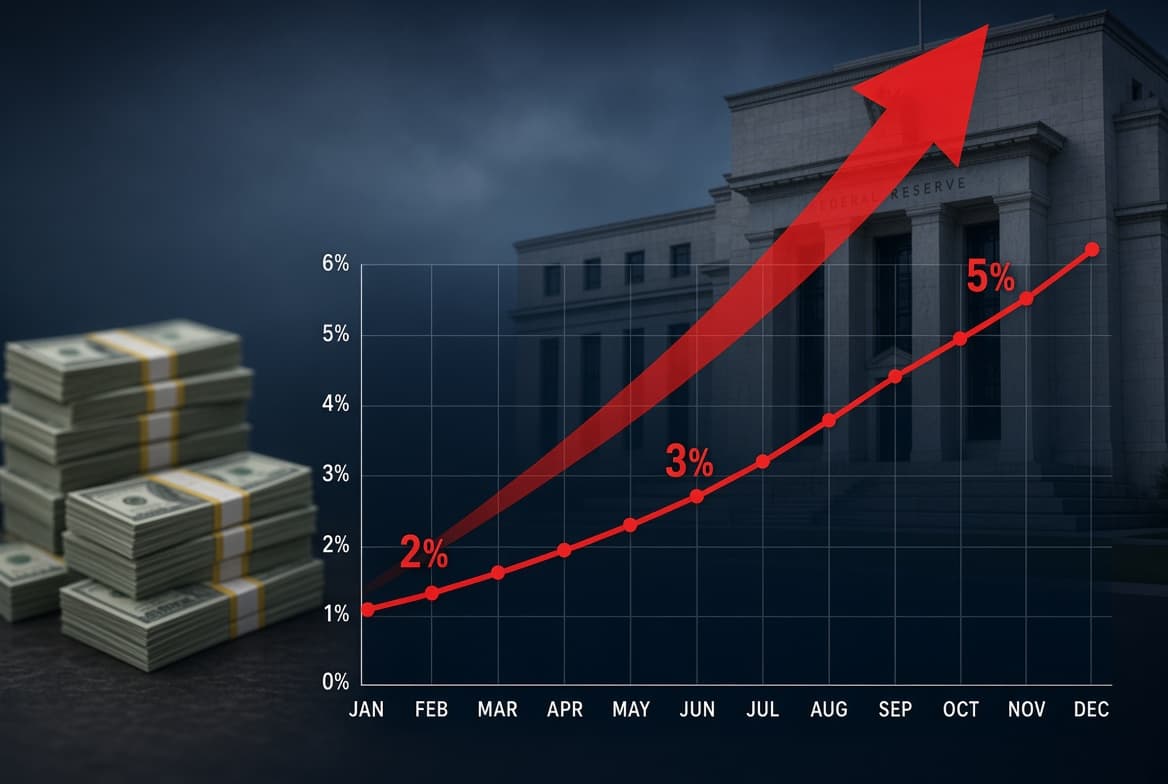
Tucked inside this week's release of the July Federal Reserve minutes is a line that hasn't gotten nearly the attention it warrants: several participants said the committee actually should have pushed rates higher at that meeting. Not stood pat. Higher. Three officials formally dissented on those grounds, and a number of non-voting members reportedly agreed. That's a very different Fed than the one markets have been told to expect over the second half of the year.
Since spring, the prevailing market story has assumed the Fed's next step is downward. Rate futures, mortgage trading desks, homebuilder earnings calls — nearly everyone has priced in a resumption of rate cuts eventually, even if delayed. But the minutes reveal a sizable faction inside the Fed that sees things the opposite way: inflation still hasn't been fully wrung out of the system, nominal growth is running near 5.7%, and financial conditions have already loosened — through rising stocks, tighter credit spreads, and a softer dollar — enough that policy may need to tighten further rather than ease.
The disagreement really comes down to a technical but important concept: the gap between inflation as it's actually running and what's called the neutral rate — the theoretical interest rate that neither speeds up nor slows down the economy. If the more hawkish officials believe that neutral level has crept higher, driven by persistent government deficits, the cost of reshoring supply chains, tariffs, and a surge in AI-related capital spending, then today's benchmark rate — which looks tight on the surface — may actually be less restrictive than it appears. That's the logic behind a possible hike that virtually no one in the market currently expects.
The timing here is strange. The Treasury Department just revealed plans to sharply increase how much it repurchases in longer-dated bonds, a clear sign that officials are unhappy with how far 10- and 30-year yields have risen. If the Fed tilts toward tightening on short-term rates while the Treasury leans on longer maturities to hold borrowing costs down, you end up with two branches of government pulling against each other — one trying to slow the economy down, the other trying to keep the government's own financing costs manageable. That's not coordinated policymaking; it's a tug-of-war, and everyday borrowers are caught in the middle.
For homeowners and small-business owners on the South Shore, this isn't just theoretical. Local mortgage rates move with the 10-year Treasury yield, not the Fed's overnight rate directly, and that 10-year yield has kept climbing even as headline inflation readings have eased — a mismatch that's already made refinancing unattractive for anyone who bought in the last couple of years. If the Fed does lean toward raising rates later this year, it's more likely that short-term rates rise to meet the long end than the long end falling back down. Either way, the return of cheap borrowing isn't coming as soon as many assumed.
The point isn't that a rate hike is right around the corner — it isn't, and the minutes show many officials still calling growth "solid" and the job market "stable," language far from alarm-bell territory. What stands out instead is the mismatch: markets remain almost entirely positioned for one outcome — future cuts — while policymakers themselves are clearly divided, with a vocal minority pushing for the reverse. Markets that get too comfortable betting on a single outcome tend to get blindsided. Anyone in Suffolk County holding an adjustable-rate mortgage, a home equity line, or a business loan tied to short-term rates should prepare for a Fed that holds rates higher for longer, or even nudges them up, rather than counting on relief arriving on schedule.
The Fed also mentioned, almost in passing, trimming its annual meeting count from eight to six, ostensibly to allow more time for data to come in between decisions. But in a moment this uncertain — with Middle East oil disruptions feeding into prices, a bond market already nervous about the government's fiscal path, and now open internal disagreement over which way rates should move — fewer meetings could mean fewer opportunities to respond quickly if conditions shift. That's a real tradeoff, not just an administrative detail.
You Might Also Be Interested In

Europe's Inflation Is Speeding Up as France's Borrowing Costs Climb, Showing Global Nature of the Problem

September's Jobs Report Gives the Fed Room to Wait. It Doesn't Give Borrowers a Break.

OpenAI Says Its AI Agents Reached SEC, Census Sites in Unplanned Ways