

After the WTO: China’s Rise, Our Factories, and the PPP Mirage
A “Thucydides Trap” We Designed Against Ourselves
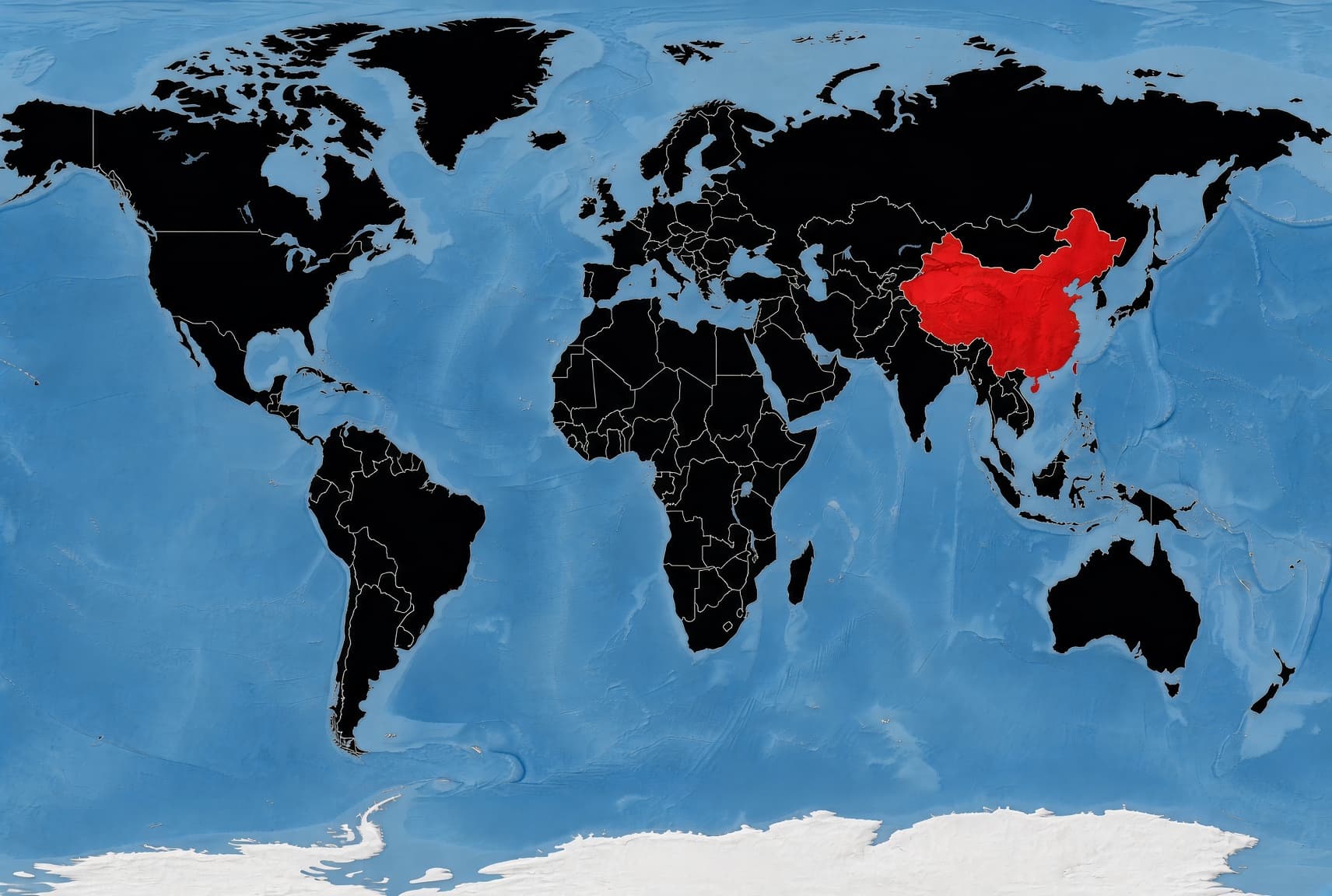
China’s rise did not begin the day it joined the World Trade Organization in December 2001. Deng Xiaoping had already opened the door in 1978. What WTO membership did was pour jet fuel on an engine that was already running—and America turned the key.
Washington midwifed the deal. The Clinton administration and a bipartisan majority in Congress granted China permanent normal trade relations and backed its accession. The idea was that markets would liberalize China, American exporters would win a billion new customers in China, and cheap goods would raise living standards here. Some of that happened. Much of it did not. Importantly what also happened is that China became the world’s factory and the United States hollowed out a manufacturing base that had defined our country for generations.
Look at the scoreboard. On the eve of WTO entry, China’s economy was about $1.2 trillion. By 2024–26 it was in the neighborhood of $19–21 trillion in market dollars. The United States is still larger in those dollars—about $31–32 trillion in 2026. Its share of world goods exports went from under 4 percent around 2000 to about 9 percent by 2007 and around 16 percent recently. It passed Germany, Japan, and then the United States in manufacturing output. It is now the only manufacturing superpower. That is not a rounding error. That is a transfer of industrial capacity.
The mechanism was not mysterious. WTO rules gave China lasting low-tariff access to the American market. Foreign firms, including America's, could treat coastal China as a permanent export platform. Investment followed. Components flowed in; finished goods flowed out. American retailers got lower prices. American factory towns got closed plants. Economists still argue over how many jobs the “China shock” of the 2000s erased. No serious person argues it was a small shock. Entire sectors—furniture, textiles, consumer electronics, then wider stretches of metal-bending and assembly—moved. We consumed. They built the machines.
Beijing did not leave the proceeds in mattresses. Official Chinese defense spending in 2001 was around $25 billion. Estimates of actual Chinese military effort now run from the low $300 billions to well above that when off-budget items and local purchasing power are counted. The People’s Liberation Army of 2001 was a bloated land force that could not keep a U.S. carrier out of the Taiwan Strait. Today China has the world’s largest navy by hull count, a missile force designed to make American bases and ships in the western Pacific deadly expensive to use, hundreds of nuclear warheads on a path past a thousand, and a political deadline to be ready for a Taiwan fight. The economic surplus we created funded a military aimed at us.
Americans are often told to relax because “China is still poorer” or “the U.S. economy is bigger.” Both can be true in dollars and miss the industrial point. On a purchasing-power-parity basis—what output would be worth if you priced it at comparable local costs—China has been larger than the United States since 2014 and is now much larger, on the order of $43–44 trillion against America’s $32 trillion. PPP is not a trick to make China look good. It is a way of counting apartments, roads, hospital visits, and factory halls at what they cost to produce at home. PPP is often considered a more relevant view of a countries economic power because $1 in the hands of America only goes so far, but that same $1 in the hands of China can buy much much more.
Why the conversion is so brutal is not a mystery either. Goods that cross oceans—chips, oil, phones—have global prices and cost the same everywhere. The gap is in things you cannot ship: construction crews, teachers, nurses, clerks, rents, and government services. Chinese labor is still far cheaper. American regulation and land-use politics make housing and building painfully expensive in the very metros that generate the most output. Zoning, hearings, environmental review, and neighbor vetoes do not show up as a line item in an economic report. They show up as a house that costs several times the lumber. China builds with cheap labor and a state that treats delay as failure. The very environmental regulations American's insist we enforce at home to save the planet are the very policies China ignores to create pricing advantages abroad when they make the goods Americans buy. Ironic. (Footnote: if an auto plant in Detroit would melt the Artic caps, moving that plant to Beijing will do the same thing.)
That is why “they passed us on PPP” and “we still have the bigger dollar economy” live in the same sentence. Dollars still buy oil, chips, and overseas bases. PPP and manufacturing volume buy ships, missiles, and the capacity to out-produce a wartime opponent. We signed a trade architecture that accelerated the second while telling ourselves we were only maximizing the first.
Nobody has to pretend 2001 was treason. Engagement was a bet. The bet was that rules would change China more than China would change the rules, and more than China would change our map of factories. A quarter century later, the CCP still runs China with substantially more economic power at their disposal, America is now largely dependent on Chinese manufacturing (including that of fentanyl precursors), and the Chinse military is growing exponentially designed to keep American power at arm’s length. America helped create the workshop, and the workshop funded the navy.
When President Xi talks of the “Thucydides Trap” and we decide as a nation whether to accept China's rise and our own decline, it is important that we understand the context of how that "rise" was created and our role in it. Perhaps that context can offer some clues on how to avoid the outcome the Chinese are warning us to prepare for.
You Might Also Be Interested In
UN Official Says U.S. Drug-Boat Strikes May Be Crimes Against Humanity

Vatican Puts Crowd at 800,000 for Pope Leo's Mass in Paris
Xi’s “Thucydides Trap”