

The Jobs Report Everyone Wants Is the One That Keeps Rates Guessing
A benign unemployment rate near 4.2% has become the market's preferred outcome — not because it signals strength, but because it threads a needle between a Fed that wants cover to cut and an economy still generating enough friction to keep inflation contained
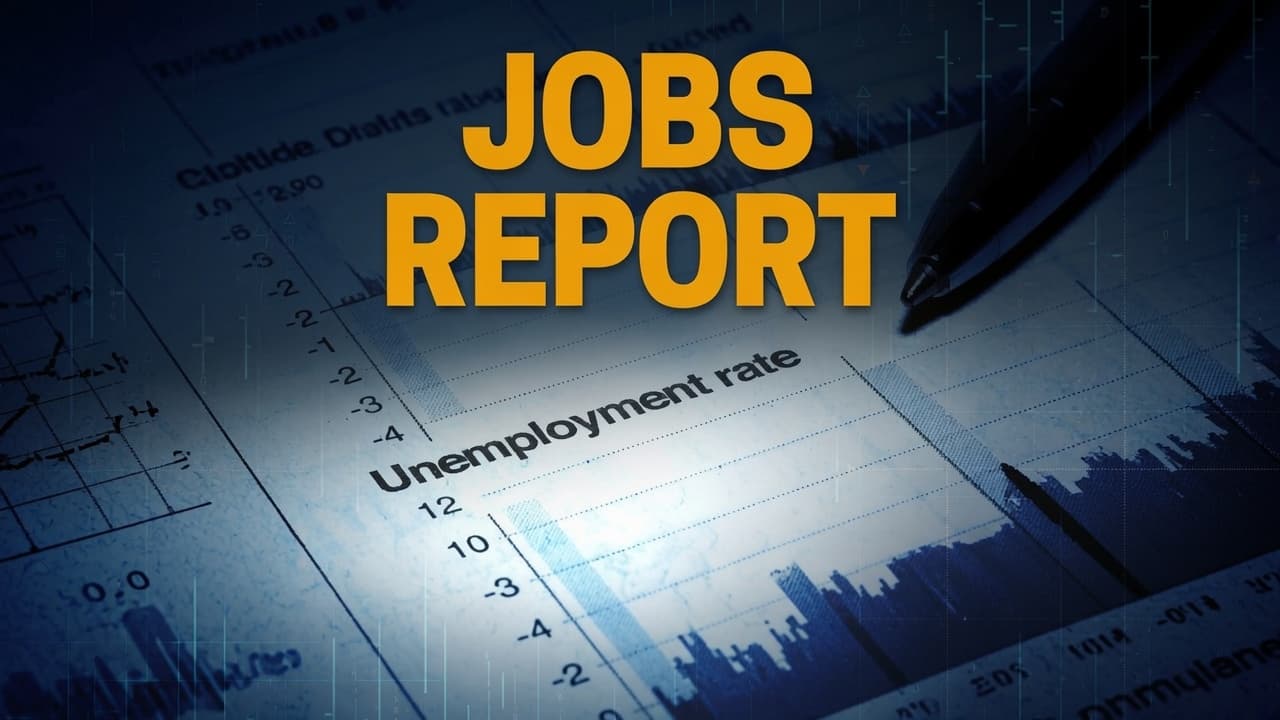
Friday's jobs report will land the way most economic data does these days: parsed less for what it says about American workers than for what it lets the Federal Reserve do next. The consensus circulating among institutional forecasters ahead of the report calls for roughly 80,000 new payrolls and an unemployment rate holding near 4.2%. Those numbers sound unremarkable, and that is precisely the point. A cooler-but-not-cold labor market is exactly what a rate-cutting Fed needs to justify continuing down that path without reigniting the inflation it spent three years fighting.
The mechanics underneath this data are worth understanding, because they explain why forecasters aren't spooked by 80,000 jobs — a figure that a decade ago would have read as disappointing. Population growth and labor force growth have both slowed sharply, partly a function of immigration policy and partly demographic drift. When fewer people are entering the workforce, an economy needs fewer net new jobs each month just to hold the unemployment rate steady. So a slower jobs number today can mean something closer to a stable labor market than an equivalent number would have meant five years ago. Layered on top of that is a genuine acceleration in productivity growth, now running near an annualized 2.1%, roughly double the pre-pandemic trend. Companies are extracting more output per worker, whether through AI-assisted software tools, leaner staffing models, or simple post-layoff efficiency. That combination — modest hiring, low labor force growth, and rising productivity — has kept unit labor costs remarkably tame, growing at roughly 1% year over year even as nominal wages continue to rise.
This is the quiet, non-headline story of the 2026 economy: inflation is behaving not because demand has collapsed, but because supply-side dynamics in the labor market have shifted underneath it. It's a fragile equilibrium, though. If layoffs accelerate — and unemployment claims, while still historically low, are a data point worth watching closely in the months ahead — the same demographic slowdown that makes 80,000 jobs look adequate today could make a weaker number look alarming tomorrow, because there won't be an obvious offsetting explanation.
For Long Island readers, the read-through is fairly direct. Suffolk County's labor market skews toward healthcare, retail, hospitality, and public sector employment — sectors less exposed to the productivity-driven headcount reductions showing up in software and media right now, but not immune to a broader slowdown if one materializes. More immediately, this data feeds directly into mortgage pricing. The market's read on Friday's payrolls, and next Wednesday's CPI print, will move the 10-year Treasury yield, which in turn moves 30-year fixed mortgage rates more than anything the Fed does directly. A benign labor report that supports continued rate cuts is good news for anyone househunting on the South Shore this fall; a hot report that forces the Fed to pause would do the opposite, right as the traditional autumn selling season gets underway.
The deeper lesson for voters and consumers alike is this: the labor market and the inflation fight are no longer telling a simple story about whether the economy is 'strong' or 'weak.' They're telling a story about structural change — fewer workers, more automation, better productivity — that is reshaping what a 'good' jobs number even means. Watching the unemployment rate in isolation, the way headlines tend to frame it, risks missing what's actually driving the numbers underneath.
You Might Also Be Interested In

Giving Smarter: Charitable Planning Under the New Rules
The Fed Hiked Rates Into an Oil Shock. Some Economists Think That's a Mistake.

When the AI Bosses Talk About Slowing Down, It Is Important to Understand Why, and What Is Coming