

Two Fed Officials Wanted a Rate Hike This Week. The Rest Chose to Wait.
Governor Lisa Cook and Cleveland's Beth Hammack broke from the majority as the committee held its benchmark rate at 3.75 to 4 percent, keeping the debate over another increase alive.
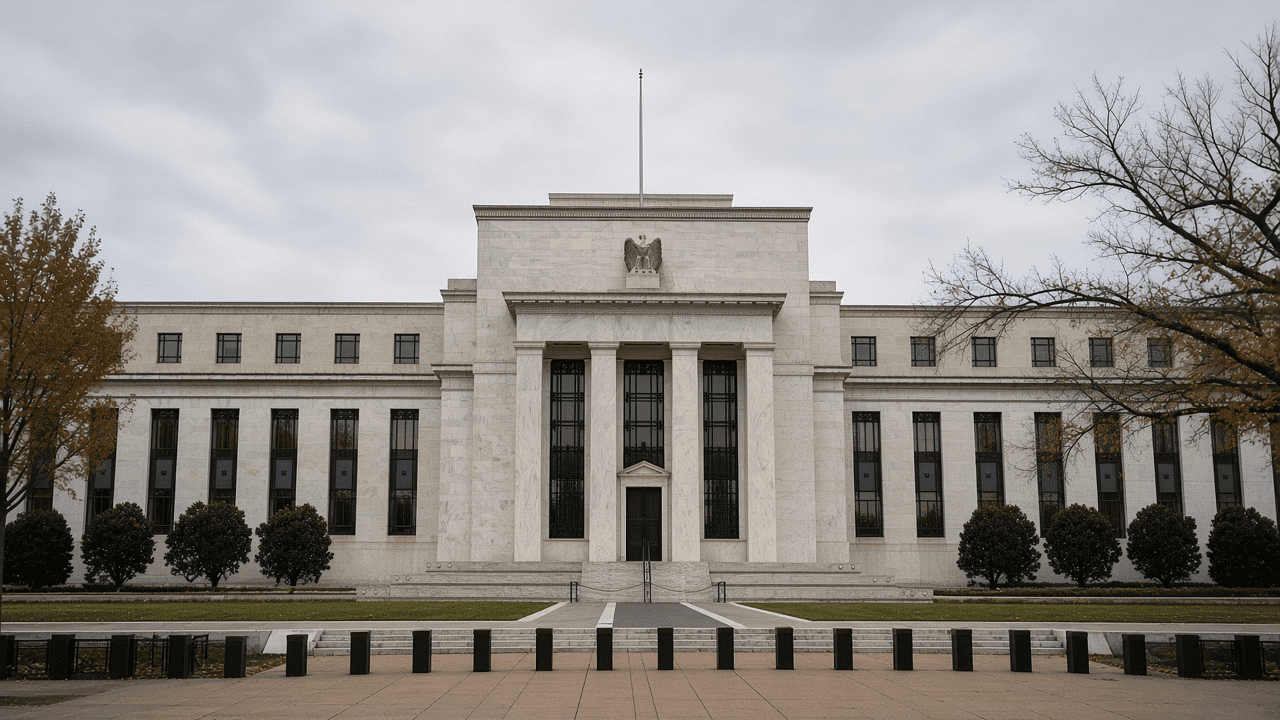
Ten members of the Federal Reserve's rate committee agreed on Wednesday to leave borrowing costs where they are for now. Two did not. Governor Lisa Cook and Beth Hammack, president of the Cleveland Fed, each voted to lift the benchmark rate by a quarter point, and the published tally of the 10 to 2 decision names them both.
The federal funds rate therefore holds in a band of 3.75 to 4 percent. Policymakers moved it there six weeks ago, on Sept. 16, when all 12 voters backed a quarter-point increase. The meeting before that, in late July, ended with no change and three dissents: Hammack, Neel Kashkari of Minneapolis and Lorie Logan of Dallas each wanted a hike then, too. Kashkari and Logan joined the majority this time.
Taken together, the last three votes point the same way. No one on the committee has voted for a cut. The fight is about timing, and whether to push rates higher right away or to hold off and watch.
The majority explained itself in very few words. Inflation "remains elevated," the statement said, and the committee wants "the accumulation of more information" before it settles on the stance needed to bring prices back to its 2 percent target in a timely way. The description of the economy got a lift. In September the committee called growth "solid." This week it chose "strong pace."
At his news conference, Chairman Kevin Warsh was pressed on why the Fed did not simply raise rates on Wednesday, given how little ground inflation has given up. He said that taming prices does not come down to a single meeting date or a single data release. He also granted the premise. "You haven't achieved price stability, you're right about that," he said. "But we're working on it."
Warsh argued that the September increase is already working. Credit has gotten harder to come by for some borrowers since that move, he said, but he stopped short of calling overall conditions tight. "While overall financial conditions are tighter, I'm unwilling and unable to call them tight," he said. Hiring has been running ahead of last year's pace, he added, and the four-week average of new jobless claims is at "the lowest level in generations."
Hammack made her case in public before the meeting. In an Oct. 12 speech, she said a jobless rate that has held at 4.2 percent leaves the Fed room to lean harder against prices, and that she would rather adjust often and in small steps than sit through long pauses. Her reading of inflation was blunt. The Fed's preferred gauge stood 3.4 percent above its level of a year earlier as of August, and 3 percent once food and energy are set aside, with both higher than in 2025. She does not see a single culprit. Business contacts in her district, she said, report climbing bills for electricity, grains, metals and health coverage, on top of several rounds of tariffs, and price gains are also turning up in services that have little exposure to oil or imports.
She also raised a concern about psychology. One retailer in her district, she said, plans to raise its prices by more than its own costs have risen, because it assumes more inflation is coming from somewhere. If that mindset spreads, she warned, it gets harder for the Fed to bring prices down.
Cook's vote stood out for another reason. It was her first dissent since she joined the Fed, and it came days before a White House hearing on President Trump's renewed effort to oust her over allegations about her mortgage paperwork. An earlier attempt to remove her was stopped by the Supreme Court.
A day after the decision, the Commerce Department published its first look at summer output. Inflation-adjusted growth ran at a 3.4 percent annual pace from July through September, up from 2.2 percent in the spring. The same report put the quarter's rise in the Fed's favored price index at 2.1 percent at an annual rate, and 2.5 percent without food and energy, both slower than in the April through June period.
Warsh also announced a calendar change. Starting in 2027, one of the eight yearly meetings will be devoted to strategy alone, with no rate decision and no statement expected, he said, and he expects two of them in 2028.
The next rate decision comes in December.
You Might Also Be Interested In
Water Authority accepts final review of North Fork pipeline

Economy Grew at a 3.4% Pace Last Quarter, With Imported Computers Swelling Investment

Oheka Castle Goes for $72 Million at Auction, About Half Its Appraised Value
