

Wall Street's Favorite Trade Is Betting the Fed Blinks and the World Behaves
Stocks just posted their best week since April even as the Strait of Hormuz standoff drags on and the yen intervention exposes just how much of the rally rests on hope rather than resolution
Investors spent last week doing something markets do best: looking past two live geopolitical fires to buy stocks at a record pace. The S&P 500 and Nasdaq notched their strongest weekly gains since April, oil fell sharply on hopes of a Strait of Hormuz resolution, and the yen stabilized after a coordinated intervention by U.S. and Japanese authorities. By Friday, nothing about Iran or the shipping lane had actually been resolved. Markets simply decided to stop pricing in the worst case.
That's worth sitting with, because the underlying facts didn't change much. Iran spent the weekend hardening its position, tying any reopening of the Strait to a list of demands that includes a permanent end to hostilities, a lifted naval blockade, unfrozen assets, and war reparations. Washington's public posture, meanwhile, has shifted to what officials describe as economic pressure rather than further strikes — a strategy that assumes Tehran will eventually fold under sanctions rather than any near-term diplomatic breakthrough. That is not a resolution. It's a stalemate with a calmer news cycle, and markets have treated the absence of new bad news as if it were good news.
The yen episode tells a similar story. A crowded short-yen trade — one of the most popular wagers in global macro for the better part of a decade — got squeezed hard enough that the U.S. and Japan felt compelled to intervene jointly. That's a big deal: coordinated currency intervention is rare, and it happened because a one-way trade had become so lopsided it threatened to destabilize markets on its own. The intervention didn't change Japan's underlying fiscal trajectory or the structural reasons investors had been short the yen in the first place — it just punished the people on the wrong side of a crowded position. Whether the currency's calm holds depends on the Bank of Japan actually following through on the rate hikes markets now expect, not on the intervention itself.
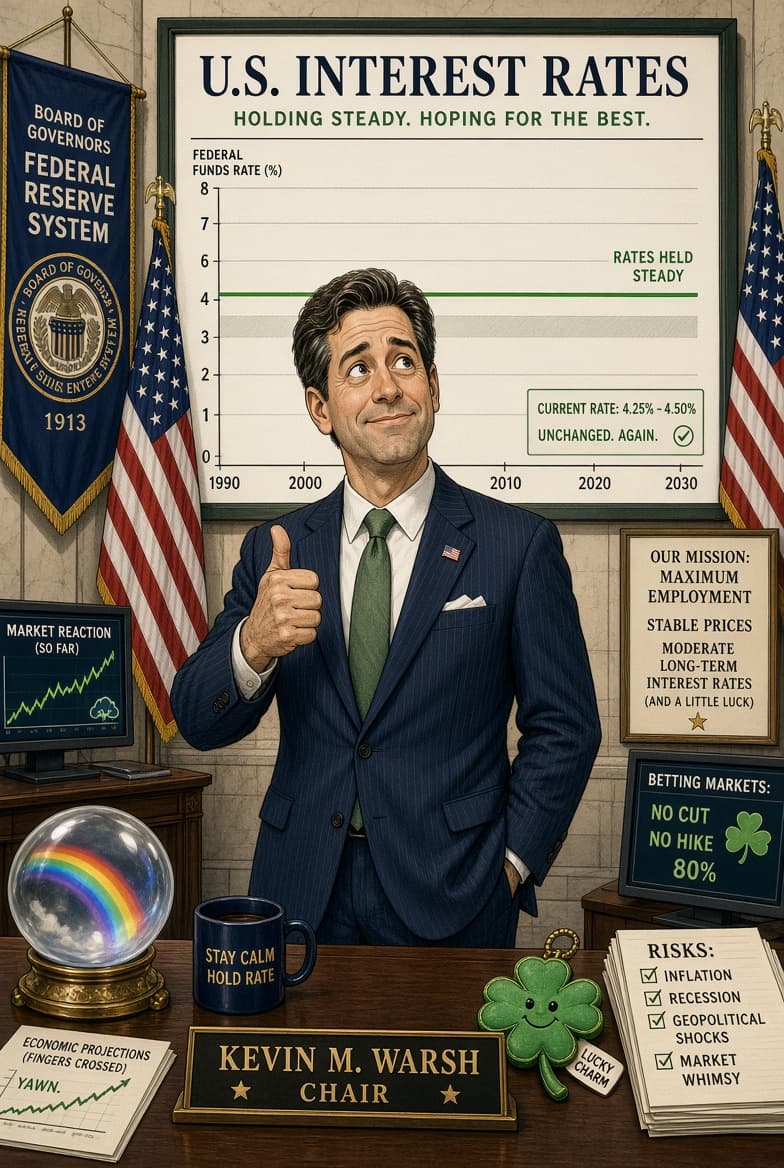
All of this is unfolding days before Wednesday's July CPI report, which traders are treating as the real decision point for whether the Fed has room to cut rates this fall. A soft jobs report already pushed short-term Treasury yields down and pulled rate-cut odds higher, but that same soft labor data has an inflationary tail: falling labor force participation among older workers can flatter the unemployment rate even as underlying demand for workers stays sticky. Add a war-adjacent oil market that could reverse its recent decline in a matter of days, and the Fed is being asked to set policy based on data that could look very different by Thanksgiving.
For Long Island readers, this isn't an abstract Wall Street parlor game. Local mortgage rates track the 10-year Treasury yield, which has been yanked in both directions by exactly this tug-of-war between soft jobs data and unresolved geopolitical risk. Every basis point of yield compression that comes from a hoped-for Iran deal or a dovish CPI surprise shows up in Suffolk County closing costs — and every basis point that snaps back if either story reverses shows up there too. Homebuyers on the South Shore are, whether they realize it or not, making a bet on the Strait of Hormuz every time they lock a rate.
The deeper lesson is about how markets price geopolitical risk generally: not continuously, but in fits and starts, often overshooting in both directions. Oil spiked when the conflict escalated and cratered when talks resumed, even though the actual physical risk to tanker traffic in the Strait has barely moved. That volatility is itself a tax on the real economy — on refiners, on shippers, on any business that has to plan capital spending around energy costs — regardless of which direction the market happens to be leaning this week. Investors who are pricing in a Fed cut and a Middle East resolution simultaneously are making two separate bets that both need to go right. History suggests that's a less-than-even proposition, and voters watching their own borrowing costs and grocery bills would do well to remember that a calm ticker tape isn't the same thing as a resolved crisis.
You Might Also Be Interested In

Trump Announces 'AI Force,' Vows to Appoint AI Czar
Corporate Tax Receipts Down $95 Billion as Bonus Depreciation Bites

Warren Buffett Steps Down as Berkshire Hathaway Chairman After Six Decades