
Washington's China Chip Ban Shows Industrial Policy Has a Price Tag
A drafted FCC ban on Chinese data-center components would protect national security, but hyperscalers — and eventually their customers — will pay for the shift to costlier domestic suppliers
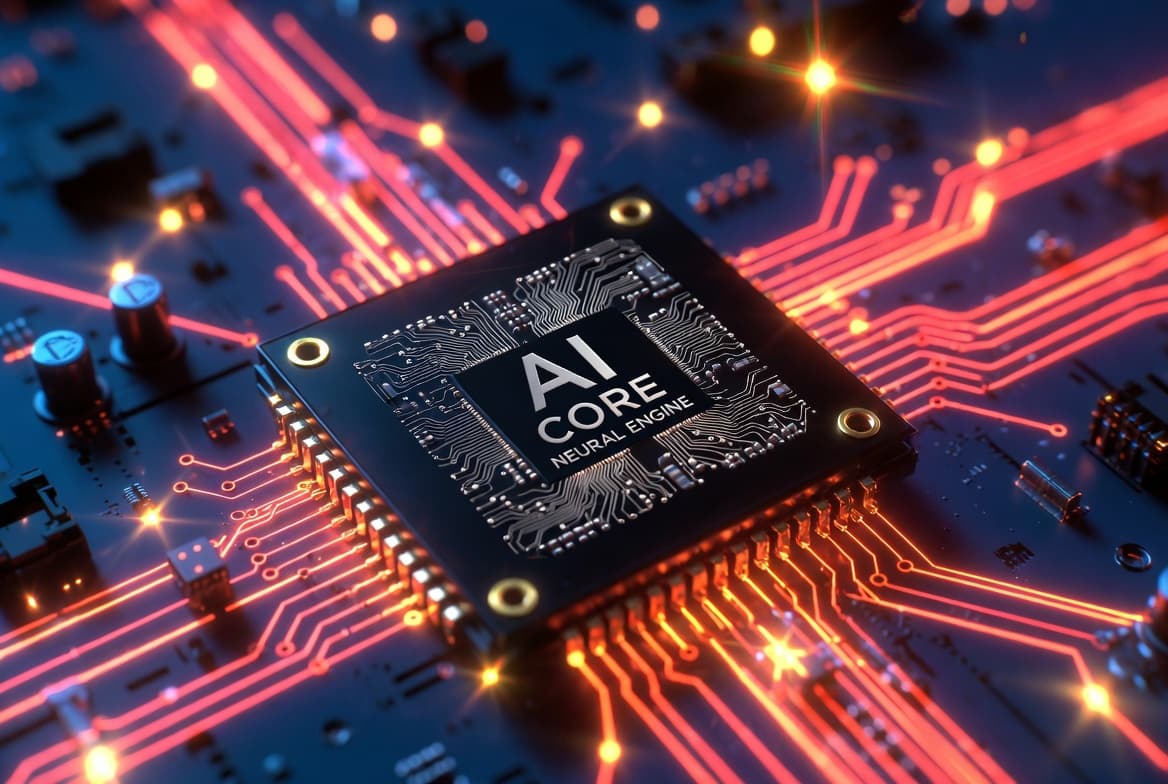
Word that the Federal Communications Commission is drafting rules to bar imports of new-model Chinese optical transceivers landed like a jolt in markets this week, sending shares of a handful of domestic component makers up double digits in a single session. The policy targets a niche but critical piece of internet plumbing: the optical parts that shuttle data at light speed between racks of servers in the data centers now being built at a pace unmatched in a generation. One Chinese supplier alone is estimated to hold more than a quarter of global market share in these parts. The proposed ban would force American cloud giants to shift purchasing toward domestic and allied suppliers — several of which, not coincidentally, are American public companies with far smaller manufacturing scale than their Chinese counterpart.
The mechanics of the policy matter more than the headline. This isn't a tariff, which raises the price of a good without changing who's allowed to sell it. It's an import ban, which removes a supplier from the market altogether. For a component that is genuinely difficult to source at scale outside of China in the near term, that distinction has teeth: expect higher prices for these parts, and quite possibly delays in data center buildouts as the supply chain reroutes. Given how central optical interconnects are to the current AI infrastructure boom, any friction here ripples outward — into hyperscaler capital budgets, into the timeline for new compute capacity coming online, and eventually into the cost structure of the AI services built on top of that capacity.
This is not the first time Washington has used trade authority to reshape a tech supply chain in the name of national security, and it will not be the last. What's notable is the timing: it comes as data center capital expenditure among the largest technology companies is running at a scale — well over a trillion dollars in aggregate over the next several years — that few other sectors of the economy can match. Policy that adds friction, cost, or delay to that buildout is no longer a niche regulatory story. It is macro-relevant, in the same way that steel and aluminum tariffs mattered to manufacturers a decade ago, only bigger, because AI infrastructure spending has become one of the more significant swing factors in headline GDP growth this year.
There is a reasonable case for the policy on security grounds — nobody wants adversarial hardware sitting inside the networks that will run critical AI systems. But readers should understand that security and economic efficiency are often in tension, and this is one of those moments. Reshoring supply chains, whether for semiconductors, batteries, or optical components, tends to raise near-term costs even when it succeeds at its stated goal. The bill for that tradeoff, as always, gets paid somewhere down the chain — by the cloud providers in the short run, and potentially by anyone whose business increasingly runs on AI-driven services in the long run.
For Long Island readers, the connection is more indirect than, say, mortgage rates or LIPA bills, but it's real. Data center buildouts, chip manufacturing incentives, and the broader reindustrialization push tied to AI infrastructure are among the few growth engines pulling capital spending higher nationally even as consumer-facing sectors show more mixed signals. Policy moves that alter the cost and pace of that buildout are worth watching not because they'll show up in next month's local headlines, but because they're a preview of how much of the next phase of American industrial policy will be conducted not through legislation, but through security-justified import restrictions — a tool this administration has shown a clear willingness to use again and again.
You Might Also Be Interested In

Giving Smarter: Charitable Planning Under the New Rules
The Fed Hiked Rates Into an Oil Shock. Some Economists Think That's a Mistake.

When the AI Bosses Talk About Slowing Down, It Is Important to Understand Why, and What Is Coming