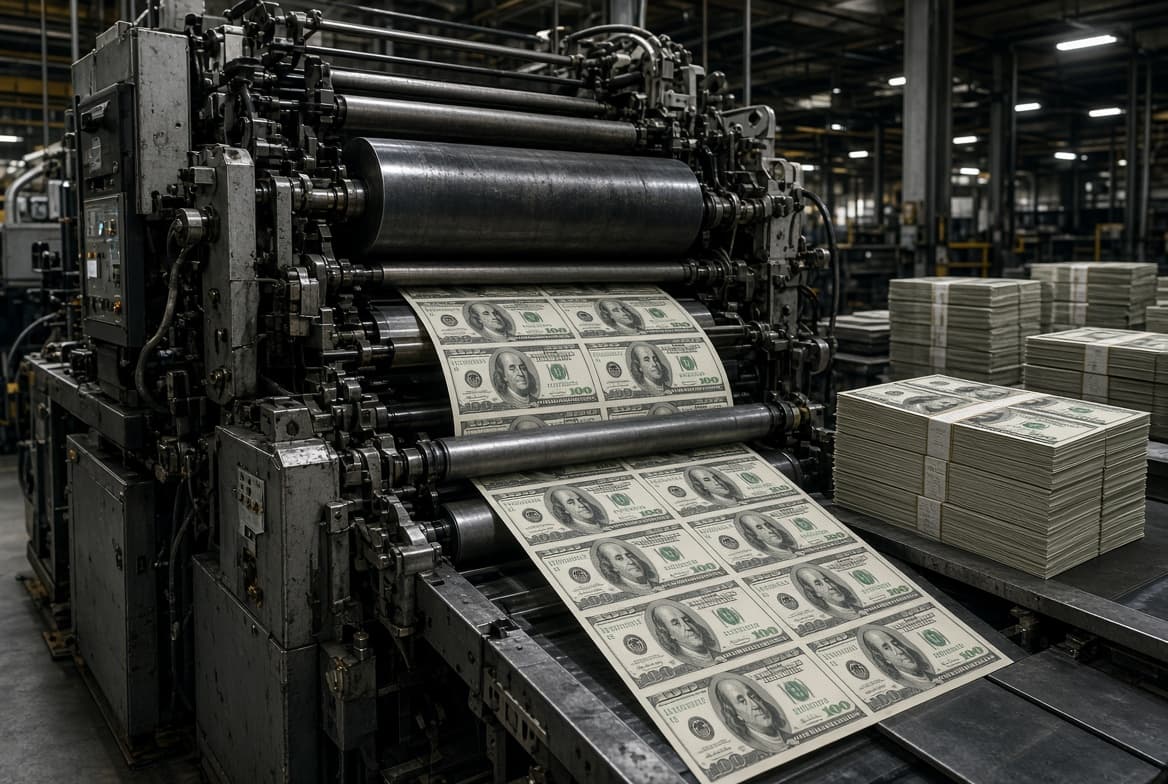

Your Retirement Savings: The Next Financial Time Bomb?
Insurance Market May Be Hiding the Disaster Awaiting Us All

In the quiet towns and suburbs of America, millions of retirees, teachers, and families rely on life insurance policies and annuities for security. These products promise stability—steady payouts in retirement, protection for loved ones, and peace of mind after decades of hard work. But a growing body of evidence suggests a troubling reality: much of the $10 trillion life and annuity industry rests on accounting tricks, underfunded promises, and risky bets that could unravel in the next economic downturn, leaving ordinary Americans holding the bag while Wall Street walks away.
This isn't alarmism. It's the conclusion drawn from public filings, forensic accounting, and warnings from experts like Thomas D. Gober, a veteran fraud examiner who spent decades investigating insurance alongside the FBI. Independent analysts have laid out the details in stark terms, comparing the situation to a bomb with private credit as the fuse and the insurance industry as the explosive core—potentially bigger than the 2008 Global Financial Crisis.
At its heart, the issue revolves around how insurers handle risk. When a company sells an annuity or life policy, it takes on long-term obligations. To free up capital and meet regulatory requirements, insurers "cede" these liabilities to affiliated reinsurance companies—often captives in Vermont or offshore havens like Bermuda, Barbados, and the Caymans.
On paper, this transfers risk. In reality, many of these entities are shells. Consider one documented case involving Brookfield's American Equity acquisition. Three Vermont captives held about $7 billion in liabilities but only $261 million in real assets—roughly 3.7 cents on the dollar. The shortfall? Filled with "XOL" (excess-of-loss) reinsurance contracts promising payouts if things go wrong. Counterparties like Hannover Re booked zero reserves against these, charging tiny fees for what amounted to reputational promises, not real backing.
Industry-wide, affiliated reinsurance credits total around $1.54 trillion against just $657 billion in total surplus capital. Strip away the affiliated paper, and regulators' own data suggests dozens of major insurers would be insolvent. Vermont and other domiciles have made captive filings confidential—even immune to subpoenas—limiting scrutiny. Offshore entities operate beyond U.S. examiners' reach.
This opacity serves a purpose. Private equity firms like Apollo (behind Athene), KKR, and others have poured into insurance, redirecting policyholder funds into private credit: leveraged loans, collateralized loan obligations (CLOs), and illiquid assets originated by their own shops. Insurers hold significant slices of these markets, often the riskier mezzanine tranches. These assets are "marked to model"—valued by the managers who earn fees on them—not by transparent markets. Covenants get waived, interest gets paid with more debt (PIK), and downgrades are delayed.
Risk-Based Capital (RBC) ratios look healthy, like Athene's reported 419%. But the underlying math reveals razor-thin margins—sometimes under 2% solvency cushion on extreme leverage. A wave of credit downgrades from a recession would spike capital needs overnight. The captives? Underfunded. The backstops? Circular IOUs.
Forensic experts note three layers of complexity: captives, troubled-company cross-pollination, and concentrated "funnels" where hundreds of insurers route risk to a handful of entities that then push it offshore. It's efficient in good times. In stress, dominoes align.
Americans who saved prudently—skipping vacations, working overtime, funding 401(k)s and pensions—now find their security tied to financial engineering. Pension risk transfers have shifted corporate obligations to these insurers. Teachers' annuities and widows' policies depend on chains that terminate in phantom assets.
State guaranty funds, meant as backstops, assess surviving insurers. If many fail together, taxpayers foot the bill. Recall 2008: bailouts socialized losses while executives kept gains. Here, private equity extracts management fees and dividends from manufactured surplus today, potentially leaving shortfalls for tomorrow.
Federal Reserve researchers have flagged parallels to subprime: life insurers' risky debt exposure exceeds 2007 mortgage levels in some metrics. Recovery rates on direct loans hover around 33 cents on the dollar. BIS and IMF notes echo concerns about systemic interconnections with banks.
Yet regulators—602 examiners for trillions—face confidentiality barriers. NAIC rules get bent; special state laws enable questionable assets. No major pushback has come against the core findings despite letters, Senate presentations, and podcasts featuring short-seller Steve Eisman.
This echoes past warnings ignored. Before 2008, complex derivatives and off-balance-sheet vehicles hid leverage. Ratings agencies blessed them. "Too big to fail" meant Main Street rescues. Today, private credit exceeds $3 trillion with limited visibility, much funneled through insurance.
Conservatives rightly champion free markets, innovation, and capital allocation. But markets require transparency, skin in the game, and rule of law—not crony opacity where affiliates mark their own homework and offshore structures shield accountability. True conservatism protects property rights, including retirees' contractual claims, not enabling extraction from policyholders to shareholders.
The incentives mirror addiction: more cessions sustain dividends and stock prices tied to executive pay. One bad credit cycle lights the fuse.
Downgrades are already appearing in private credit. Annual filings lag; deterioration can hide for quarters. When visible, forced sales could roil markets, hitting equities, credit, and retirement accounts broadly.
Policymakers should demand sunlight: full disclosure of captive funding, independent stress tests incorporating real recoveries and offshore risks, and enforcement of existing NAIC standards without waivers that stretch rules. Subpoena power for one focused commission could clarify exposures before a crisis forces reactive bailouts.
Americans deserve honest accounting. Retirees didn't sign up for leveraged bets on illiquid loans. Families counting on policies for funerals or inheritance shouldn't wonder if the money is real.
This isn't about punishing success but ending regulatory arbitrage that privatizes gains and socializes tail risks. Our communities thrive when savings vehicles are sound, not sophisticated shells. Local leaders, contact your representatives. Demand visibility into the $10 trillion promise guarding American retirements. The bomb ticks—not from external shocks alone, but from choices inside the system. Proactive accountability today beats taxpayer-funded cleanup tomorrow.
You Might Also Be Interested In

When the AI Bosses Talk About Slowing Down, It Is Important to Understand Why, and What Is Coming
Washington's Fingerprints Are Now All Over Your Credit Score

Top AI Chiefs Call for Voluntary Slowdown as OpenAI Shelves 2026 IPO