
Battery Storage Fire Raises New Questions for State’s Energy Transition
As Suffolk County investigates contamination following an East Hampton battery fire, officials say the findings underscore the need to fully understand the environmental risks associated with large-scale battery storage systems.
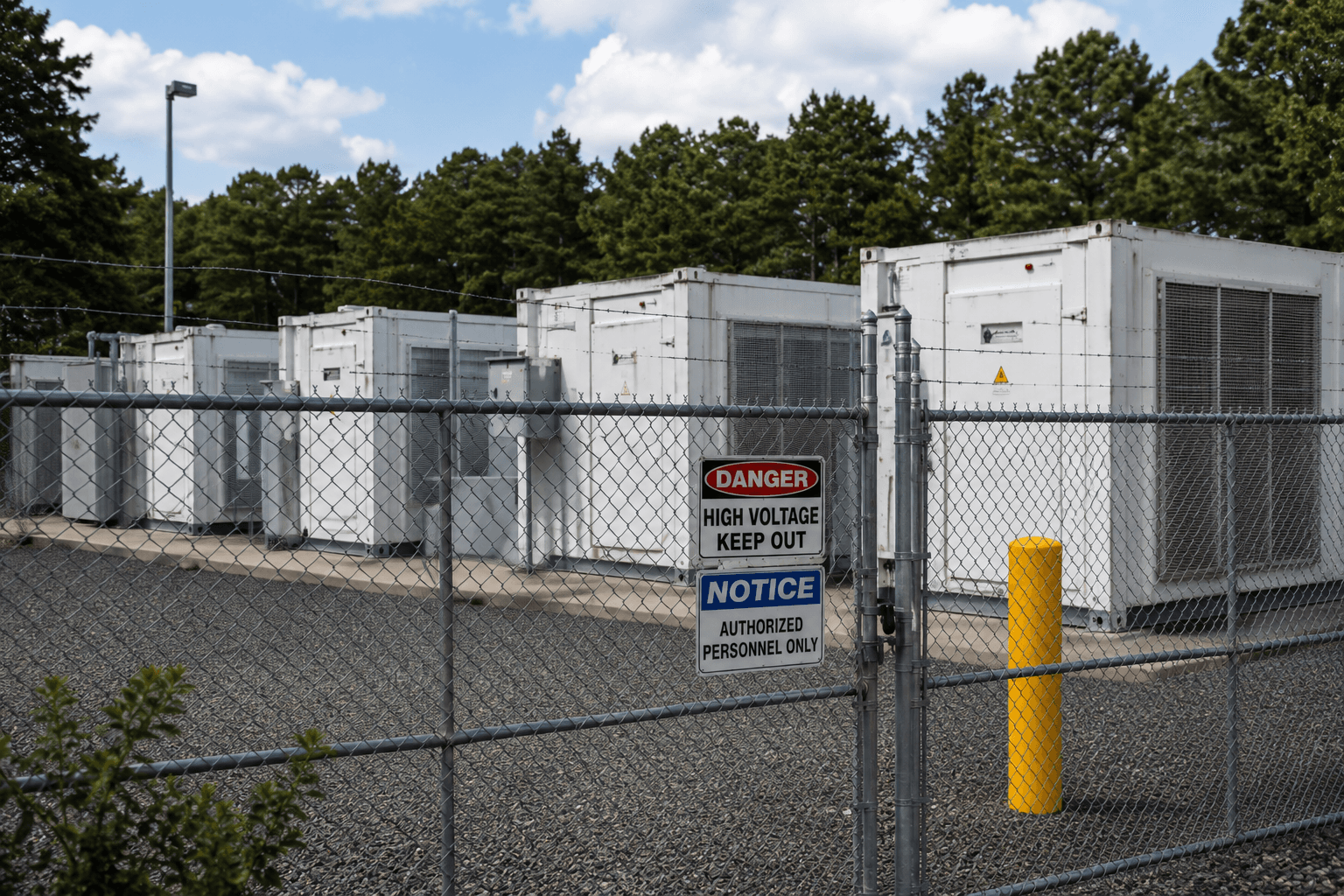
A Suffolk County investigation into possible groundwater contamination following a lithium battery fire in East Hampton is drawing renewed attention to the role large-scale battery storage facilities play in New York’s transition to renewable energy.
County Executive Ed Romaine said the June 2023 fire at the East Hampton Energy Storage Center, a Battery Energy Storage System (BESS) operated by a joint venture of NextEra Energy Resources and National Grid, remains under investigation after county testing detected contaminants in the area.
“Three years ago, there was a fire at the BESS with lithium batteries,” Romaine said. “Several fire departments from East Hampton Town responded, and they wound up trying to put the fire out over two or three days with about two million gallons of water, all of which went into the aquifer.”
Romaine said state officials initially assured residents there were no environmental concerns.
“DEC said no problem, all is OK, and the governor echoed what DEC said,” he noted. “We found out in April that that was not the case. Our Health Department has done nine test wells, and all of them showed high contamination of PFOS, of 1,4-dioxane and a host of other things.”
The county is offering free testing for nearby private wells while continuing to collect groundwater data.
“Anyone that wants their well tested in the vicinity we’re testing for free,” Romaine said. “As soon as we have data, all of our data will be made public.”
Battery energy storage systems are designed to store electricity generated by renewable sources such as wind and solar for use when those intermittent resources are not producing power. As New York expands renewable generation under its climate policies, the number of battery storage projects is expected to grow.
Romaine said any future county action will be based on scientific findings.
“Whatever we do is going to be driven by the data that we’re getting from our well drillers and from our testing of ground and surface water,” he said. “That’s the water that you and I drink.”
You Might Also Be Interested In

Tunnel to Towers Marks 25th Anniversary With Cross-Country Steel Beam Tour

El Salvador Expands Classroom AI Tutors After Pilot Scores Rise; New York Restricts Student Use
Romaine Details Suffolk Environmental Priorities