

Flock Cameras Face Fourth Amendment Questions
License-plate surveillance systems are drawing scrutiny over whether tracking motorists’ movements amounts to an unconstitutional search.
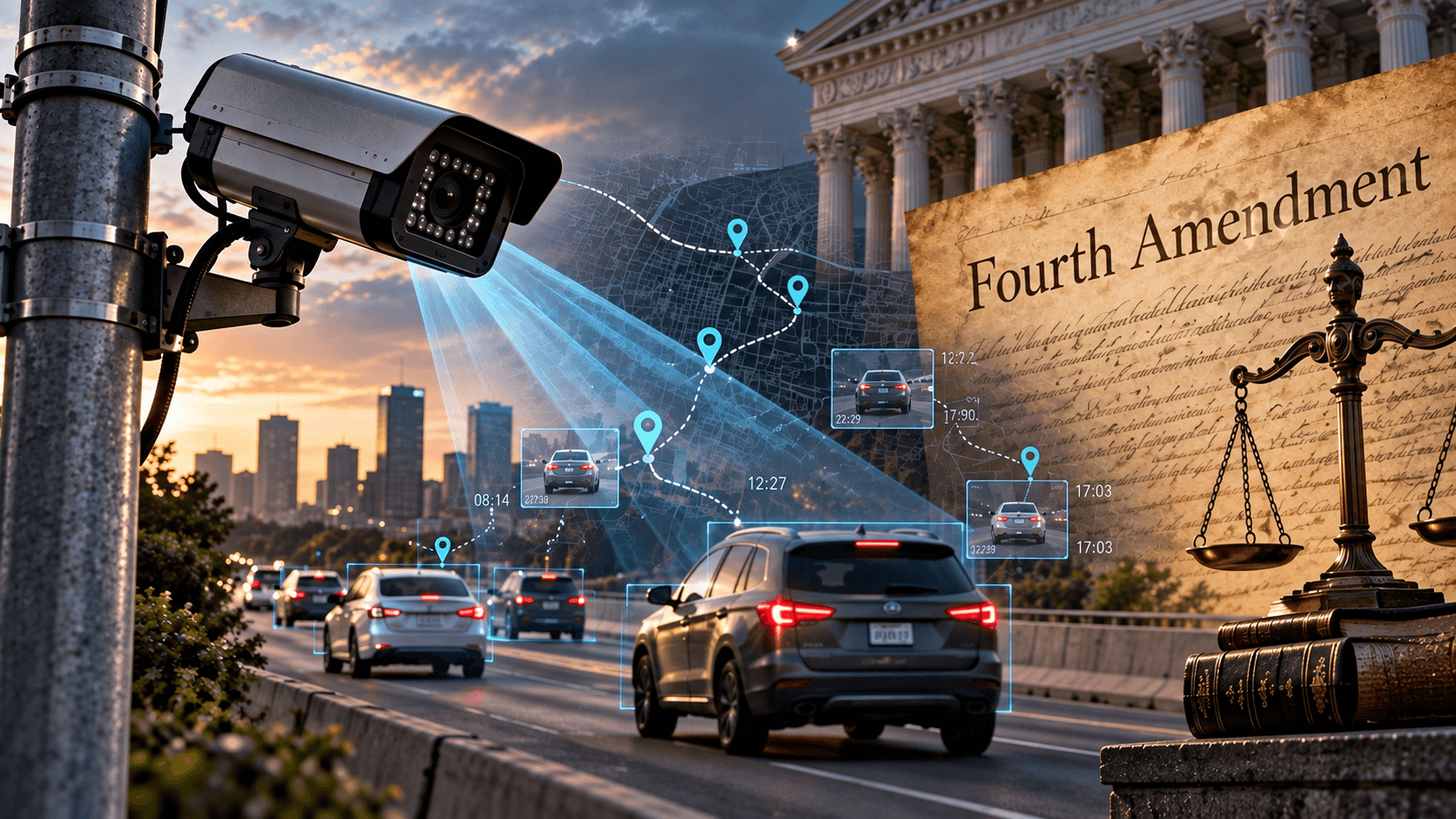
A The growing use of Flock Safety cameras is raising Fourth Amendment questions over whether police can collect and search motorists’ movements without first obtaining a warrant.
The cameras automatically photograph license plates and record when and where vehicles pass particular locations. While motorists generally have little expectation of privacy in a license plate visible on a public road, critics contend a large network of cameras creates something much different: a searchable history of a person’s movements.
That argument gained support in Virginia, where a Norfolk Circuit Court judge ruled that the collection and storage of location information through the city’s Flock network constituted a search under the Fourth Amendment and should require a warrant.
The decision does not establish a nationwide rule, and the constitutional question surrounding automatic license-plate readers remains unsettled.
The controversy intensified last week when Rep. Alexandria Ocasio-Cortez, along with Sens. Bernie Sanders and Jeff Merkley, introduced the Ban Flock Act. The proposal would prohibit federal agencies from using automatic license-plate readers and prevent federal grant money from going to state and local governments that use them.
The issue has also surfaced in Suffolk County political races.
Democratic congressional candidate Chris Galant told the South Shore Press he strongly opposes the cameras, saying they “could often be utilized in malicious ways.”
Republican State Sen. Dean Murray expressed a more measured position, saying the cameras are valuable for finding missing people and solving crimes but acknowledging they are “as big brother-ish as it gets.”
Assemblyman Joe DeStefano, also a Republican-Conservative, similarly said the cameras have legitimate law-enforcement uses but need restrictions to prevent abuse.
The developing legal question may ultimately hinge on the difference between photographing one vehicle on a public street and constructing a detailed record of where that vehicle travels over time.
You Might Also Be Interested In
Flock Camera Ban Bill Sharpens Local Debate
Red, White & Blonde Takes on Midterms, Elections and Voting Scandals

Day School Yes, Dorms No: Islip Blocks Boarding at Bay Shore’s Former Seminary