
Hammering History at the Manor of St. George
A Colonial-era blacksmith shop is being brought back to life at the historic Manor of St. George where ironwork supported the region's maritime industry and supplied armaments and ammunition to American Patriots during the Revolutionary War.
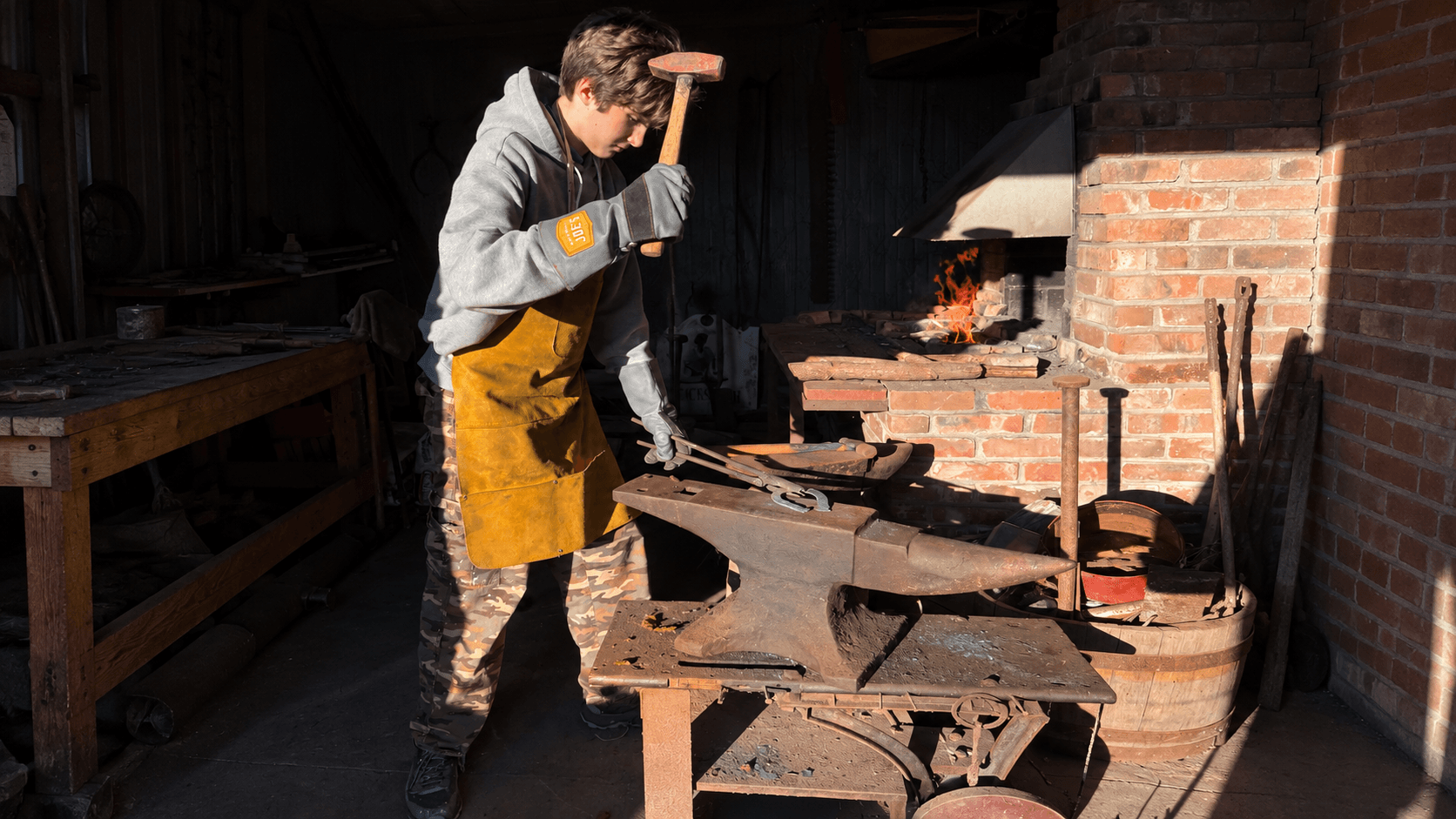
The clang of hammer against anvil and the glow of a roaring fire have returned to the Manor of St. George in Shirley, where a Colonial-era blacksmith forge is coming back to life through the efforts of an East Moriches teenager.
Townes Costeplane has been firing up the historic forge, heating iron and hammering it into shape using vintage tools and anvils that recall the craftsmanship practiced there generations ago.
“I’ve always been interested in blacksmithing and metalwork, and this is a great opportunity to work with a forge and all the tools,” Townes said. “I really feel that I’m reliving the history of my country.”
“This forge is part of the Unkechaug Nation’s contribution to American history,” said Chief Harry Wallace, who recounted how an Indian gunsmith named Treadwell supplied arms and ammunition to Patriots during the Revolutionary War. “Our people possessed skills in metalworking, whaling and gunsmithing, and those skills were put to use in the fight for independence. Seeing the forge operating again brings an important part of that history back to life.”
The forge was also used to manufacture harpoons and spears used in the local whaling industry, Wallace noted. Whales captured in local waters were processed in large cauldrons at Fireplace, another historic location upstream from the manor.
Manor Trustee John Scott Prudenti, watching Townes hammer iron on the antique anvil, emphasized the importance of preserving the forge as a historical resource.
“Just imagine what this forge witnessed during the American Revolution,” Prudenti said. “The same kind of tools, the same fire and the same sound of a hammer striking an anvil. It's remarkable to see a young man bringing that history to life.”
The manor figured prominently in the Revolution when British troops occupied the estate and established Fort St. George. Colonel Benjamin Tallmadge led an American raid against the fort in November 1780 to drive the Redcoats out.
“We have an obligation to preserve more than the buildings at the Manor of St. George,” Prudenti added. “We want people to experience the history that took place here. Watching Townes work at the forge shows exactly why this is such an important historical resource.”
Townes will demonstrate traditional blacksmithing techniques during the March for Liberty Harvest and Heritage Fair on Saturday, November 21, from 11 a.m. to 3 p.m. The event will also feature a 1.5-mile commemorative walk beginning at noon and ending at the manor.
You Might Also Be Interested In

Suffolk Leads State in High-Paid Government Workers

Industrial Fishing Fleets Threaten Ocean Food Chain
DeStefano Secures $50,000 for Historic Preservation