EPA Finds No Lead in Public Water Samples After Iowa Army Blast
Soil, dust and household tap results are still being validated, and a farmer near the plant awaits independent tests
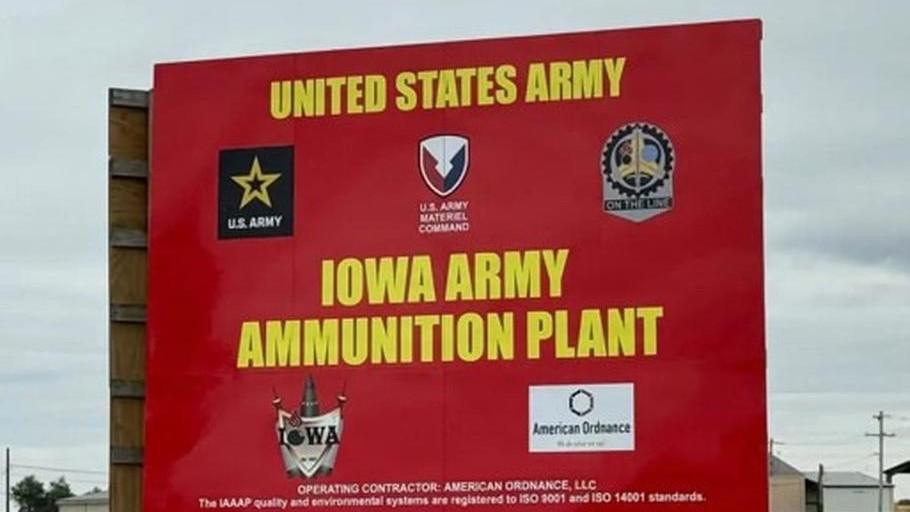
Initial federal tests found no lead in nearly 40 public water supply samples taken after the Army set off about five tons of degraded lead azide at an Iowa ammunition plant, the Environmental Protection Agency said Saturday.
The agency limited that finding to those samples, covering finished drinking water and untreated water drawn at plant intakes. Its air monitors also read zero airborne lead for 30 straight hours after the detonation. Results for household taps, soil, dust and laboratory-analyzed air samples have not cleared validation, and the EPA said they will appear on its Iowa data page over the coming days.
Before the blast, the agency pulled baseline samples from 35 sources of drinking water in Iowa, Illinois and Missouri, none along the path the plume took. Four held small traces of lead, roughly 1 to 2 parts per billion, far under the federal action level of 15 parts per billion, and the EPA said that lead predated the detonation. Crews have collected more than 3,200 samples drawn from air, soil, dust and water in all, roughly half after the blast. Post-blast sampling was finished at nearly 90 percent of the homes tested beforehand.
The target was 68 drums of lead azide kept in two earth-covered bunkers inside the Middletown plant, formally the Iowa Army Ammunition Plant. The EPA's regional office learned of the drums in March, when the Army told it the material had crystallized and might react to a shock. The Army later concluded that the crystals left the compound sensitive to friction and shock, with a risk of spontaneous explosion.
The Army ruled out applying a chemical solution to the barrels and hauling them to the plant's permitted open detonation area, because moving or even opening them risked setting off the contents. Leaving them in place risked an uncontrolled blast. The Army settled on detonating in place, with barrier walls around the bunkers and misting equipment to dampen the soil.
An open house run by the Army in Middletown in October drew nearly 200 residents, and the EPA issued the detonation permit less than two weeks before the blast. The date slipped twice before the Army acted Wednesday. Beforehand, FEMA recommended that residents of Middletown and a five mile cone southwest of the plant relocate temporarily and advised people 5 to 20 miles southwest to stay indoors with windows closed, and the governor declared a disaster in three counties.
Maj. Gen. Eric Shirley, who commands Army Sustainment Command, said afterward that all of the barrels were "definitively removed" and that there was "no infrastructure damage." Robert Cekada, who directs the federal agency for alcohol, tobacco, firearms and explosives, said the design "ensured that the blast drove the explosion into the ground" along a channel built to limit lead dispersion. Mayor Rodney Johnson of Middletown said, "We did not feel anything. We did not see anything."
Democratic Gov.-elect Rob Sand wrote on social media the day of the blast, "The lead-up to the detonation should never have been so chaotic and unclear." Sand added: "There must be immediate transparency to understand how and why this situation became what it did."
Sue Dyer, who farms corn and beans roughly 18 miles southwest of the site, said on a national radio program Saturday that "We didn't know anything about this until last week." She said the plume projection was not ready "until the day of." Her neighbors are split, she said: "some people are sure that we're absolutely fine, and some people think we're absolutely dead."
The EPA says no safe level of lead has been identified in children, and young children and pregnant women face the greatest risk. In a letter to Gov. Kim Reynolds before the blast, the regional office advised washing surfaces children touch, such as play equipment and handrails, with a hose or a wet rag. Residents who believe the detonation caused losses may seek reimbursement from the Army.
Until the validated results for taps, soil and dust arrive, the water finding stands for the public supply samples alone. Dyer, who had soil samples taken before the blast and plans to sample the same spots again, said she is waiting on government and independent laboratory results alike. "I'm very hopeful that everything's fine, but I'm also a realist and need to wait for the independent tests."
You Might Also Be Interested In

OpenAI Counterclaims Accuse Apple of Taking Hardware Secrets and Pressuring Suppliers

Biden Memoir's Opening Sales Trail Obama, Clinton and Harris
Washington's Next Health Plan Starts at Age 55, and Albany Wants to Finish the Job