
Fractured Parties Head into Election Day
Deepening ideological divisions within both major parties are reshaping congressional races as Republicans and Democrats battle for control of Washington in the November 3 midterm elections.

Since the turn of the century, both the Democratic and Republican parties have been on a divergent journey.
Both parties have become increasingly polarized, particularly over the past four years. From Artificial Intelligence and data centers to foreign aid and immigration policy, Americans have become increasingly dissatisfied with the two-party system, especially since the start of President Trump’s first term.
Now, many Americans, even within their own parties, have found themselves pushed farther from the center-right or center-left toward the far ends of the political spectrum, including the recent uptick in the Democratic Socialists of America.
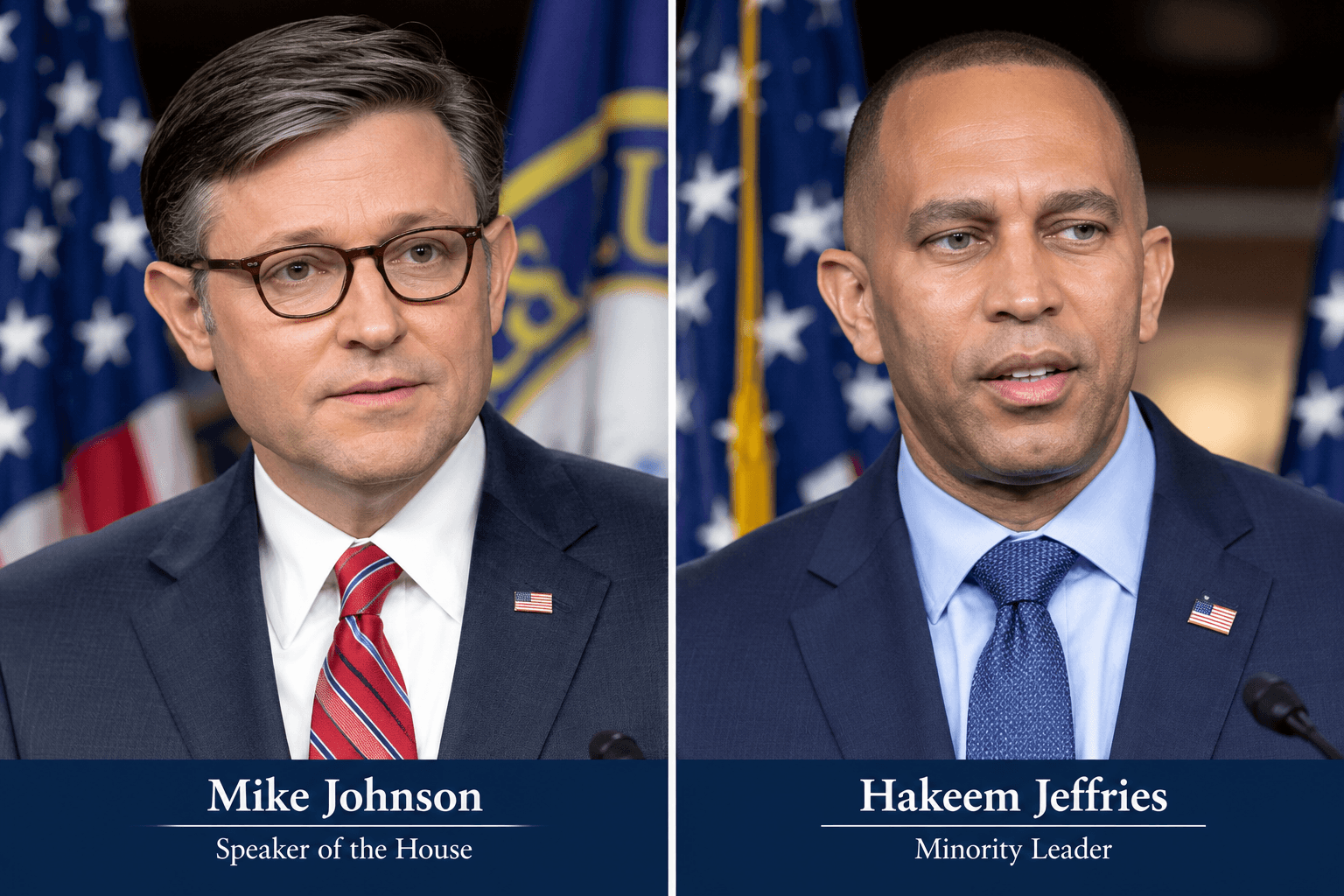
Several forecasters currently favor Democrats to win the House, though the outcome remains uncertain. Yet Speaker Mike Johnson has remained confident in a Republican-controlled House.
Although Senate candidates have been more focused on affordability, anti-Trump sentiment, and social issues, House candidates have been campaigning on many new issues, such as rising opposition to foreign aid, the war in Iran, data centers, and AI.
Many candidates have focused on inflation and immigration, issues Americans have put at the forefront long before the 2026 primary elections. Although a clear majority of Americans support a stronger border and lower inflation, factions within each party are seeing divisions over policies surrounding data centers, Flock cameras, foreign aid, and foreign military involvement that are each worth noting.
Altogether, many pollsters, strategists, and even Kalshi, a prediction market, have declared that Democrats are heavily favored to flip the House.
Apart from the House, all eyes are focused on the Senate, where candidates from several swing states, including some surprisingly close races, are competing on pressing issues.
Since 2016, Democrats have often run on anti-Trump sentiment. Although this was a success in 2020, with strong Democratic turnout coupled with policy changes, Republicans performed well in both the 2022 and 2024 elections.
Republicans won the House in 2022 while Democrats retained the Senate. In 2024, Republicans won the Senate and the presidency. Those national results do not, by themselves, show that outcomes in New York, California, Texas, and Florida drove the shifts in control.
Voters have shown so far that a campaign based solely on being anti-Trump does not resonate with voters.
Republicans across the country, including a few notable names such as Mike Rogers (MI), Ken Paxton (TX), Jon Husted (OH), and others, are facing several far-left opponents endorsed by socialist leaders.
Looking toward Michigan, Abdul El-Sayed, a Medicare for All champion, has been endorsed by Sen. Bernie Sanders and Rep. Alexandria Ocasio-Cortez. El-Sayed faces former U.S. Rep. Mike Rogers, who narrowly lost against Sen. Elissa Slotkin in 2024.
A surprising primary upset in Texas has led to former state Rep. James Talarico becoming the Democratic candidate. Talarico, a progressive, has drawn GOP-aligned attacks over his positions on transgender rights and other social issues.
This race is now seen as one of the most expensive Senate races in U.S. history. Combined advertising spending has topped $500 million, including future ad bookings, and the race is on pace to become the most expensive Senate contest ever.
All in all, Texas, Michigan, Ohio, Alaska, Kansas, Maine, and Iowa will be the deciding elections in determining who will control the U.S. Senate. Other closely watched races include Georgia, New Hampshire, and North Carolina.
One of the more interesting concepts is how primary endorsements have aided or fractured general election chances for candidates on both sides of the aisle.
Though we do not yet know the general election results, the 2026 primary wins have shown us that both parties may be on a new trajectory.
Many candidates running for both the House and Senate have received endorsements from either President Trump or the progressive wing of the left.
An interesting point to note is that President Trump has an over-82% approval rating among registered Republicans and a nearly 95% success rate in primary endorsements across more than 300 races, according to endorsement tracking.
On the other hand, many DSA-backed candidates ousted incumbents and challengers across the U.S. in the 2026 primary elections. These include Brad Lander, who defeated incumbent Congressman Daniel Goldman in NY-10 but was not formally endorsed by DSA, and Darializa Avila Chevalier, a progressive organizer who ousted longtime five-term incumbent Rep. Adriano Espaillat.
These primary results show the influence of endorsements and progressive organizing among primary voters; they do not yet establish how either will affect general election outcomes.
With Election Day just around the corner, candidates from all ends of the political spectrum are fighting for control of the House and Senate. General election results will prove just how powerful a Trump endorsement is beyond the primary season, as well as how much the DSA and progressive groups will grow or reduce their influence.
With affordability, Republicans’ record in Congress, and the war in Iran on the ballot, Americans have started to flood the polls. Early voting has risen in several key states, though turnout varies by state.
You Might Also Be Interested In
The midterms are less than a week away and their outcome will determine America’s future

Ex-FBI Task Force Leaders Accused of Misleading House Panel on Hunter Biden Work
Justice Department Tells California Counties to Set Aside Ballots It Says May Belong to Noncitizens