

GOP Holds Major Cash Edge for Midterms
Republicans hold a sizable fundraising advantage as control of Congress — and positioning for 2028 — hangs in the balance
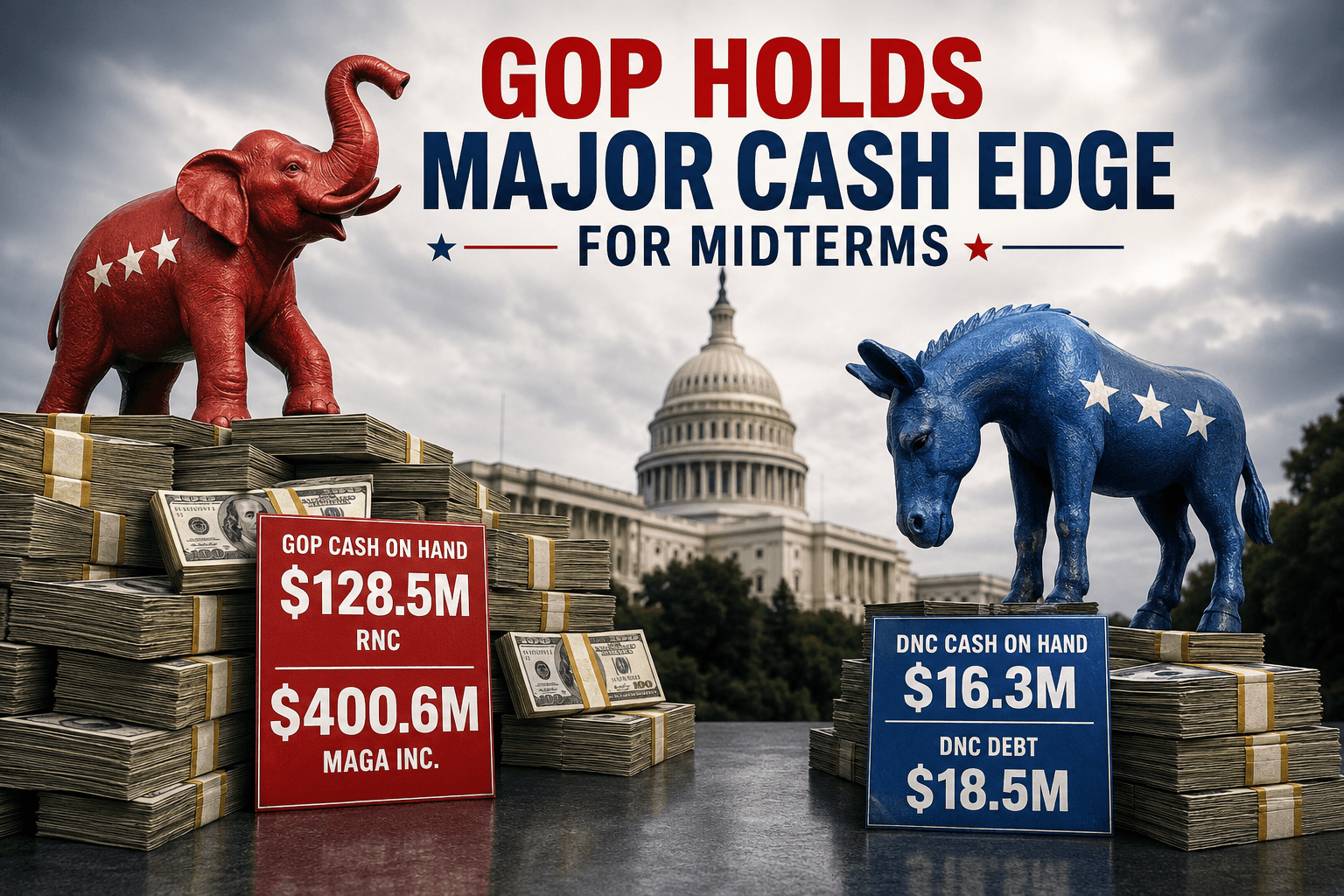
Republicans are heading toward the November midterms with a significant financial advantage over Democrats, holding substantially more cash across the national party, congressional super PACs and Trump-aligned political organizations.
Federal Election Commission filings through June 30 show the Republican National Committee with $128.5 million on hand and no debt, compared with $16.3 million for the Democratic National Committee, which reported $18.5 million in debt. In October, the party put its Washington headquarters in hock to secure a $15 million loan.
Beyond the GOP committees sits an extraordinary reserve: MAGA Inc., the Trump-aligned super PAC, reported $400.6 million in cash after beginning 2025 with $23.8 million.
Republicans also hold advantages among the major outside groups preparing for congressional races. The Republican-aligned Senate Leadership Fund reported $238 million on hand compared with $126 million for the Democratic-aligned Senate Majority PAC.
The advantage extends to the House. The Republican Congressional Leadership Fund reported nearly $142 million on hand, compared with approximately $115 million for its Democratic counterpart. Combined, the two major Republican congressional super PACs held approximately $380 million, compared with $241 million for the Democratic groups — a GOP advantage of about $139 million.
That money can finance television and digital advertising, voter turnout operations, data programs and late spending in close races.
The stakes extend well beyond November. Democrats are seeking control of the House and need a net gain of at least four Senate seats to capture that chamber. Whichever party emerges stronger will gain not only congressional power for President Trump’s final two years in office, but a significant organizational and political advantage heading into the 2028 presidential election.
Still, recent primaries show that money does not always decide elections.
In Texas, Ken Paxton knocked four-term U.S. Sen. John Cornyn out of the Republican primary despite being vastly outspent. More than $71 million in advertising backed Cornyn in the initial primary, compared with less than $5 million supporting Paxton — roughly a 14-to-1 advantage. More than $120 million was ultimately spent on advertising across the primary and runoff.
In Florida, Angie Nixon pulled off an even more dramatic upset, winning the Democratic Senate nomination after raising just $975,000 compared with Alexander Vindman’s $16.3 million.
The lesson is clear: Republicans may have the bigger war chest heading into November, but recent races show campaign cash alone cannot guarantee victory.
You Might Also Be Interested In

South Shore Press Correspondent On The Front Lines Of History

Tennessee Prison Chief Resigns as Ex-U.S. Attorney Who Led 2022 Review Takes On Pike Case

DoorDash Agrees to Pay $131.5 Million Over Underpaid NYC Delivery Workers