
South Shore Press Correspondent On The Front Lines Of History
From combat zones in Iraq and the chaotic fall of Kabul to the halls of the White House, Neil W. McCabe has built a remarkable career covering the people and events shaping the world.
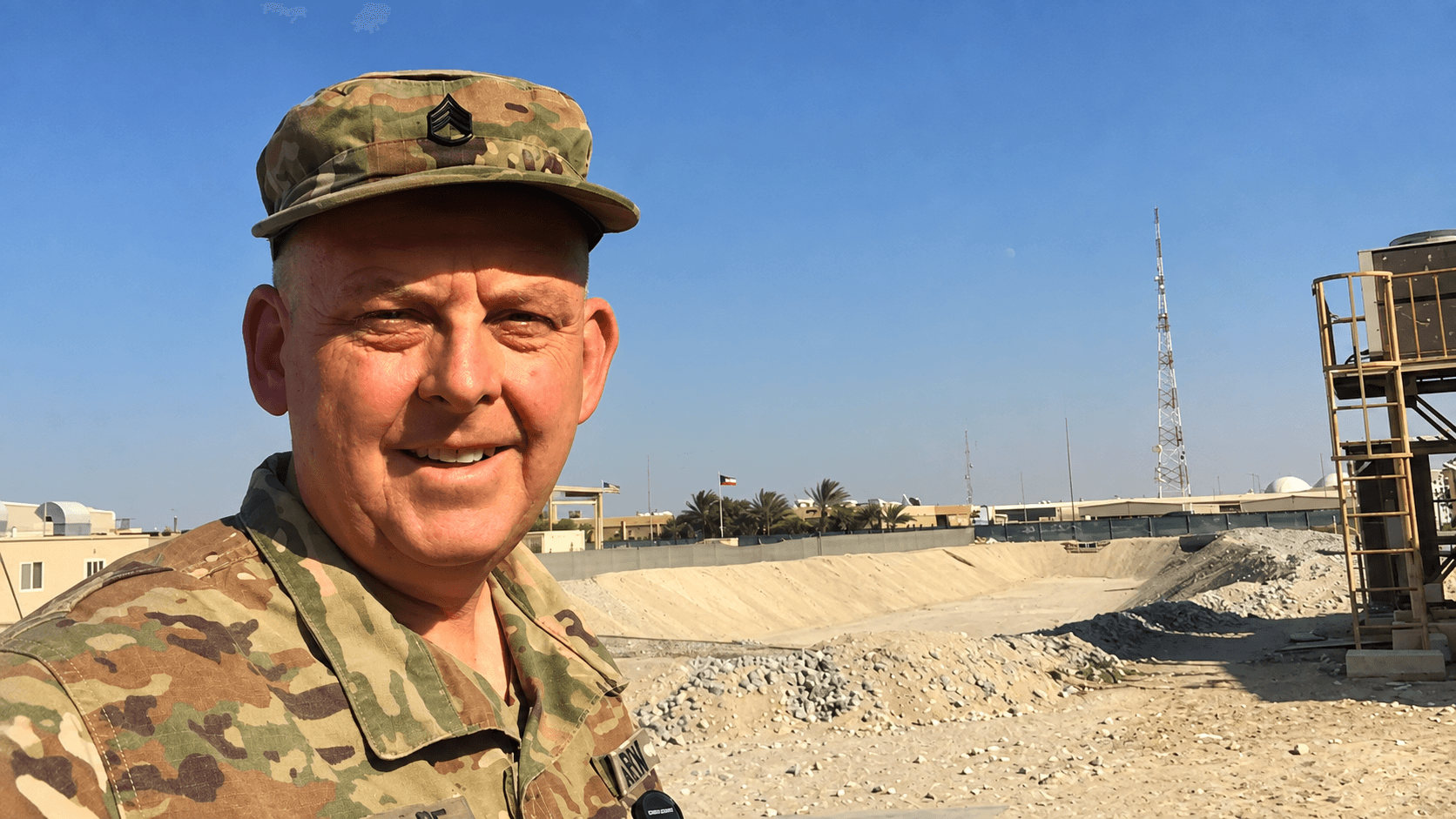
Neil W. McCabe has traveled through Iraqi combat zones aboard military convoys, witnessed the aftermath of the deadly Kabul airport bombing and questioned the president of the United States—all experiences that have shaped the remarkable career of the South Shore Press Washington correspondent.
McCabe’s journey began in Franklin, Massachusetts, where he grew up before embarking on a military career that included eight years of active duty in the Coast Guard and service in the Army Reserve, retiring as a sergeant first class. His reporting career began after attending the Defense Information School at Fort Meade, Maryland, where he studied photojournalism and later broadcast journalism.
“I graduated from the photojournalism program a year before James D. Hamill, now known as JD Vance,” McCabe noted, pointing out that the future vice president was one of three vice presidents to attend the same military journalism program, along with Al Gore and Walter Mondale.
McCabe was managing overnight crews at Target before landing his first newspaper job in 2003 at the Somerville News, a small Massachusetts community publication. He also began writing for Boston’s Catholic newspaper, The Pilot.
His military service subsequently took him to Iraq for 15 months as a combat historian, an assignment that allowed him to travel extensively, interviewing soldiers and commanders.
“I was a hobo soldier,” McCabe related. “I would leave Camp Basra, where our headquarters was, and for six weeks at a time, I would just be hitching rides on convoys and C-130s and Black Hawks.”
Traveling alone, he moved between military installations, documenting the experiences of American troops. “I would just sort of wander into these camps and then do my interviews and then move on to the next town.”
The freedom came with considerable danger. “Every destination I was at was subject to some kind of rocket attack while I deployed,” McCabe said.
He remembers one remote installation near the Iranian border, where a dozen American soldiers lived behind sandbags without hot water. “They were the happiest soldiers I met.” Their secret, McCabe explained, was being far removed from the military bureaucracy. “They were as far away from the flagpole as you could be and still be in Iraq.”
His travels occasionally produced humorous encounters. After repeatedly crossing paths with a command sergeant major from the 1st Armored Division, McCabe was given the division’s shoulder patch. “He said, ‘McCabe, everywhere I go, I keep bumping into you.’”
“One time, I saw Capt. Joseph R. Biden III, the president’s son, at Camp Victory, where he was deployed as a JAG officer with the Delaware National Guard,” McCabe recounted. “I decided not to bother him, but later when I was on a convoy with Delaware Guardsmen, I asked about him.”
“I really wanted the guys to tell me he was an obnoxious jerk, but they didn’t,” he said. “Instead, they all said he was a great guy. When he died, I looked back upon his deployment with respect. He was one Army lawyer the enlisted all liked.”
One of McCabe’s most sobering experiences came during the chaotic American withdrawal from Afghanistan in August 2021. Stationed in Kuwait as a senior noncommissioned officer supporting military logistics operations, he helped document the evacuation and preparations to receive Afghan refugees.
He was inside a military operations center shortly after a suicide bombing at Kabul’s Abbey Gate killed 13 American service members and scores of Afghans. “I was watching live footage from a drone of the Abbey Gate situation,” McCabe said. “It was absolutely horrific. I’ve never been in a room that quiet.”
McCabe’s civilian journalism career has been equally varied, including positions at Human Events, Breitbart and One America News, where he served as Washington bureau chief. He also worked as communications director for Project Veritas and at the Justice Department before joining Real America’s Voice as a national political reporter.
Today, he covers the White House and Capitol Hill, frequently finding himself within speaking distance of President Donald Trump. “I’ve interviewed him. I’ve probably asked him questions maybe 10 or 12 times,” McCabe said.
Among his queries was whether Trump still supported a pardon for baseball legend Pete Rose. The president confirmed that he did. Another time, McCabe asked Trump which international organization was more dysfunctional, NATO or OPEC. “He said, ‘I don’t really know a lot about OPEC, but I’m very disappointed with NATO.’”
For McCabe, Washington’s political battles represent another fascinating chapter in a career spent pursuing stories wherever they lead. “I love the swamp,” he admitted. “I love the intrigue and the drama.”
Reflecting on his military years, he remains particularly grateful. “I had a good run,” McCabe said. “I got more out of it than I gave, that’s for sure.”
You Might Also Be Interested In
Tennessee Prison Chief Resigns as Ex-U.S. Attorney Who Led 2022 Review Takes On Pike Case

DoorDash Agrees to Pay $131.5 Million Over Underpaid NYC Delivery Workers

OpenAI Says Its AI Agents Reached SEC, Census Sites in Unplanned Ways