

Surgisphere: The Lasting Effects of COVID Mistruths
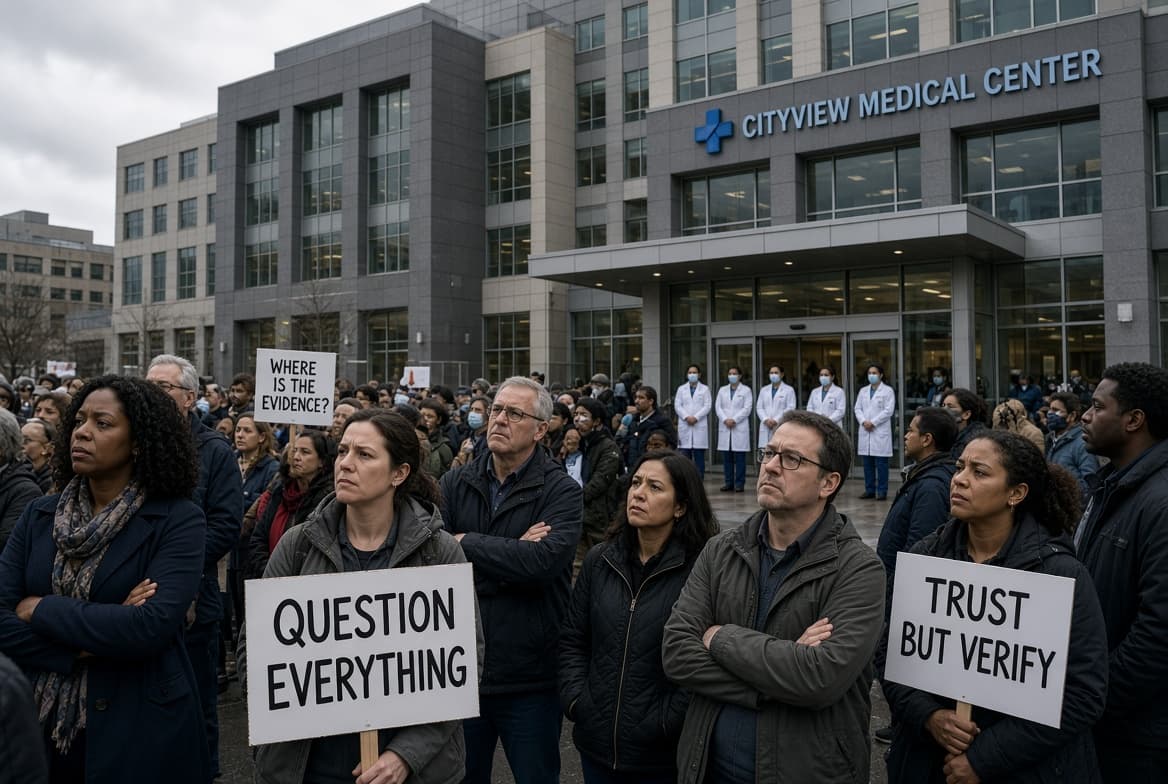
In late May 2020, as hospitals worldwide struggled to treat a novel virus, The Lancet published a study that instantly changed medical practice. The paper, “Hydroxychloroquine or chloroquine with or without a macrolide for treatment of COVID-19: a multinational registry analysis,” claimed to examine nearly 96,000 patients from 671 hospitals on six continents. It concluded that the inexpensive antimalarial hydroxychloroquine, given alone or with an antibiotic, raised the risk of death and dangerous heart-rhythm problems. Within days the World Health Organization paused the hydroxychloroquine arm of its Solidarity trial. Regulators in France and the United Kingdom halted enrollment in their own studies. Doctors who had been using the decades-old, off-patent drug stopped prescribing it.
The paper did not appear in a vacuum. President Donald Trump first praised hydroxychloroquine at a White House briefing on March 19, 2020, calling early reports “very, very encouraging.” Two days later he tweeted that the combination with azithromycin could be “one of the biggest game changers in the history of medicine.” Prescriptions surged. Political adversaries and much of the national press responded by treating the drug itself as a loyalty test: support for it was framed as MAGA credulity, opposition as scientific virtue. On May 18 Trump announced he was taking the pills himself. Four days later The Lancet published the Surgisphere analysis. The timing converted a clinical question into a political one and gave the paper an audience primed to treat its conclusions as a rebuke.
The study carried the names of four authors: Harvard cardiologist Mandeep Mehra, University of Zurich’s Frank Ruschitzka, University of Utah’s Amit Patel, and Sapan Desai, founder of a little-known Chicago firm called Surgisphere. The prestige of The Lancet and the institutional affiliations attached to the byline gave the findings immediate authority. Few asked how a tiny Illinois company with a handful of employees had assembled the largest COVID-19 dataset on Earth.
Independent researchers soon noticed impossibilities: more Australian deaths in the Surgisphere numbers than the Australian government itself reported; African hospitals supposedly contributing sophisticated electronic records that strained credulity; hospitals that later said they had never heard of Surgisphere.
On June 4, 2020—The Lancet retracted the paper. A companion study in the New England Journal of Medicine that used the same database was pulled the same day. The three academic authors requested the retraction. They stated they had never seen the raw patient data. Mehra later said the numbers reached him only in aggregate form. Ruschitzka’s institution confirmed he had no role in data collection. Patel, Desai’s brother-in-law, likewise lacked access to the underlying records. When an independent auditor asked Surgisphere for the full dataset, client contracts, and server audit reports, the company refused. No hospital ever confirmed it had supplied records. Desai did not join the retraction request.
Large randomized trials that followed did not reproduce the catastrophe Surgisphere described. Britain’s RECOVERY trial found 28-day mortality of 27.0 percent with hydroxychloroquine versus 25.0 percent with usual care—a difference that was not statistically significant—and no increase in major new cardiac arrhythmias. The WHO Solidarity trial produced a similar null result on mortality. Hydroxychloroquine did not save hospitalized patients; neither did it double their death rate or produce the arrhythmia epidemic claimed in May 2020. The specific harm signal that stopped trials worldwide was an artifact of data that never existed. Surgisphere’s website disappeared in mid-June. Its social-media accounts were deleted. Desai stopped giving interviews. No Department of Justice investigation followed. The scientific record was marked “retracted,” and the episode receded from headlines.
Why a small Chicago company would fabricate a dataset large enough to halt global trials remains unknown. Cynics note that hydroxychloroquine cost pennies and had long been off patent, while the treatments that filled the vacuum were proprietary products. Those observations are speculation; Surgisphere left no paper trail that would allow anyone to prove motive. What is not speculation is the sequence: a president’s comments turned a cheap generic into a political symbol, a paper published in the world’s most prestigious medical journal then supplied the scientific pretext to sideline it, respected names who later admitted they had never examined the data lent their authority, and the institutions that amplified the paper moved on with little more than an apology.
Patients watched an entire treatment option vanish on the strength of numbers that never existed. The result is a public that now approaches medical pronouncements with skepticism—skepticism earned by the record, not invented by politics. Six years later the company is gone, the authors have distanced themselves, and the “why” is still a blank page. The distrust remains. One must wonder whether that was the intended outcome of the whole escapade.
You Might Also Be Interested In

Pump Pain Outruns Crude: Refinery Hits, Not Just Oil Supply, Are Driving Local Fuel Costs
White House Claws Back $810 Million in Congressionally Approved Funds
Trump and Xi End State Visit With Trade Truce Extended, Big Issues Unresolved