

The Changing Face of American Politics
With New York City Mayor Zohran Mamdani bringing democratic socialism into the national spotlight, the South Shore Press takes an in-depth look at the origins, evolution and philosophies of America’s major political movements.
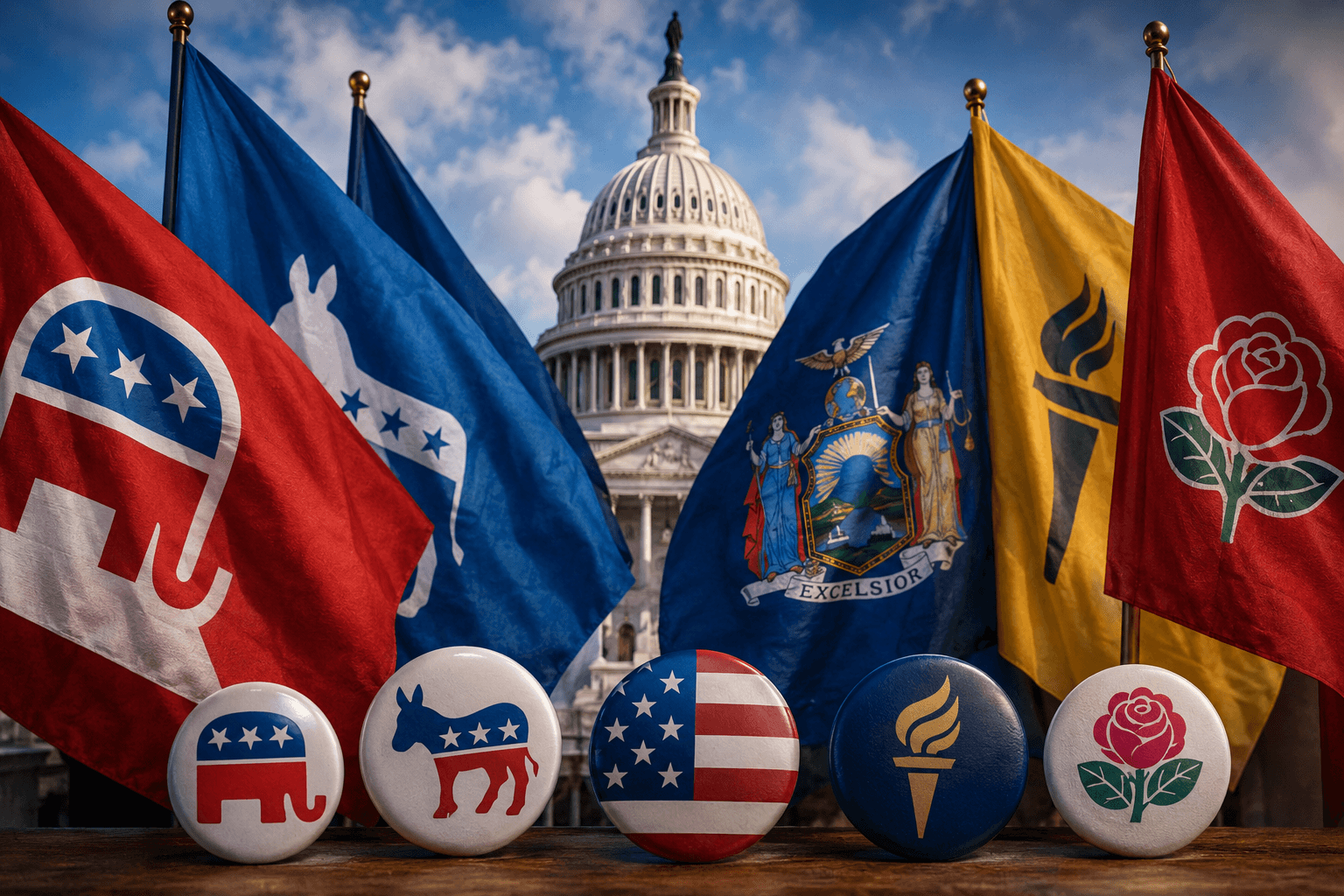
The election of Zohran Mamdani as New York mayor has sparked renewed interest in democratic socialism, prompting many Americans to wonder how it compares with the Republican, Democratic, Conservative and other political movements that have long shaped the nation’s political landscape.
The answers lie in more than two centuries of political history—a history the South Shore Press examines through the origins, evolution and philosophies of the political movements shaping America today.
While the Republican and Democratic parties currently dominate national elections, both have undergone dramatic ideological shifts over time. Meanwhile, New York’s Conservative Party has become one of the nation’s most influential third parties, and the Democratic Socialists of America have emerged from the political fringe to become an increasingly visible force within the progressive movement.
The Democratic Party is the nation’s oldest active political party. Its origins date to 1828, when supporters of Andrew Jackson organized around a philosophy favoring greater political participation for ordinary citizens and limiting the power of the federal government.
Throughout most of the 19th century, the party drew much of its support from Southern states and generally defended states’ rights, including the institution of slavery before the Civil War. Following Reconstruction, Democrats remained politically dominant across much of the South for decades.
The party began its modern transformation during President Franklin D. Roosevelt’s New Deal in the 1930s, dramatically expanding the role of the federal government in response to the Great Depression. While the national Democratic Party ultimately embraced civil rights legislation under Presidents Harry Truman and Lyndon B. Johnson, many Southern Democrats fiercely opposed those measures.
Over time, the party increasingly embraced labor unions, environmental protections, expanded social programs, abortion rights, LGBTQ+ rights, voting rights initiatives and a broader federal role in health care and education.
Today, Democrats generally support a more active federal government, expanded social programs, climate initiatives, labor protections and progressive taxation. Immigration policy has become one of the sharpest contrasts between the two major parties, with Republicans arguing Democratic policies have weakened border security while Democrats maintain they support both border security and expanded legal immigration.
The Republican Party was founded in 1854 by opponents of slavery’s expansion into western territories. The new party united former Whigs, Free Soilers and anti-slavery Democrats around a platform opposing the spread of slavery.
Its first president, Abraham Lincoln, was elected in 1860. His election triggered the secession of Southern states and the Civil War. Under Republican leadership, the Union was preserved and slavery was abolished through the 13th Amendment.
During the late 19th century, Republicans became closely associated with industrial growth, business development and protective tariffs. Throughout the 20th century, the party increasingly embraced lower taxes, free-market economics, reduced regulation and a strong national defense.
President Ronald Reagan reshaped modern conservatism during the 1980s through tax cuts, deregulation and an aggressive foreign policy toward the Soviet Union. More recently, President Donald Trump redirected the party toward an “America First” agenda emphasizing border security, immigration enforcement, domestic manufacturing, energy production, trade reform and reducing the size of the federal bureaucracy.
Today, Republicans generally advocate for lower taxes, fewer regulations, school choice, expanded domestic energy production, stronger immigration enforcement, Second Amendment gun rights and a more limited federal government.
The Conservative Party of New York State occupies a unique place in American politics. Founded in 1962, it emerged after conservatives grew dissatisfied with what they viewed as the increasingly moderate direction of New York’s Republican Party under Governor Nelson Rockefeller.
Unlike most third parties, the Conservative Party rarely competes directly against Republicans. Instead, it frequently cross-endorses GOP candidates through New York’s fusion voting system, allowing them to appear on multiple ballot lines. That strategy has given the party influence far beyond its voter enrollment.
Over the decades, the Conservative Party has helped elect officials including U.S. Senator James Buckley, Governor George Pataki and numerous members of Congress, the State Legislature and local governments. In fact, Conservative backing has often been the difference-maker on Long Island, providing the margin of victory for many Republican officeholders.
The party continues to push for lower taxes, limited government, fiscal responsibility, strong law enforcement and traditional conservative principles.
The Democratic Socialists of America (DSA) represent the newest of the political movements at play nationwide. The organization was formed in 1982 through the merger of two socialist groups but remained relatively small for decades.
Membership surged following Senator Bernie Sanders’ 2016 presidential campaign, even though he identifies as an independent rather than a member of the DSA. His proposals energized younger progressive voters and helped bring democratic socialism into mainstream political discussion.
Unlike Republicans and Democrats, the DSA is not a political party. It is a political organization that endorses candidates, many of whom run as Democrats in primary elections while advocating democratic socialist policies. Mamdani’s upset victory over former Gov. Andrew Cuomo in the Democratic primary shook the political establishment and contributed to renewed attention on DSA-backed candidates across the country.
Its policy priorities include universal health care, tuition-free college, rent control, stronger labor unions, higher taxes on wealthy Americans and expanded social welfare programs. Many of these positions closely overlap with those of New York’s Working Families Party, which maintains its own ballot line while frequently endorsing Democratic candidates.
As the DSA movement gains prominence, it faces increased scrutiny from critics who argue that some of its policy positions—including greater public ownership of certain industries, expanded government control over health care and housing, and significantly higher taxes on the wealthy—reflect principles associated with socialism or communism.
The movement has attracted increasing attention in New York through the political rise of Zohran Mamdani, whose election as mayor has renewed debate over democratic socialist policies and their potential impact on the nation’s largest city. Supporters argue democratic socialism offers practical solutions to rising housing costs, economic inequality and access to health care. Critics argue many of its proposals would significantly expand the size and cost of government while increasing taxes and regulation.
Whether voters identify as Republican, Democrat, Conservative, Democratic Socialist or independent, understanding where these movements originated—and how they have evolved—provides important context for today’s political debates.
You Might Also Be Interested In

Never Forget Is Not Enough: Twenty-Five Years Later, America Still Needs Accountability

Nation Marks 25 Years Since 9/11 With New Toll in View

A $5,000 Check Won’t Fix Washington’s Trillion-Dollar Habit
