
A $5,000 Check Won’t Fix Washington’s Trillion-Dollar Habit
A Promise That Will Never Happen, But May Not Matter Anyway
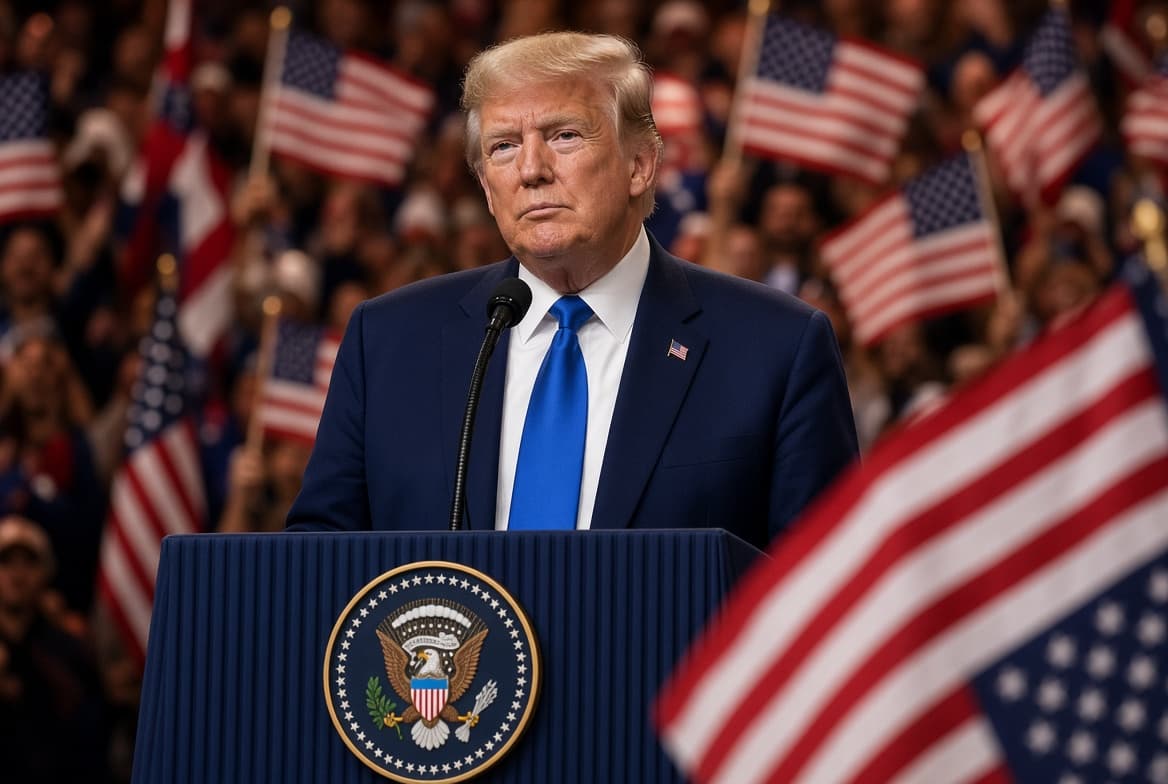
President Trump told a Republican crowd in Dallas this week that if the GOP holds Congress in November, every adult American will get a $5,000 “Trump dividend.” He did not say who qualifies, when the money would go out, or how it would be paid for. He did not need to. There are something like 260 million to 270 million adults in this country. Five thousand dollars each is well over a trillion dollars.
That kind of check would feel real at the kitchen table. It is also the kind of spending that helps keep prices high for the people who can least afford it. Extra cash does not conjure more groceries, apartments, or used cars. It just gives everyone more money to bid for the same stuff. Households living paycheck to paycheck spend most of what they earn on necessities. They feel inflation first, and they feel it longest.
Congress would have to pass it. That is a much higher bar than a convention speech. Republicans already killed an earlier version of this idea when it was framed as a dividend from tariff revenue. Fiscal conservatives and the party’s hawkish wing are already calling this one untenable. Even if Republicans keep the House and Senate, the odds of a trillion-dollar payout getting through this year are slim — maybe 5 percent, 10 percent if you are feeling generous. It reads like a campaign contrast with Democrats more than a finished bill.
The more important point is not whether the checks ever arrive. Against the budget path we are already on, another trillion dollars is almost a rounding error. That is not an argument for writing the checks. It is an argument that the starting point is already that bad.
The Congressional Budget Office’s latest ten-year outlook is the closest thing Washington has to an official scorecard. It sees a $1.9 trillion deficit in fiscal 2026, about 5.8 percent of the economy. By 2036 the annual hole is $3.1 trillion, or 6.7 percent of GDP. For the next few years, deficits hang around the mid-to-high 5 percent range — call it $1.9 trillion in a decent year and more than $2 trillion when things run hotter. Later in the decade they drift toward 6 to 7 percent of GDP, which is $2.5 trillion to $3 trillion a year. Add it up and you get more than $23 trillion in new red ink over ten years. The 50-year average deficit is 3.8 percent of GDP. We are running far above that in peacetime, with unemployment projected to stay below 5 percent.
The debt follows the deficits. Gross federal debt is already about $40 trillion. Debt held by the public — the bonds sold to investors — goes from about $32 trillion this year to $56 trillion in 2036. Total debt, including what the government owes its own trust funds, is headed toward the mid-$60 trillion range. Debt as a share of the economy rises more than 20 percentage points and tops the World War II record.
Interest is the part of the budget that keeps compounding whether anyone votes for it or not. The Treasury is on track to spend about $1 trillion this year just to service the debt, and about $2.1 trillion by 2036. That $1 trillion is already about 19 percent of all federal tax revenue, larger than the defense budget, and roughly even with Medicare — the two biggest program line items in the federal government. By 2036, interest is about 26 percent of projected revenue, still larger than defense, and larger than Medicare as well. A generation ago the country spent that money on programs, or sent it back in tax cuts. Increasingly it just pays for yesterday’s borrowing.
None of this assumes a war, a recession, a depression, or another pandemic. Those are the base-case numbers. Historically, it is exactly those surprises that blow out budgets in a hurry by reducing tax revenue and increasing spending. September 11 and Covid are two great examples of our budget getting blown up.
People used to joke about a billion here and a billion there. We have moved from B to T. A $5,000 check would be real money in a lot of households in this community. In Washington it barely moves the needle on a budget that is already compounding out of control. The midterms will decide who writes the next bills. They will not, by themselves, change the arithmetic.
You Might Also Be Interested In

Soros-Backed Group Maps New York for Migrants

Public Urged to Weigh In on New Census Rules

Is Hochul’s sanctuary state denial the lie of the year?