

America Has Voted. Now Can We Learn to Live With Each Other Again?
But somewhere along the way, we crossed a dangerous line. We stopped treating political disagreements as differences of opinion and started treating them as moral indictments of our fellow Americans.
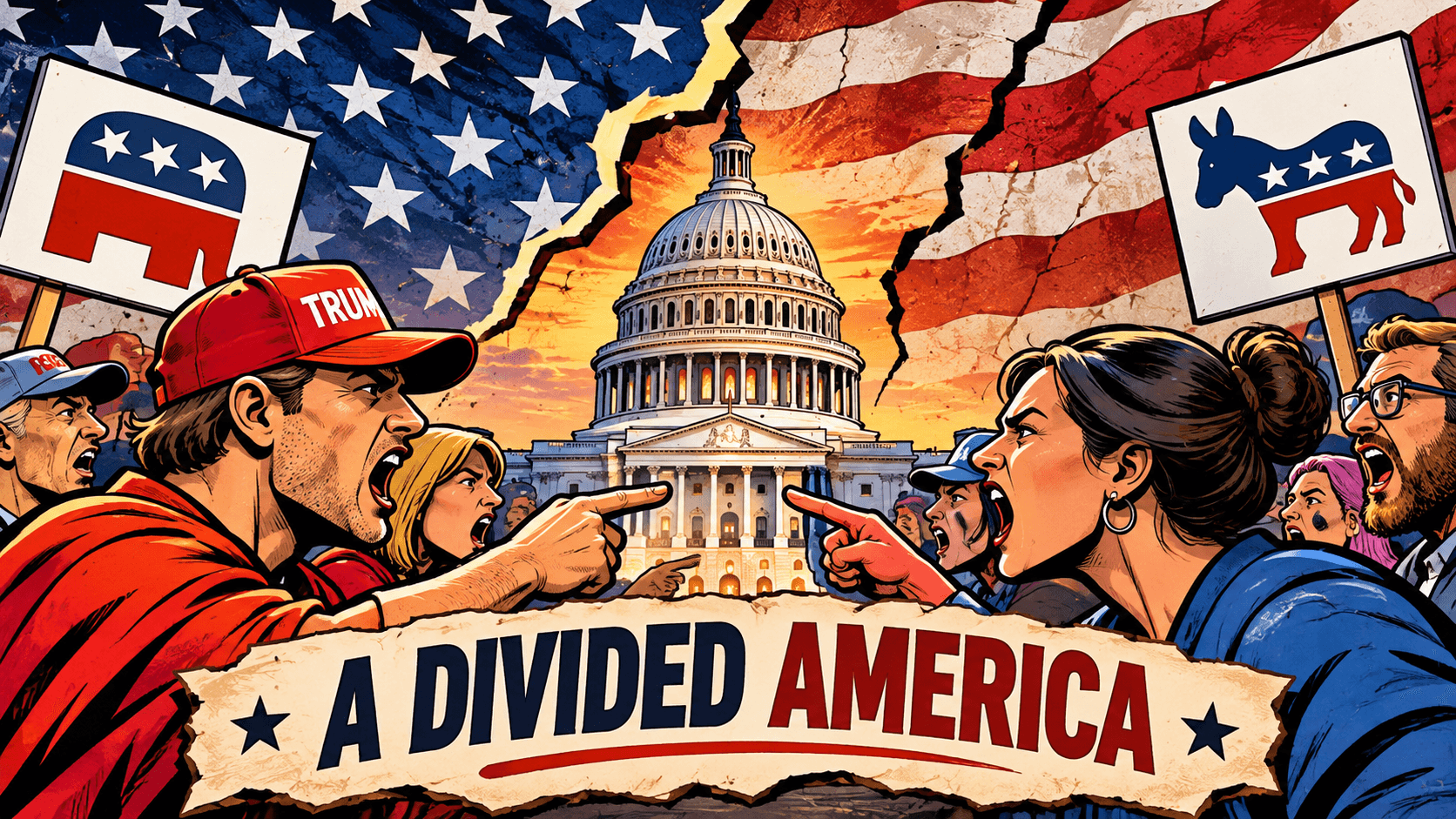
Another election is behind us, and regardless of who is celebrating and who is licking their wounds, one thing remains painfully obvious: America is a deeply divided nation, and the temperature of our political discourse has reached a point that should concern every single one of us.
Some Americans are celebrating victories, others are mourning defeats, and millions are simply exhausted by the endless political warfare that has consumed our national conversation.
I have spent enough time in politics to understand that elections are emotional. They should be. Our elections determine the direction of our communities, our states, and our country. People invest their hopes, their fears, their money, and their time into candidates and causes they believe in. There is absolutely nothing wrong with that.
But somewhere along the way, we crossed a dangerous line.
We stopped treating political disagreements as differences of opinion and started treating them as moral indictments of our fellow Americans. A Republican is no longer simply a Republican, and a Democrat is no longer simply a Democrat. Instead, we have allowed ourselves to believe that anyone who votes differently must somehow be ignorant, dangerous, or fundamentally un-American.
That mentality is poisoning our republic.
I am a conservative Republican. I have strong convictions, and anyone familiar with me knows I have never been particularly shy about expressing them. I believe in limited government, individual liberty, secure borders, and the principles that made this country exceptional. None of that has changed, nor should anyone expect it to.
But believing passionately in something does not require me to hate someone who believes differently.
And frankly, I think we have forgotten that.
Social media has transformed political disagreement into a blood sport. Every comment becomes a controversy, every disagreement becomes a personal attack, and every election is portrayed as the final battle for America’s survival.
The outrage is constant, the accusations are relentless, and the consequences are increasingly personal.
Families have stopped speaking. Friendships have dissolved. Neighbors who once shared barbecues now avoid one another because of a political sign on the front lawn.
Think about how absurd that is.
We are allowing politicians, television personalities, and social media algorithms to dictate how we treat people we have known and loved for decades.
And for what?
An election?
I say this as someone who has experienced the absolute best and worst of American politics. I have seen the excitement of victory, the bitterness of defeat, the cruelty of public judgment, and the extraordinary capacity of people to show compassion when it is least expected.
Those experiences have taught me something important: Politics is temporary. Our humanity should not be.
The results of this election will shape the next chapter of American government, but they should not determine whether we can sit across a dinner table from someone who disagrees with us.
We can fight fiercely over policy without destroying one another personally. We can demand accountability without celebrating someone’s suffering. We can defend our convictions without abandoning basic decency.
And perhaps most importantly, we can recognize that loving America does not require every American to think exactly alike.
To those celebrating, enjoy your victories, but remember that winning an election does not give you a license to humiliate your neighbors.
To those disappointed, remember that losing an election does not mean losing your country.
Democracy requires both winners and losers, but a functioning republic requires something far more important: citizens willing to accept that political power changes hands and that disagreement is not an act of treason.
America has survived wars, economic depressions, political scandals, and moments of extraordinary national uncertainty. We have endured because the bonds holding us together have historically been stronger than the disagreements pulling us apart.
Those bonds are being tested again.
The next election will come soon enough. There will be new candidates, new controversies, new promises, and undoubtedly another round of political mudslinging.
But between now and then, perhaps we should remember that the person voting differently from us is still our neighbor, our coworker, our friend, or our family member.
We do not have to surrender our principles to rediscover our respect for one another.
America does not need fewer convictions. It needs less hatred.
Because at the end of the day, Republicans and Democrats may disagree about how to govern this country, but we still have to live in it together.
And no election victory is worth losing our national soul.
You Might Also Be Interested In

Engaging our local retired veterans and their special stories of military service
FLOTUS Could Win Nobel Peace Prize her Husband Craves

Futbol and Its Discontents