
Suffolk's Split Decision: No, You Can't Blame Trump or a Blue Wave For Losses
The numbers suggest Suffolk voters weren't simply voting against a political party. They were making distinctions between candidates, offices and campaigns.
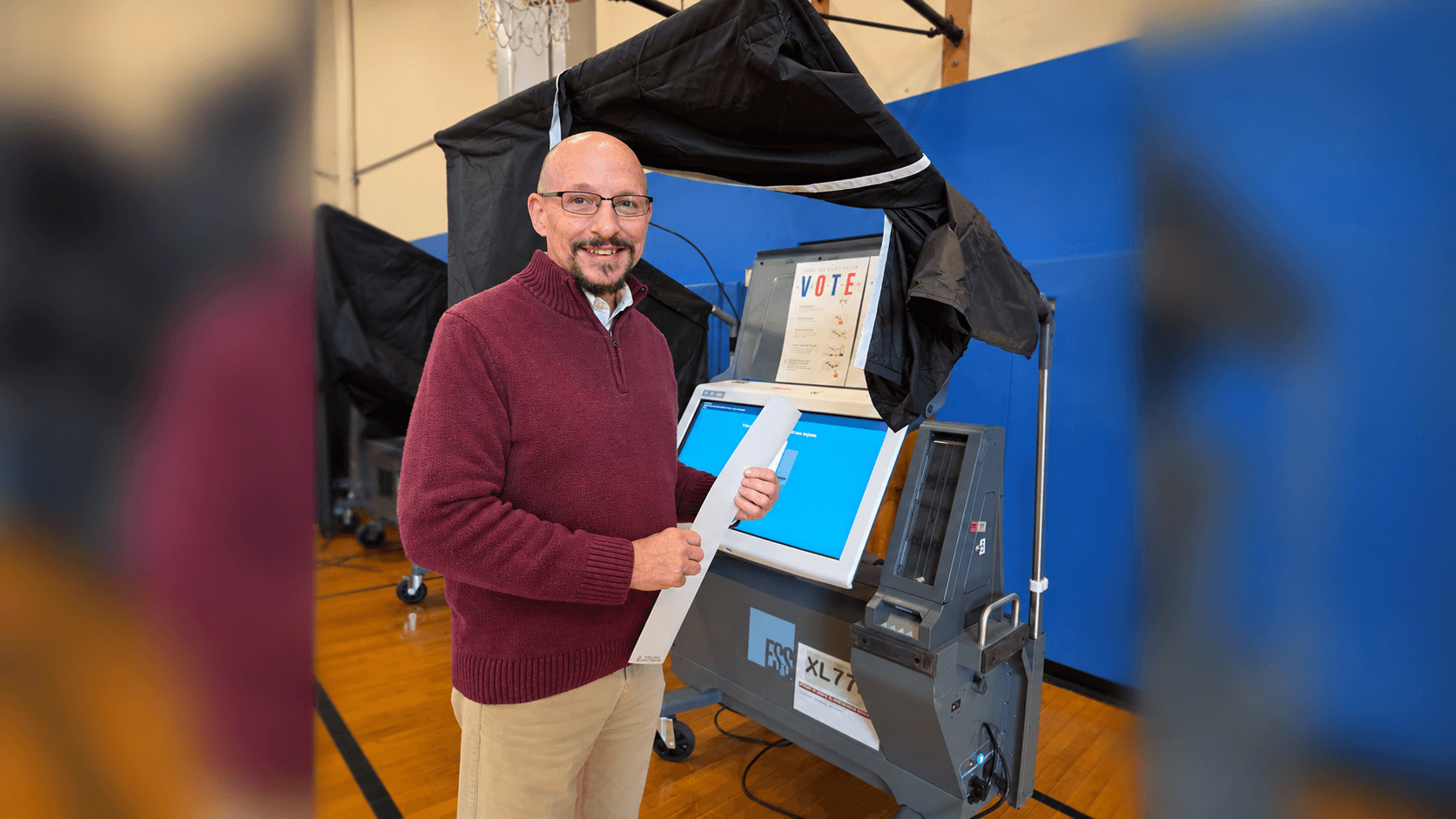
Call it a blue wave. Blame President Donald Trump. Point to national political headwinds. But a closer examination of Suffolk County's election results reveals a far more complicated picture: voters who elected Republicans to Congress and the State Legislature also rejected Republican incumbents in overlapping districts.
Same districts. Same voters. All Republicans. Some won, others lost.
The numbers suggest Suffolk voters weren't simply voting against a political party. They were making distinctions between candidates, offices and campaigns.
Consider Republican State Sen. Dean Murray, who led Democrat Antonio Vargas-Ayala by 56,280 votes to 47,982, a margin of 8,298 votes in the Third Senate District. Yet Republican Assemblyman Joe DeStefano, representing territory within Murray's Senate district, trailed Democrat Josh Slaughter by 908 votes, 19,948 to 19,040.
Two Republican incumbents. Overlapping constituencies. Two dramatically different outcomes.
The contrast raises an important question: If voters were simply rejecting Republicans because of Trump, why did Murray survive while DeStefano fell?
The East End delivered another revealing example.
Republican Congressman Nick LaLota led Democrat Christopher Gallant by 152,546 votes to 145,869, a margin of 6,677 votes. Yet Republican State Sen. Anthony Palumbo, whose First Senate District overlaps LaLota's congressional territory, trailed Democrat E. Christopher Murray by 4,064 votes, 62,408 to 58,344.
LaLota's victory was considerably narrower than his 42,745-vote margin in 2024, suggesting Democrats gained ground. Nevertheless, voters in the same general region demonstrated a willingness to support a Republican Congressman while favoring a Democrat for state senator.
Then there's Republican Assemblywoman Jodi Giglio, whose Second Assembly District overlaps Palumbo's Senate district.
Giglio led Democrat Michael Szika by a commanding 31,513 votes to 21,672, nearly 18 percentage points, with a third candidate receiving 678 votes.
While Palumbo struggled and eventually lost, Giglio cruised.
Republican Congressman Andrew Garbarino also led Democrat Patrick Halpin districtwide, 125,338 to 119,079, according to early reported returns, although Halpin led in the Suffolk-only portion of the congressional district.
Even Suffolk's countywide results challenged the notion of an overwhelming Democratic takeover. Republican Dan Losquadro led the county comptroller contest by 6,548 votes, while Democratic Gov. Kathy Hochul carried Suffolk by just 4,040 votes over Republican Bruce Blakeman.
None of this proves national politics played no role, mind you. I'm not suggesting that the blue wave or President Trump had no impact on races. Both clearly did.
But Democrat gains, including LaLota's sharply reduced margin, suggest broader political conditions mattered.
But the mixed outcomes undermine any explanation that treats every Republican defeat as an inevitable consequence of a blue wave or anti-Trump sentiment.
The lesson for future elections is that candidate-specific factors deserve closer scrutiny: constituent relationships, campaign organization, local issues, voter outreach and the strength of individual opponents. As former House Speaker Tip O'Neil famously said: "All politics is local."
Suffolk's voters delivered a split decision, not a blanket rejection of Republicans. They supported some incumbents and replaced others, sometimes within overlapping political boundaries.
The message from election night is that party affiliation alone cannot explain every result. Any serious examination of Suffolk's political future must begin with the voters' actual choices, not a convenient national narrative.
There are important political tea leaves to read in Suffolk County's election results, especially as both parties gear up for the critical local races of 2027. The lesson isn't that every Republican was swept away by a blue wave or that every defeat can be blamed on Donald Trump. The results reveal an electorate willing to distinguish between candidates, reward some incumbents and reject others, even in overlapping districts.
I make no bones about being a die-hard Republican. I live, breathe, and die politically for the Grand Old Party.
It would be a massive mistake to brush off losses and blame Democrat turnout or the President.
If this happens, Republicans can expect more losses across Long Island in the years ahead, and more gut punches like Election Night 2026.
You Might Also Be Interested In
Winners and Losers of the Midterms
America Has Voted. Now Can We Learn to Live With Each Other Again?
You Asked For it NY. Now Suffer the Consequences