

Affordability Set to Take Center Stage in Governor’s Race
Every month, New Yorkers are reminded of the state’s affordability crisis when they open their utility bills—a pocketbook issue Republicans say will place Gov. Kathy Hochul’s energy policies at the center of the November race for governor.
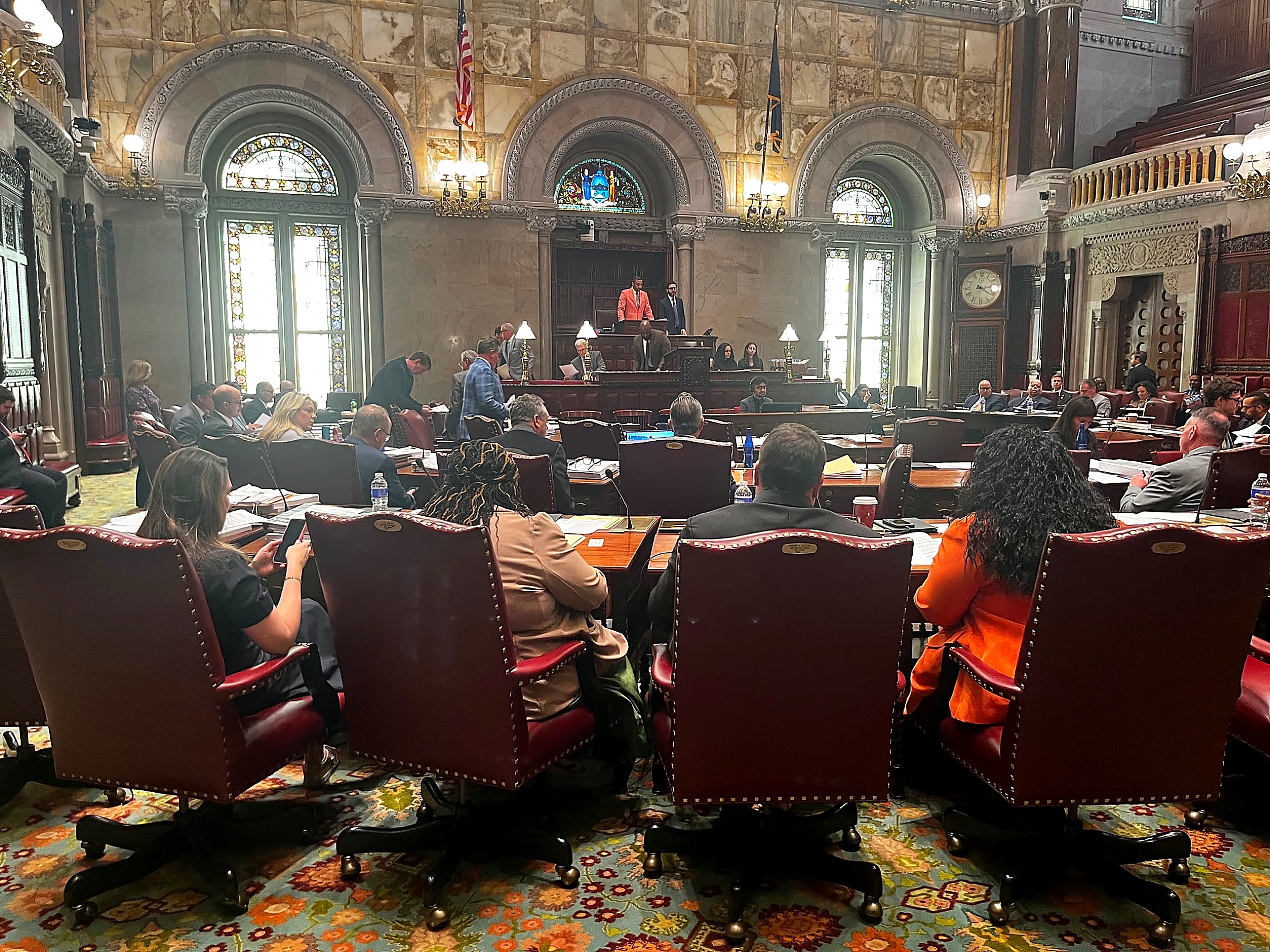
Every month, New Yorkers are reminded of the state’s affordability crisis when they open their utility bills—a pocketbook issue Republicans say will place Gov. Kathy Hochul’s energy policies at the center of the November race for governor.
“Affordability is the number one concern for New Yorkers,” said state Sen. George Borrello, whose district borders Pennsylvania, where abundant natural gas has helped keep energy costs down and fueled economic growth. “Every single month, every household in New York State opens up its utility bill and sees the impact of her disastrous energy policies.”
Borrello said the Hochul administration has reduced dependable power generation while promoting wind and solar projects whose transmission and grid-connection expenses are passed along to customers.
“That’s why, in many cases now, the delivery charge on your bill is more than the actual energy you’re using,” he noted. “We have a greater demand for energy and less of a supply—that’s a recipe for economic disaster.”
Hochul has responded to rising costs with $1 billion in one-time rebates, a payout critics say is a brazen—and expensive—way to buy votes. Her administration maintains that New York’s clean-energy transition will create jobs, reduce pollution and protect consumers from volatile fossil-fuel prices.
Republicans, however, say those measures do not address the policies that are causing the underlying increases.
Senate Republican Leader Rob Ortt said energy bills provide voters with a clear example of what the broader affordability debate means in their daily lives.
“For a lot of people, it means getting a utility bill in the mail that’s three times higher than you’re used to paying,” Ortt said. “We all get that bill. There’s no avoiding it.”
Ortt argued that Albany’s decisions affect not only what customers pay but also whether businesses can obtain the reliable power needed to operate and employ New Yorkers.
“A lot of what you are paying here in New York is driven and impacted by policies out of Albany,” he said. “If an employer doesn’t have access to reliable, low-cost power, then some people don’t have jobs, and now they can’t pay their own energy bill.”
Another Pennsylvania border senator, Tom O’Mara, said Hochul should be held directly accountable for rising electric rates since she appoints the members of the Public Service Commission, which regulates utilities and approves rate plans.
“She has every appointment on the PSC,” O’Mara pointed out. “Every decision they have made has driven up electric prices—the governor should be tagged with some of this stuff.”
O’Mara said New York’s Climate Leadership and Community Protection Act (CLCPA) was adopted without a sufficient cost-benefit analysis and requires a dramatic expansion of electricity demand even as older generating facilities are being retired.
“We actually have less power generation in New York State today than we had when the CLCPA was instituted,” he said. “We’re going backwards.”
The state’s climate plan calls for 70% renewable electricity and a transition to a zero-emission electric system, goals Hochul and Democratic lawmakers say are necessary to combat climate change and reduce long-term energy risks.
But Borrello said recent warnings to conserve electricity and the state’s pause on large data centers amount to an admission that the system cannot support current demand, much less economic growth. The governor announced a one-year moratorium on the largest new data centers, citing concerns about electricity costs, water consumption and pressure on the grid.
“We don’t have enough power to meet our current needs, let alone anything new,” Borrello said. “It’s a radical policy that is going to make it impossible for people to live here affordably and still be able to heat their homes and keep their lights on.”
With utility bills arriving every month, Ortt said Hochul’s energy policy will be a key talking point in the campaign of her challenger, Nassau County Executive Bruce Blakeman.
“Energy writ large is absolutely going to be a huge issue in this election,” Ortt stated. “People are concerned about what they’re paying, and they’re concerned about reliability.”
Energy and affordability loom large in the November race for governor.
You Might Also Be Interested In
OPERATION ROTTEN APPLE: ICE Nabs 2,197 In NY Sweep
Health Officials Warn of Growing Tick Threat
Local Control Urged For Broadband Expansion