
ANALYSIS: State Audit Exposes Cracks in NY’s Green Scam Schemes
Radical progressives and Albany Democrats are charging ahead with sweeping "Green Scam Schemes" and wildly unpopular mandates to electrify buses, buildings and appliances, but a new state audit raises a fundamental question: Can Albany’s green-energy deadlines actually work in the real world?
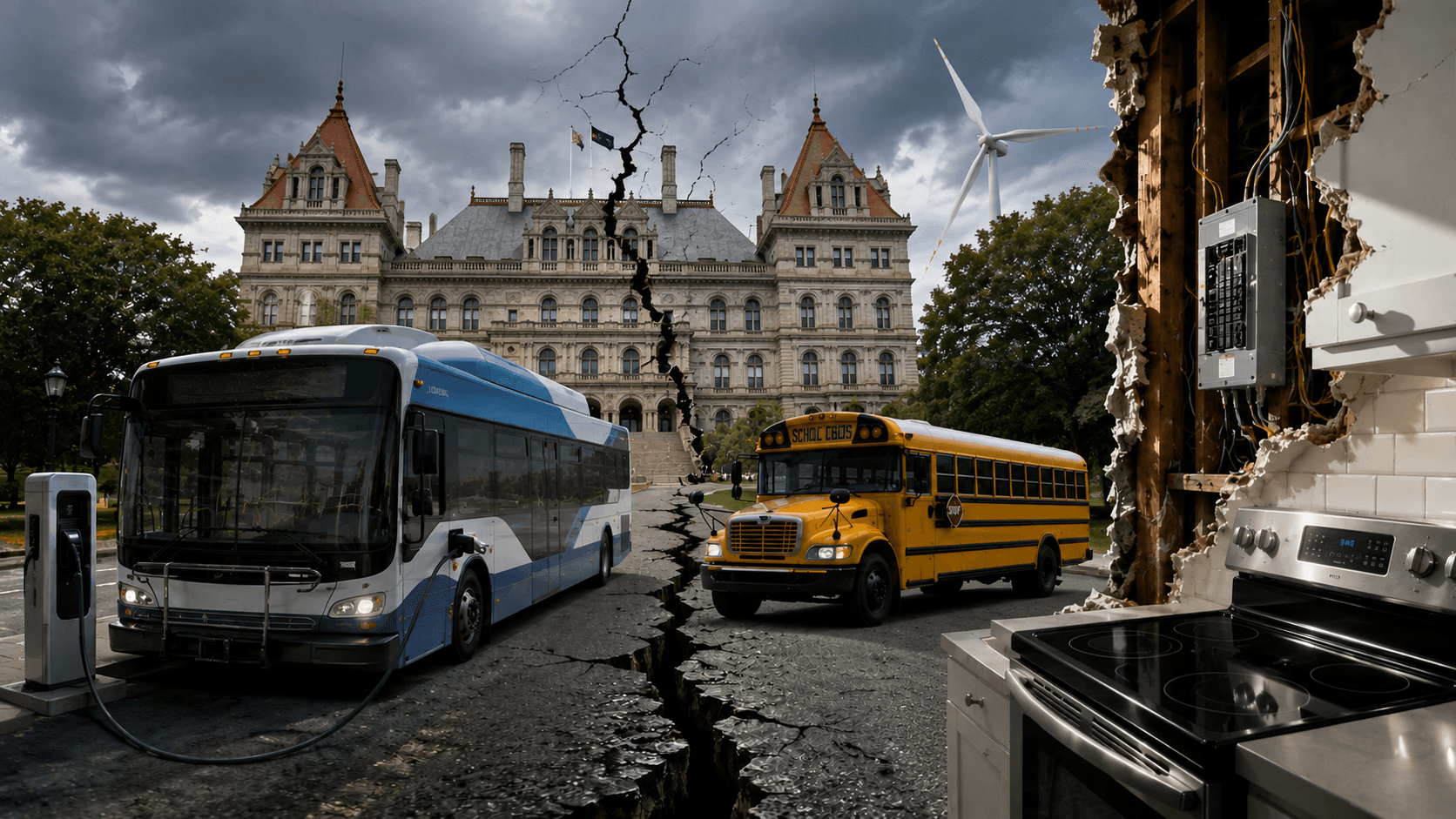
Radical progressives and Albany Democrats are charging ahead with sweeping "Green Scam Schemes" and wildly unpopular mandates to electrify buses, buildings and appliances, but a new state audit raises a fundamental question: Can Albany’s green-energy deadlines actually work in the real world?
At this time, until technology advances are put in place, true cost savings could be shown, and the grid is strong enough to handle the influx of power, the answer is clearly "not at all."
State Comptroller Thomas DiNapoli’s latest audit found the MTA is unlikely to meet its 2040 deadline for converting nearly 5,800 buses to zero-emission models, with auditors documenting soaring costs, delivery delays, limited range and reliability problems.
“The MTA has set an ambitious goal to transform the nation’s largest bus fleet to 100 percent zero-emission,” DiNapoli said. “Unfortunately, this audit identified multiple challenges that have put its 2040 target in jeopardy.”
Those “challenges” are substantial.
Electric buses were available for service less than 60% of the time anticipated at five depots. An articulated electric bus jumped from approximately $1.4 million to $1.8 million by 2024 — roughly 60% more than a comparable diesel bus. The complete conversion is estimated at $11.9 billion.
The findings have implications far beyond New York City.
Albany is simultaneously attempting to electrify school transportation and new buildings while dramatically increasing renewable electricity generation.
New York mandated that school districts eventually abandon conventional buses. Lawmakers already pushed those deadlines back five years, requiring new school bus purchases to be zero-emission beginning in 2032 and entire fleets to transition by 2040.
Then there is Albany’s war against fossil fuels in buildings.
Beginning next year, most newly constructed buildings seven stories or shorter must use electric heat and appliances, effectively preventing installation of gas stoves in those covered buildings. Taller residential buildings and additional commercial construction follow in 2029. Existing homes and several categories of new construction are exempt.
All of that places greater demands on an electric system New York is simultaneously attempting to remake.
DiNapoli previously found that meeting the state’s 70% renewable-electricity target for 2030 would require renewable generation to increase more than 200% above 2022 levels.
The latest audit provides a costly warning: Albany can write ambitious green mandates into law, but legislation cannot guarantee the technology, infrastructure, electrical capacity or money necessary to make them reality.
You Might Also Be Interested In
ICE Officer Shoots Man in Marble Hill; DHS and NYPD Give Differing Accounts
James and Komatireddy Clash Over Cornell Case and Trump in Attorney General Debate

Suffolk Supervisors Ask Albany to Revisit 2% Property Tax Cap