
MTA Wants More Federal Cash As Long Islanders Pay The Price
Gov. Kathy Hochul and Metropolitan Transportation Authority Chair Janno Lieber are asking the incoming Democratic Congress for a larger share of federal transit funding, with a critical deadline less than a month away.
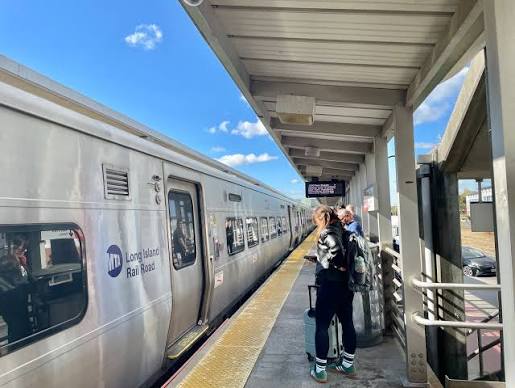
Gov. Kathy Hochul and Metropolitan Transportation Authority Chair Janno Lieber are asking the incoming Democratic Congress for a larger share of federal transit funding, with a critical deadline less than a month away. The request comes after years of emergency aid, tax increases, fare hikes and construction cost overruns, even as the authority already counts on $14 billion in federal assistance for its latest capital plan. For Long Island commuters, motorists and businesses already paying to support the transit system, the latest push for federal dollars raises questions about the MTA's financial management and whether additional taxpayer assistance will provide any meaningful relief.
An MTA policy brief released Nov. 5 says the authority handles 43 percent of the nation's mass transit trips but receives only 17 percent of available federal transit funding.
"It's time to deal with the fact that New York historically has been radically shortchanged in money from Washington for transit," Lieber said Tuesday on NY1. "Time to fix that."
The immediate deadline is Dec. 11, when a short-term extension of the federal Infrastructure Investment and Jobs Act expires. The latest extension excluded what the MTA calls advance appropriations, additional funding first included in the Biden-era infrastructure law. Without that money, the agency says it faces a $265 million reduction in fiscal 2027. Sen. Chuck Schumer has called transit cuts in the next surface transportation bill a "nonstarter."
Hochul told the New York Post she wants additional federal funding for the Second Avenue Subway and the proposed Interborough Express. She also argued that New York should not be responsible for financing the redevelopment of Penn Station.
"President Trump has already said he'll pay for it. And sometimes I hear whispers looking to New York. I would keep looking at the federal government," Hochul said.
Lieber has said his "principal concern" is that the Penn Station project "cannot kill Long Island Rail Road service." The MTA is also seeking tariff exemptions for new trains and buses, warning that tariffs could otherwise add an estimated $1 billion in costs.
Long Island Businesses Hit With Higher Taxes
Albany established the payroll mobility tax in 2009, imposing an additional financial burden on downstate employers, including businesses in Nassau and Suffolk counties. In 2023, the top rate for New York City businesses increased from 0.34 percent to 0.60 percent. On July 1, 2025, the state nearly doubled the top rate for the largest Long Island employers, raising it from 0.34 percent to 0.635 percent on quarterly payroll exceeding $2.5 million. Hochul said the increase would help fully fund the MTA's $68.4 billion capital plan for 2025 through 2029, but the additional tax burden has drawn criticism from lawmakers and business advocates who question why the authority continues requiring more money despite years of increased government support.
When the Long Island tax increase was approved, State Sen. Mario Mattera, a St. James Republican, argued that the authority needed to address its own financial problems before demanding additional revenue.
"Long Islanders are tired of being an ATM machine for the MTA and New York State and that must end," Mattera said in a May 2025 statement. "Many of the MTA's problems are self-inflicted and the solution can't always be having their hand out."
His criticism reflects a broader concern among opponents of the tax increases that employers are being forced to absorb rising transportation costs regardless of whether their workers regularly use the transit system.
Drivers Face Growing Congestion Tolls
Long Island motorists are also paying more under New York City's congestion pricing program, which charges most passenger vehicles $9 to enter Manhattan south of 60th Street during peak hours and $2.25 overnight. Those charges are scheduled to increase to $12 in 2028 and $15 in 2031, placing an additional financial burden on commuters who drive into the city for work, medical appointments or other necessities. The New York Post reported that congestion pricing generated approximately $550 million through September, with the revenue directed toward MTA capital projects rather than daily operating expenses. The tolls have drawn criticism from Long Island officials who argue that suburban motorists are being forced to shoulder an unfair share of the transit system's financial burden, particularly when many communities lack convenient public transportation alternatives.
Billions In Aid, But Financial Problems Persist
Federal taxpayers have already provided more than $15 billion in pandemic assistance to the MTA, according to Hochul's 2022 statements. After warning of a looming financial crisis as that emergency funding dwindled, the authority returned to Albany and Washington seeking additional support. State Comptroller Thomas P. DiNapoli reported last month that the MTA's $21.9 billion operating budget is balanced for 2026, but projected budget shortfalls are expected to grow to $897 million by 2030, even with anticipated fare and toll increases in 2027 and 2029 that have not yet received final approval. The authority's outstanding debt, including capital borrowing, is projected to soar from $45.3 billion in 2025 to $88.9 billion by 2033, raising further concerns about the long-term sustainability of its finances.
Meanwhile, Long Island Rail Road passengers are already paying higher fares. On Jan. 4, monthly tickets increased 4.5 percent, while most other ticket categories rose approximately 8 percent. Before the pandemic, fares and tolls covered more than half of the MTA's operating expenses, but by 2025, that share had fallen to just 34 percent, according to DiNapoli's office. The declining share of operating expenses covered by riders has increased the authority's reliance on taxes, subsidies and other government funding, leaving commuters and taxpayers facing the prospect of additional increases even as the MTA seeks more assistance from Washington.
Fare Evasion Drains Hundreds Of Millions
Fare evasion remains another major financial problem for the authority, with losses reaching hundreds of millions of dollars annually. An MTA blue-ribbon panel estimated that the agency lost $690 million to fare and toll evasion in 2022, while the Citizens Budget Commission subsequently estimated approximately $1 billion in losses during 2024. During the second quarter of 2026, the MTA estimated that 49 percent of bus passengers failed to pay their fares, compared with 45 percent during the same period a year earlier. DiNapoli's office estimated that reducing bus fare evasion by 10 percentage points could have generated as much as $150 million in additional revenue during 2026, underscoring the potential financial benefits of stronger enforcement and improved fare collection before the authority seeks additional taxpayer support.
Construction Costs Explode
The MTA's history of expensive construction projects has also fueled criticism of its financial management, particularly as the authority seeks billions more for infrastructure improvements. East Side Access, which brought LIRR trains into Grand Central Madison in January 2023, ultimately cost approximately $11 billion, according to a 2025 state comptroller's audit. Early estimates placed the project's cost at approximately $3.5 billion, and the project opened more than a decade after its originally anticipated 2009 completion. The first 1.8 miles of the Second Avenue Subway cost approximately $4.45 billion, or roughly $2.5 billion per mile. Research by the NYU Transit Costs Project found that major New York transit construction projects rank among the world's most expensive urban rail investments on a per-mile basis, raising questions about whether the MTA can deliver future projects within reasonable budgets and construction schedules.
Overtime Spending And Fraud Concerns
Excessive overtime spending has created additional financial pressure, while investigations into employee misconduct have raised questions about internal oversight. DiNapoli's office found that the MTA had already spent $821 million on overtime through August 2026, exceeding its forecast by $141 million. The authority could finish the year approximately $225 million over its $993 million overtime budget, adding to concerns about spending controls at a time when commuters and businesses are being asked to contribute more. Critics have argued that controlling overtime expenses should be a priority before the authority pursues additional taxes, tolls or federal assistance.
Separate investigations have uncovered serious problems involving employee timekeeping at Long Island Rail Road facilities. In October 2025, the MTA inspector general reported a "culture of fraud and time abuse" at three LIRR facilities, including Ronkonkoma. Investigators found that 36 employees, including seven supervisors, used cloned swipe cards to collect compensation for time they did not work. The findings intensified concerns about accountability and the authority's handling of public funds, particularly as the MTA continues to seek additional financial support from commuters, employers and taxpayers.
Will More Federal Money Help Long Islanders?
Lieber has suggested that increased federal assistance could replace some of the funding currently provided by New York State and New York City, potentially reducing the financial obligations of those governments. However, an MTA spokesperson did not specify to the New York Post which contributions might be replaced or how much money could be saved.
Ana Champeny, vice president for research at the Citizens Budget Commission, cautioned that any savings would flow back to the state and city governments, "who would then probably use them for something else." That means additional federal assistance would not necessarily translate into direct relief for taxpayers, commuters or businesses already paying higher taxes, tolls and fares.
The MTA has not committed to reducing the payroll mobility tax, congestion pricing charges or future fare increases if Washington provides additional funding. Nor has the authority publicly detailed which specific LIRR projects or services could be affected if the December funding extension excludes advance appropriations. As of Thursday, neither Rep. Nick LaLota nor Rep. Andrew Garbarino had issued a public statement addressing the latest federal funding request. Nassau County Executive Bruce Blakeman also had not publicly commented on the proposal.
For now, the first major test comes Dec. 11, when federal lawmakers must address the expiring transportation funding extension. The MTA argues that New York deserves a larger share of federal transit dollars because of the extraordinary number of passengers who rely on its trains, subways and buses. Yet the authority's mounting debt, costly construction projects, overtime spending, fare evasion losses and repeated requests for additional financial assistance raise questions about how effectively existing resources are being managed.
Long Islanders who ride the LIRR, drive into Manhattan or operate businesses already know the growing cost of supporting the MTA. They have seen payroll taxes increase, congestion tolls imposed and commuter fares climb, all while the authority continues seeking billions more in government assistance. The unanswered question is whether another infusion of federal taxpayer dollars will come with stronger financial oversight, meaningful accountability and measurable relief for the Long Islanders already paying the bill.
You Might Also Be Interested In

Prediction Markets Face Gambling Crackdown
Albany Power Shift Raises Alarm for GOP Senators

Why Would any Citizen be Intimidated by Law Enforcement at a Polling Booth?