

Bessent Presses Fed to Hold Off on Hikes, Calling War-Driven Inflation an Energy Shock
Chicago Fed President Austan Goolsbee pushed back within the hour, as wholesale prices showed their biggest annual gain since 2022 and pump prices kept falling.
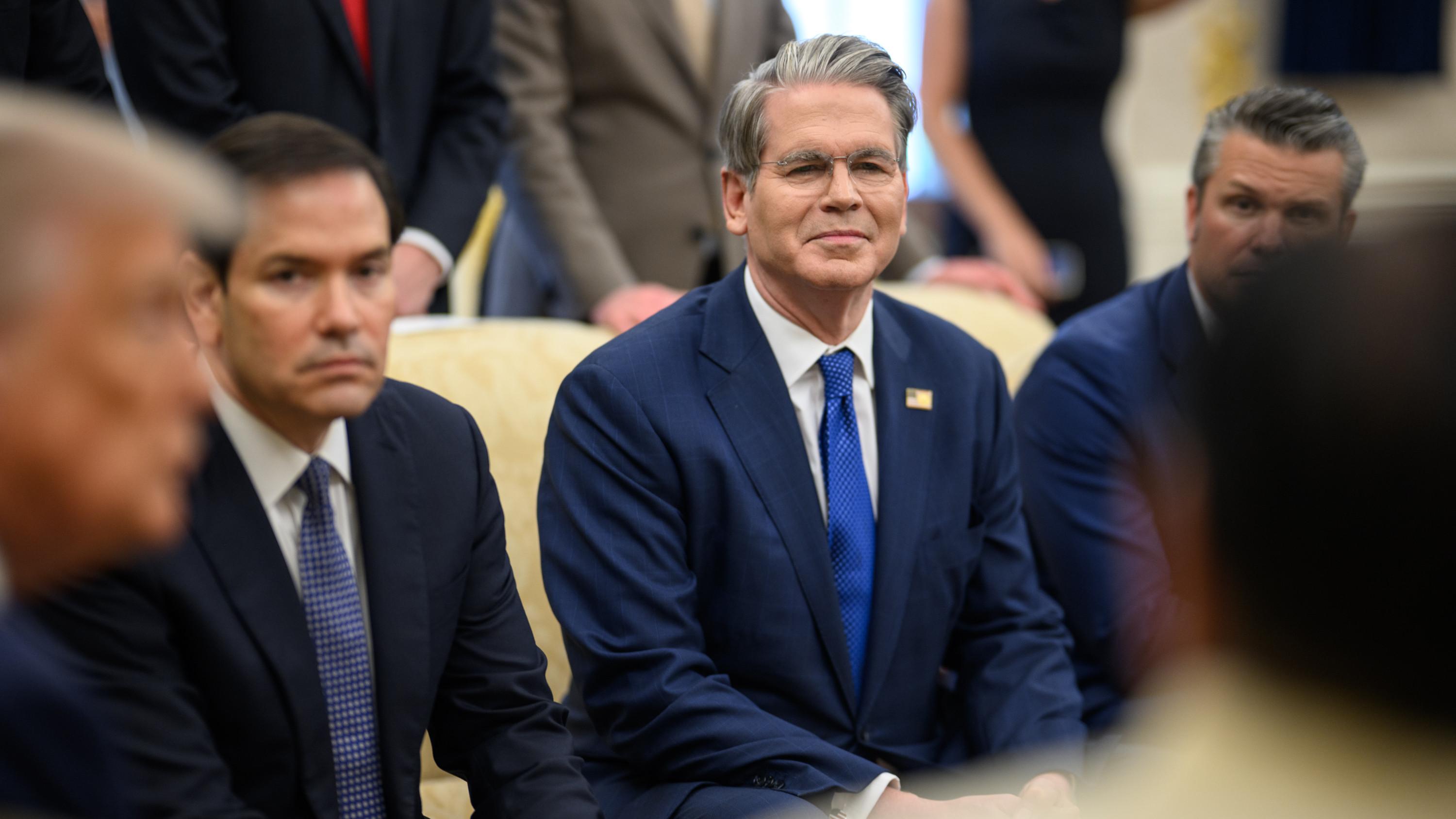
Treasury Secretary Scott Bessent urged the Federal Reserve on Friday to hold off on raising interest rates, arguing that the price pressure from the war with Iran is a passing jolt in energy supply.
"I think the Fed should understand that this is an energy supply shock," Bessent said on a business television program Friday morning. "The Fed's supposed to look into the future, not look in the rearview mirror."
Bessent said he was steering clear of giving orders to the central bank. "I'm not going to tell the Fed what to do. I am going to say they should have an open mind," he said. He pointed out that the Fed lowered rates last year and said a sharp turn the other way over an energy shock "isn't something that I would do if I were on the Fed. But I'm not on the Fed."
Austan Goolsbee, who heads the Chicago Fed, came on the same network soon after and took issue with that view. He said inflation has spread into services and other categories where energy is not what drives prices. He also pointed to demand from the construction of artificial intelligence data centers, which he said was adding to price pressures. Goolsbee did not commit to a rate increase, though he said the Fed "has definitely got work to do to continue to reestablish its credibility." Goolsbee will rotate into a voting seat on the rate committee in 2027.
The exchange followed Friday's report from the Labor Department on wholesale prices. Final-demand producer prices climbed 0.3% in October, just under the 0.4% economists had forecast. Year over year, the index climbed 6.5%, its steepest annual rise since November 2022. Goods prices rose 0.5%. Food costs at the wholesale level jumped 1.3% for the month, while energy edged down 0.1% as diesel dropped 7.9%.
The Fed held its benchmark rate in a range of 3.75% to 4% at its last meeting. On Friday, the CME FedWatch tool put the likelihood of a quarter-point hike at the Dec. 9 decision near 89%.
At the pump, the strain has started to ease. The national average for regular gasoline was $3.87 a gallon on Friday, down from about $4.34 a month earlier, motor club AAA said. The average dipped under $4 on Thursday, its first time there since July, though it remains roughly 79 cents higher than a year ago. AAA said this is shaping up as the most expensive November for gasoline on record. Diesel averaged about $6.06, roughly $2.30 above its level a year earlier.
Oil markets are also loosening. In its monthly report Friday, the International Energy Agency said world oil supply outpaced demand in October, the first month that has happened since the war began in late February. Global inventories that the agency can observe grew by 52 million barrels during the month. Gulf exports, leaving out Oman, recovered to 18.4 million barrels a day, still 26% below where they stood before the fighting. The agency said North Sea crude had fallen from a peak of $136 a barrel in early October to about $93.
Bessent also confirmed on Friday that he has left his home and moved onto a military base on instructions from the Secret Service, after death threats he tied to Iran. He vowed to stand firm against "the death threats they have made against me," and said other Cabinet members would too.
He argued the threats were a sign that the administration's campaign of financial pressure on Tehran, which it calls Operation Economic Outcast, is doing damage. Bessent has led that effort since August. "What we're doing is working," he said.
You Might Also Be Interested In
Iran Says It Hit a U.S. Radar in Bahrain as Washington Reports Both Drones Downed
Senior U.S. Army Soldier Arrested in England on Suspicion of Spying for Russia
U.S.-Brokered Ukraine Talks Yield Prisoner Deal, No Peace Breakthrough