
Russell Brand Conviction Shows Britain's Selective Zeal
Decades Old Allegations Resulting in 10-Year Prison Sentence Contrasts With Ongoing Rape Crisis Across the Country
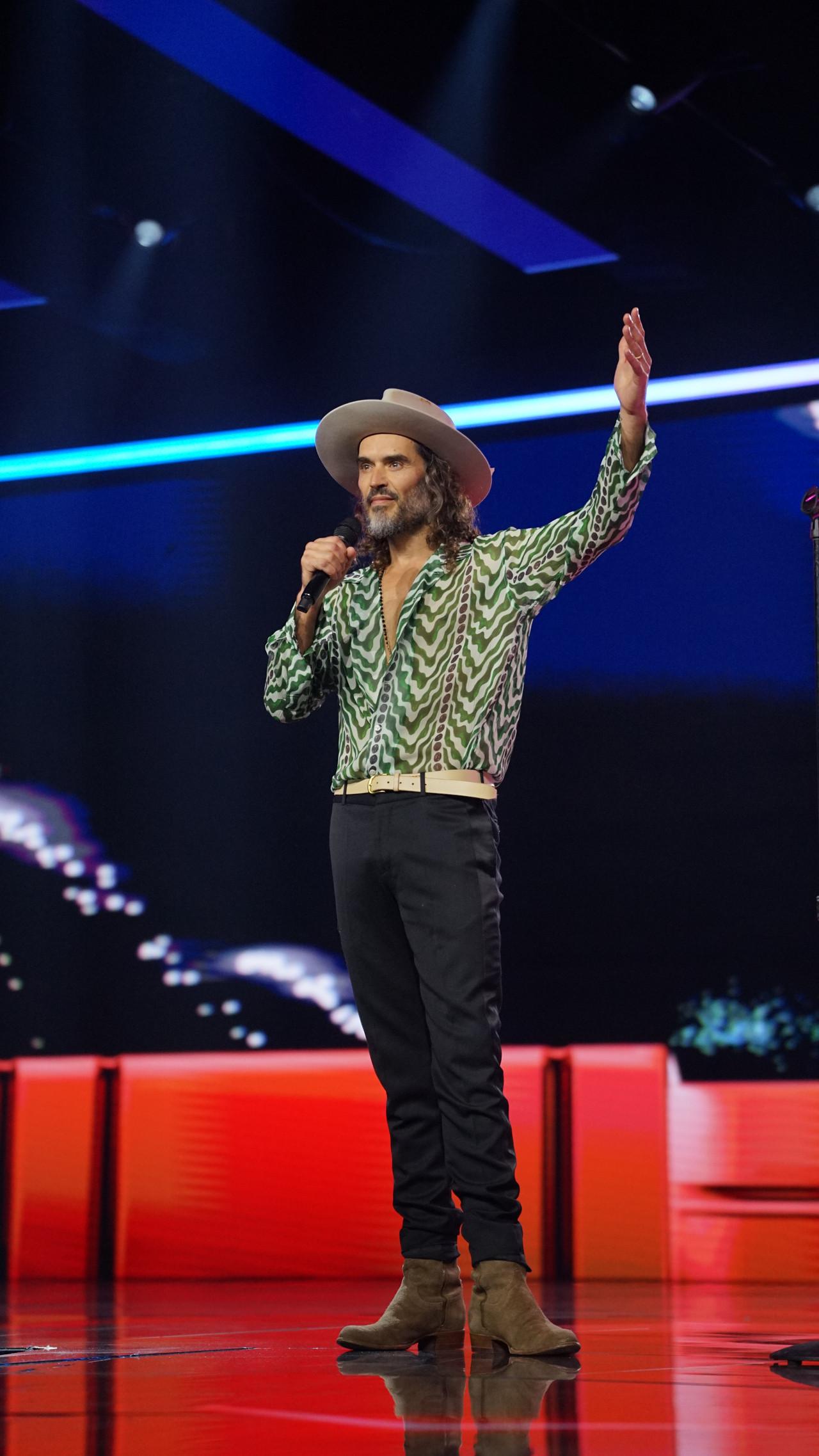
For twenty years Russell Brand sold Britain one product: himself, unbuttoned and unabashed. On Monday a London judge sent that product to prison for ten and a half years. Before Britain's institutions applaud themselves, they should explain their selective zeal.
Start with the man. Brand built his fame on excess: a memoir about his heroin years; the tabloid Sun's "Shagger of the Year" title; a 2008 exit from his Radio 2 show over crude voicemails left for the actor Andrew Sachs. None of it was secret. It was the act.
The scrutiny, when it came, came from the press. By The Sunday Times's own account, it picked up comedy-circuit rumours in early 2019, and reporter Rosamund Urwin began working sources, some of whom said other outlets had approached them and never published. Its weekday sister, The Times, dug in parallel; Channel 4's documentary series Dispatches formally joined in autumn 2022. "Alice" reached the paper in 2021 after hearing of the inquiry; "Nadia" was introduced to a Times reporter through a contact in April 2023. The outlets say nobody was paid. Their reports ran in September 2023. Soon after, the Metropolitan Police, London's force, publicly urged anyone else with a complaint to come forward.
That timeline matters, because the rape Brand was just sentenced for came to light only afterward. The woman, then 21, met him after a show at the Hammersmith Apollo, a London concert hall, in early 2009. By her own account, she had consensual sexual contact backstage with Brand and another woman. Days later his driver brought her to his Hampstead house, where she went willingly and they had consensual sex; at her request, he wore a condom. The rape count concerns what came next: the court heard he turned her over, took the condom off and penetrated her anally without her consent, and kept going after she told him to stop. The jury and the judge accepted her account. She did not go to police at the time and was not one of the documentary's women. Detectives interviewed her in April 2025, roughly sixteen years on, and prosecutors approved the charge on December 23, 2025. With no camera footage or forensic evidence, the case rested on testimony: her account; some 25 people she had told over the years; and texts from about a year later in which she said he had treated her "like an animal" and he answered, "I'm sorry." Brand maintains his innocence. A unanimous jury convicted him of that rape and of sexually assaulting three other women between 2004 and 2009, and acquitted him on three counts.
The timing of this timeline is worthy of skepticism. The digging began in 2019, but deepened as he became, from 2021, a loud critic of Covid policy and the "mainstream media"; in 2023 he called Britain's online safety law a charter for "censorship." By the time this woman sat with detectives, he had been baptized in the River Thames declaring Jesus Christ as his Lord and Savior, said he preferred Donald Trump, and used his show on the video platform Rumble to attack Prime Minister Keir Starmer's Labour government over immigration and free speech. Outlets now call him a conservative, religious commentator. By 2025 he had made himself a conspicuous political target.
Now set that story beside widespread reporting of grooming gangs across the U.K. Rings of men sexually exploited girls in English towns for years while the authorities did not go looking. Professor Alexis Jay found in 2014 that about 1,400 children in the South Yorkshire town of Rotherham were exploited from 1997 to 2013, the older cases mostly white British girls, the abusers overwhelmingly described as South Asian men of Muslim descent. Staff feared being thought racist; some were told by managers to stay quiet; police treated many victims with contempt. Rochdale, Oxford and Telford repeated the pattern. Times reporter Andrew Norfolk, who exposed it in 2011, was branded a racist.
Eleven years after Jay, the evasion persisted. Baroness Louise Casey, a member of the House of Lords, found in her 2025 national audit that ethnicity was "shied away from," unrecorded for two-thirds of perpetrators, with men of predominantly Pakistani heritage overrepresented where records existed; one sample of convictions found most were of Muslim background. Girls who came forward were disbelieved or arrested.
Nor is this history. Casey told members of Parliament she was "fairly sure" it is "still happening today." Police are reexamining more than 1,000 abuse cases they had closed, and the Greater Manchester area alone has had 1,099 suspects under live investigation. The national inquiry into the gangs has yet to hold a hearing.
What appears clear is that Britain's institutions move fastest when the defendant fits the story they prefer to tell. A political irritant loyal to Donald Trump and Jesus Christ was charged, prosecuted, sentenced and denounced by the presiding judge for alleged offenses that occurred in the midst of consensual sex, decades ago, on a woman's testimony alone. Thousands of children are still waiting for justice because the rapes they allegedly suffered came at the hands of men that the government simply doesn't want to implicate in crimes.
When the desired narrative decides who gets investigated, justice is no longer blind.
America should be watching. This is the justice we have in store for ourselves.
You Might Also Be Interested In

Iran Hails Midterm Results as a Vote Against the War, but Its Supreme Leader Expects No Shift
Israel Certifies Election Results After Review Finds No Fraud, Rebuffing Netanyahu Camp
Russell Brand Convicted of Rape and Three Sexual Assaults in London