

Israel Certifies Election Results After Review Finds No Fraud, Rebuffing Netanyahu Camp
The elections committee checked records from 9,069 polling stations; President Herzog has begun talks on who will get the first try at forming a government.
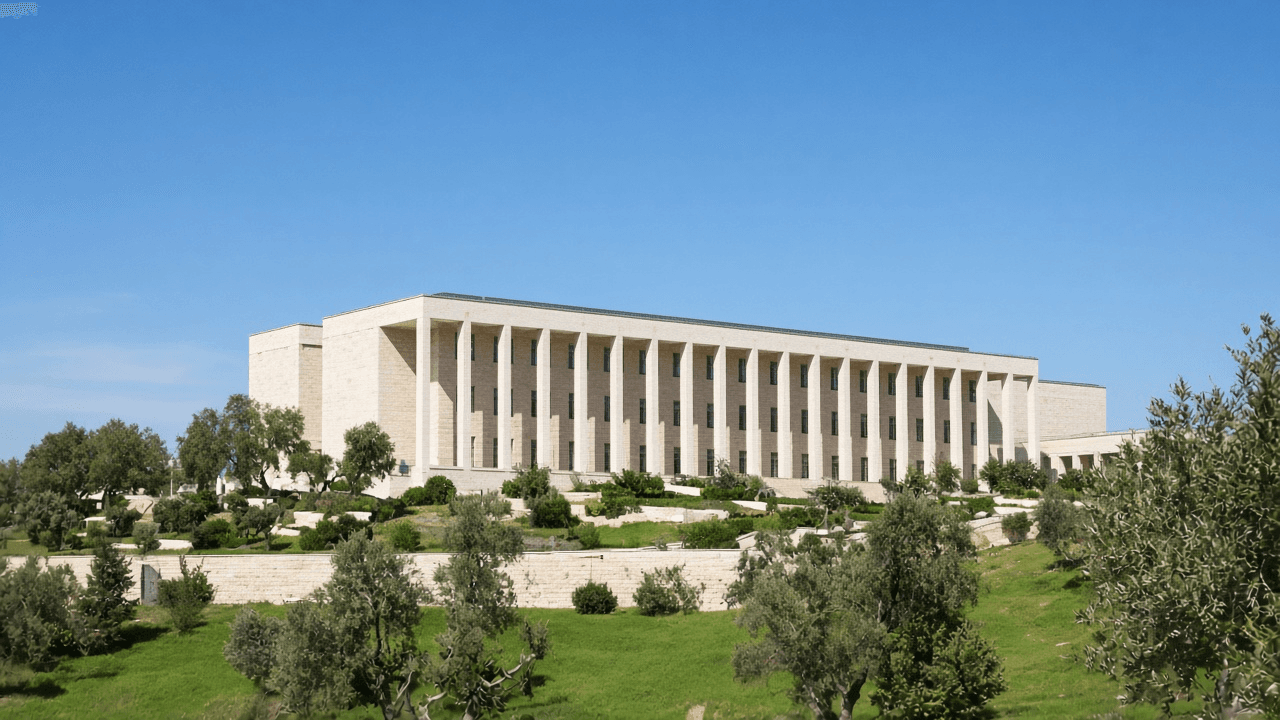
Israel's Central Elections Committee certified the outcome of last week's parliamentary election on Wednesday after a review it said turned up no sign of fraud, undercutting an effort by Prime Minister Benjamin Netanyahu and his allies to cast the outcome as illegitimate.
Justice Noam Sohlberg of the Supreme Court, who chairs the committee, handed the official results to President Isaac Herzog during a ceremony held at the president's residence. The committee said its review had found no irregularities that harmed the integrity of the voting or changed the outcome. Sohlberg warned that efforts to cast doubt on the count posed "a real danger" to Israeli democracy, and he stressed that the certified results are legally binding.
The review was the largest the committee has carried out. Officials went through paperwork from 9,069 polling stations, about three-quarters of all 12,018 ordinary polling places in the country, compared with 5,100 after the previous election. Roughly 250 government lawyers worked alongside committee staff over six working days that ended Nov. 3. Ballots, voter rolls and other materials were pulled for closer inspection at 350 of the stations.
Political parties and candidate lists filed upward of 2,450 review requests covering 1,350 polling stations, and members of the public submitted another 1,239 covering 750 more. Each one, said Dean Livne, who is serving as the committee's acting director general, got its own review.
The Oct. 27 vote left neither camp with enough seats to govern in the 120-member Knesset. The bloc led by Netanyahu's Likud won 53 seats, the opposition bloc headed by Gadi Eisenkot, a former military chief of staff, took 48, and Ra'am and the Joint List, the two parties led by Arab citizens, won a record 19 between them. Forming a government takes 61 seats.
Netanyahu and his partners have claimed, without offering evidence, that the election was stolen by the Arab-led parties, perhaps with outside help. Sohlberg said some suspicions of improper foreign influence were still being looked into, but that they did not call the overall result into question. At this point, he said, the claims are only suspicions, and even if some prove true, their possible effect on the outcome would be small. Israel's internal security service, the Shin Bet, had raised concerns about foreign money flowing into the campaign, and it sought to question senior Arab politicians.
Attorney General Gali Baharav-Miara turned that request down, saying that no citizen or elected official may be questioned without evidence to justify it, and that she had been shown none. David Zini, who heads the Shin Bet, was chosen for the job by Netanyahu. Itamar Ben-Gvir, the far-right minister in charge of national security and a Netanyahu partner, has gone further, demanding that the leaders of the Arab parties be arrested and interrogated.
Herzog used the ceremony to rebuke the tone of the campaign. "I condemn the coarseness and racist expressions that we have heard recently," he said, adding that he held Arab citizens of Israel in great respect. He said the security service's inquiry into possible foreign meddling should go forward, but that Arab voters as a group must not be smeared. Arab voters turned out in unusually large numbers this year.
The president opened two days of talks with party leaders Wednesday, after which he will choose the lawmaker with the best chance of building a coalition. In a change from past practice, he started with the smaller factions. Religious Zionism and Shas, longtime Netanyahu partners, told him they back the prime minister. Avigdor Liberman's Yisrael Beytenu, whose leader is a onetime Netanyahu ally turned critic, recommended Eisenkot. The rest, among them both Arab-led lists, are due Thursday, with Eisenkot's party and Likud last in line.
Neither Netanyahu nor Eisenkot has a clear path to 61 seats, and the coalition bargaining that follows Herzog's choice could stretch on for weeks. If no one manages to assemble a government, voters would go back to the polls early next year.
You Might Also Be Interested In

Iran Hails Midterm Results as a Vote Against the War, but Its Supreme Leader Expects No Shift
Russell Brand Convicted of Rape and Three Sexual Assaults in London
Exit Polls Show Netanyahu's Bloc Losing Its Majority, but No Clear Path for His Rivals