
Exit Polls Show Netanyahu's Bloc Losing Its Majority, but No Clear Path for His Rivals
Opposition parties led by Gadi Eisenkot edged ahead in record-setting turnout, while Likud stayed the largest party and Arab parties posted their best showing.
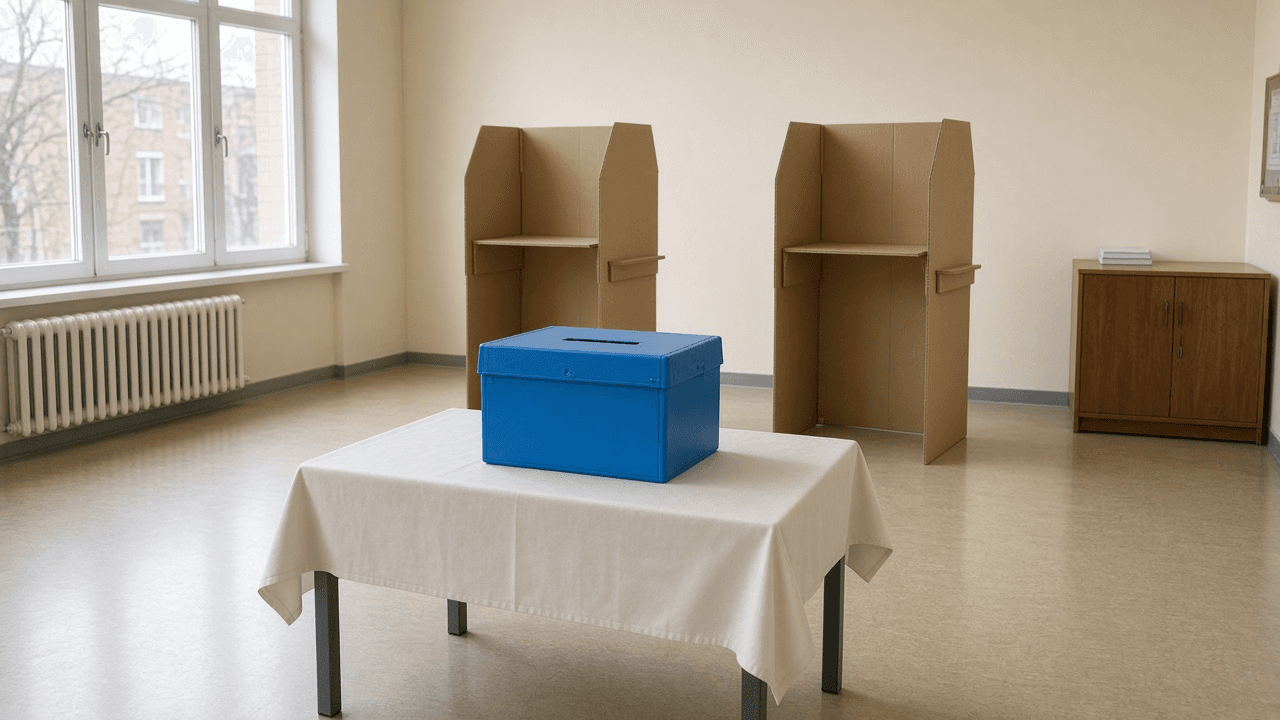
Israel's first national election since the Hamas-led attack of Oct. 7, 2023, ended Tuesday night without a clear winner. Exit polls showed Prime Minister Benjamin Netanyahu's governing camp losing its majority, while the opposition led by former military chief Gadi Eisenkot also came up short of the seats it needs to govern.
The three main broadcasters' exit polls gave the opposition bloc between 50 and 53 of the Knesset's 120 seats, against roughly 50 for Netanyahu's governing alliance of right-wing and religious parties. A majority takes 61. Arab parties were projected to win 17 or 18 seats combined, their best showing on record, which could give them real sway in the talks ahead.
Party by party, though, the picture flips: Eisenkot's Yashar was projected at 21 to 23 seats, a few short of the 24 or 25 forecast for Netanyahu's Likud, which would stay the Knesset's biggest single faction. Inside the opposition camp, former Prime Minister Naftali Bennett's party was projected to finish third, with 12 to 14 seats. On Netanyahu's side, Shas and United Torah Judaism, which draw the ultra-Orthodox vote, were projected at about six or seven seats apiece, as were the far-right parties led by Itamar Ben-Gvir and Bezalel Smotrich. Exit polls in Israel have missed before, and official results will take time.
Voters turned out at a rate not seen in decades. The Central Elections Committee put participation at 77.7 percent when stations shut at 10 p.m., about 7 points above the comparable 2022 figure, and the number was expected to rise as people already in line finished voting. Arab citizens, whose participation has often lagged, cast ballots in unusually large numbers. In several mostly Arab cities, including Rahat in the Negev and Kafr Qasim, turnout had passed its final 2022 level by early evening.
That trend alarmed the governing camp. As the afternoon numbers came in, Netanyahu urged right-wing voters to get to the polls, warning that heavy Arab turnout could decide the election. Updated exit polls released later in the night converged on 52 seats for the opposition, 50 for Netanyahu's partners, with Arab lists taking the other 18.
Eisenkot claimed the result as a rejection of the prime minister. He said the projections showed that most Israelis had lost faith in the government that was in charge on Oct. 7, and he promised to move quickly to replace it with one that would require military service. Yair Golan of the left-wing Democrats read the numbers as the public showing the government the door.
The arithmetic leaves no easy path for either side. Golan stands nearly alone in his camp in saying he could sit in a government with the Islamist party Ra'am; other opposition leaders have rejected any coalition built on Arab parties. Eisenkot has not ruled out a minority government that relies on outside support from Arab lawmakers, though it is not clear that all of his partners would go along. He has also pledged to keep a hard line on security.
Weeks of bargaining are likely before anyone can claim the premiership, and a prolonged deadlock could eventually send Israelis back to the polls.
The campaign was widely framed as a verdict on Netanyahu, the longest-serving leader in Israel's history, who is still on trial on corruption charges and has resisted calls for an official state inquiry into the failures that preceded the Oct. 7 attack.
Eisenkot, a former chief of the general staff, made the center of his campaign a call to hold leaders answerable for what went wrong before Oct. 7. He joined Netanyahu's war cabinet after the attack and later left it. The war cost him personally: his son, a soldier, was among its early casualties in Gaza. Yashar is barely a year old. Its fast climb in the polls owed much to Eisenkot's résumé as a general and to voters' appetite for someone new to politics.
You Might Also Be Interested In

Musk Says SpaceX Closed a Starlink 'Loophole' as Ukraine Reports Service Restored
France Reports 1,314 Arrests as Second Weekend of Protests Ends in Clashes

Macron Accuses Foreign Leaders of Exploiting French Riots, Says Trump Is 'Among Others'