
Danish Parliament Approves Greenland Defense Agreement With the United States
The Folketing voted 109 to 0 to consent to a September pact that widens American military access to Greenland while affirming Danish sovereignty and the Greenlandic right to self-determination
Denmark's parliament on Thursday consented to a defense agreement with Greenland and the United States that widens the American military presence on the Arctic island. The vote is the last legislative step in a dispute that began with President Donald Trump's drive to bring Greenland under American control and strained NATO this year.
The Folketing passed the measure, filed as resolution B 36, by 109 votes to 0, and the chamber's official record lists no abstentions. With 179 seats in the chamber, the result was unanimous among those who cast votes. It came while Trump was in Shenzhen, China, for a summit with Xi Jinping and Vladimir Putin.
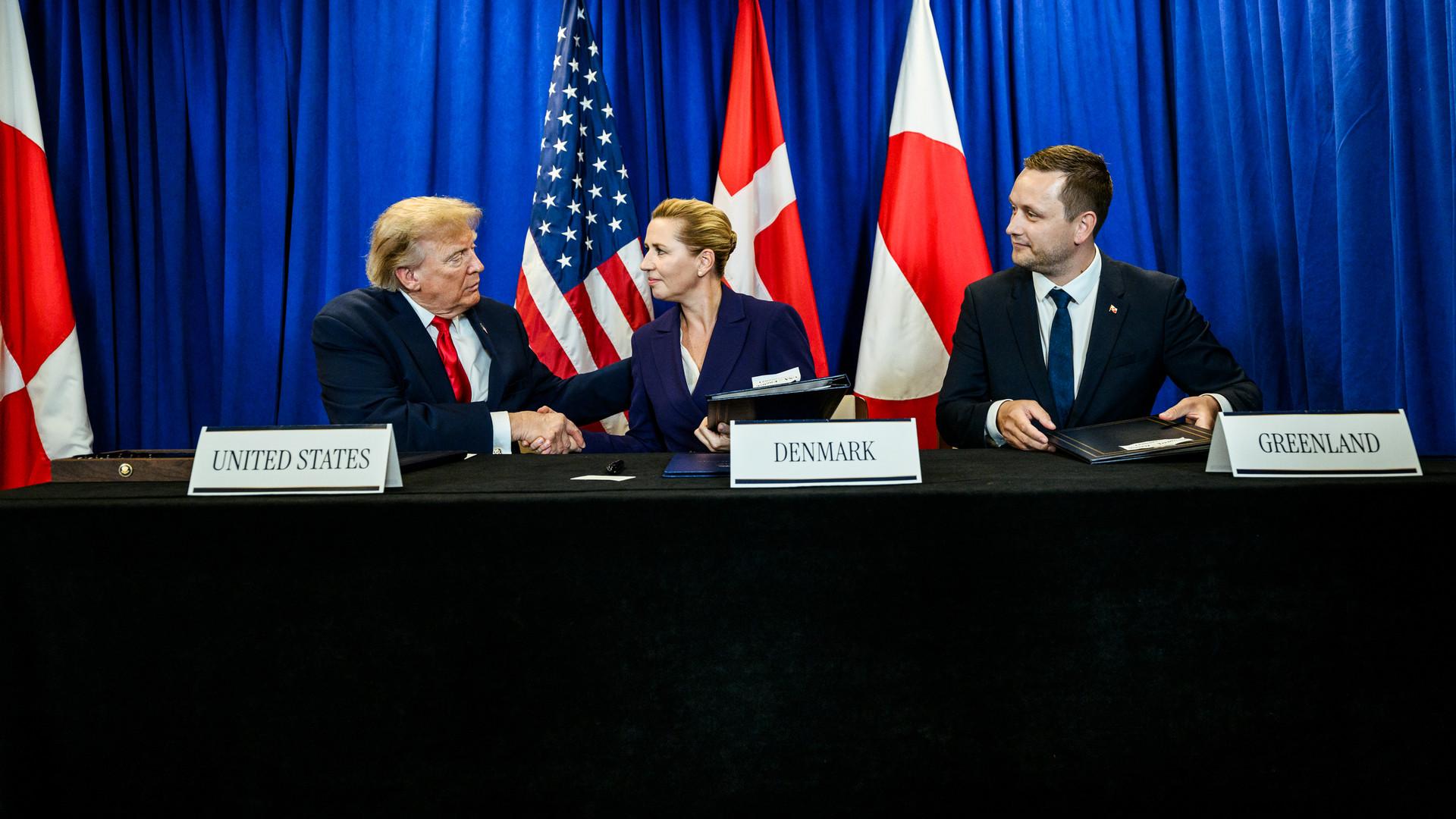
The resolution approves an agreement signed Sept. 22 in New York, at the U.N., by Trump, Greenland's premier, Jens-Frederik Nielsen, and Mette Frederiksen, the Danish prime minister. It amends a 1951 pact on the defense of Greenland. Greenland's parliament, Inatsisartut, approved it Nov. 3 by 16 votes to none, with seven abstentions. The text takes effect once a diplomatic note tells Washington that Denmark and Greenland have completed their parliamentary procedures. Contemporaneous accounts describe the pact as an executive agreement that will not go before the U.S. Senate.
For Washington, the text allows the United States to modernize and expand its work at Pituffik Space Base in the northwest and to open defense areas at Narsarsuaq in the south and Mestersvig in the northeast, on terms still to be agreed. Additional sites may be proposed, with the details left to the three governments. American aircraft may overfly and land anywhere on the island, and U.S. government vessels gain undersea access to its territorial waters, except as the parties agree otherwise. The preamble names a Golden Dome missile shield among the purposes of that access.
The pact also restricts military and economic access by countries outside the alliance. States that are not NATO members may not build military installations in Greenland or keep a lasting military presence there unless all three parties agree. Investors from outside NATO, its partners and the European Union are barred from control of sensitive sectors, including resource extraction. The agreement sets no end date. Should Greenland choose independence, Copenhagen and Nuuk must ensure the new state remains in NATO and takes on Denmark's obligations.
For Greenland, the agreement records recognition and commitments. The text recognizes Greenlanders as a people entitled to self-determination and directs the United States to give contracts for the defense areas to Greenlandic sources "to the maximum extent possible." Nielsen said at the signing: "The agreement recognizes that we are a people with the right to self-determination. At the same time, we are recognized as a part of our common security in the Arctic."
Opposition in Nuuk persists. Naleraq, an opposition party in Greenland's parliament, sought a referendum and argues that Greenland earns nothing from the deal. The official Folketing record does not list the party among Thursday's yes votes. Its member in Copenhagen, Qarsoq Høegh-Dam, told a Greenlandic newspaper afterward that he would not block what Greenland wants.
For Denmark, the agreement reaffirms the kingdom's sovereignty and territorial integrity, and Copenhagen pledges to keep strengthening its Arctic defenses. "Today, we have signed a good agreement. For Greenland, the Kingdom of Denmark and the United States. And for NATO and Europe," Frederiksen said in September. Lars Løkke Rasmussen, the foreign minister, called the road to the deal "a bumpy ride."
American officials describe the pact as lasting protection for North America. Secretary of State Marco Rubio said it "permanently guarantees U.S. security interests in the Arctic at zero cost to the U.S. taxpayer." In a radio interview that day, he said, "we can never afford to wake up one day in a world where the Chinese have bases there, the Russians, anybody." Trump said the deal "gives the United States permanent control over security and all other needs on that territory." On Thursday, Ambassador Kenneth Howery welcomed "the strong support in Denmark's Parliament" in a post on X.
Reaching the deal took a year of pressure. Trump raised Greenland as a national security issue during his first term. In January he declined to rule out force and threatened escalating tariffs on Denmark and other European allies until Washington could acquire Greenland. At the Davos economic forum days later, he said he would not use force, and after talks with Mark Rutte, the NATO secretary general, he announced "the framework of a future deal" and dropped the tariff threat.
Thursday's consent by the Folketing is the last legislative act required of Denmark and Greenland before the September agreement can take effect. The pact still awaits a diplomatic note to Washington confirming that those procedures are complete. Once that notice is sent, the United States will have a wider right of military access to Greenland under terms that reaffirm Danish sovereignty and the Greenlandic right to self-determination, with the details of the new defense areas still to be agreed by the three governments.
You Might Also Be Interested In

Five EU Nations Open Talks With Rwanda on a Hub for Rejected Migrants

Are You Ready for the Next Chokepoint Crisis? Houthis Shutting Down Mandeb Strait
Iran Says It Hit a U.S. Radar in Bahrain as Washington Reports Both Drones Downed