

Houthis Seize Red Sea Strait as Iran War Widens
A commercial ship was struck near Hormuz and Yemen's rebels now control the Bab al-Mandeb chokepoint
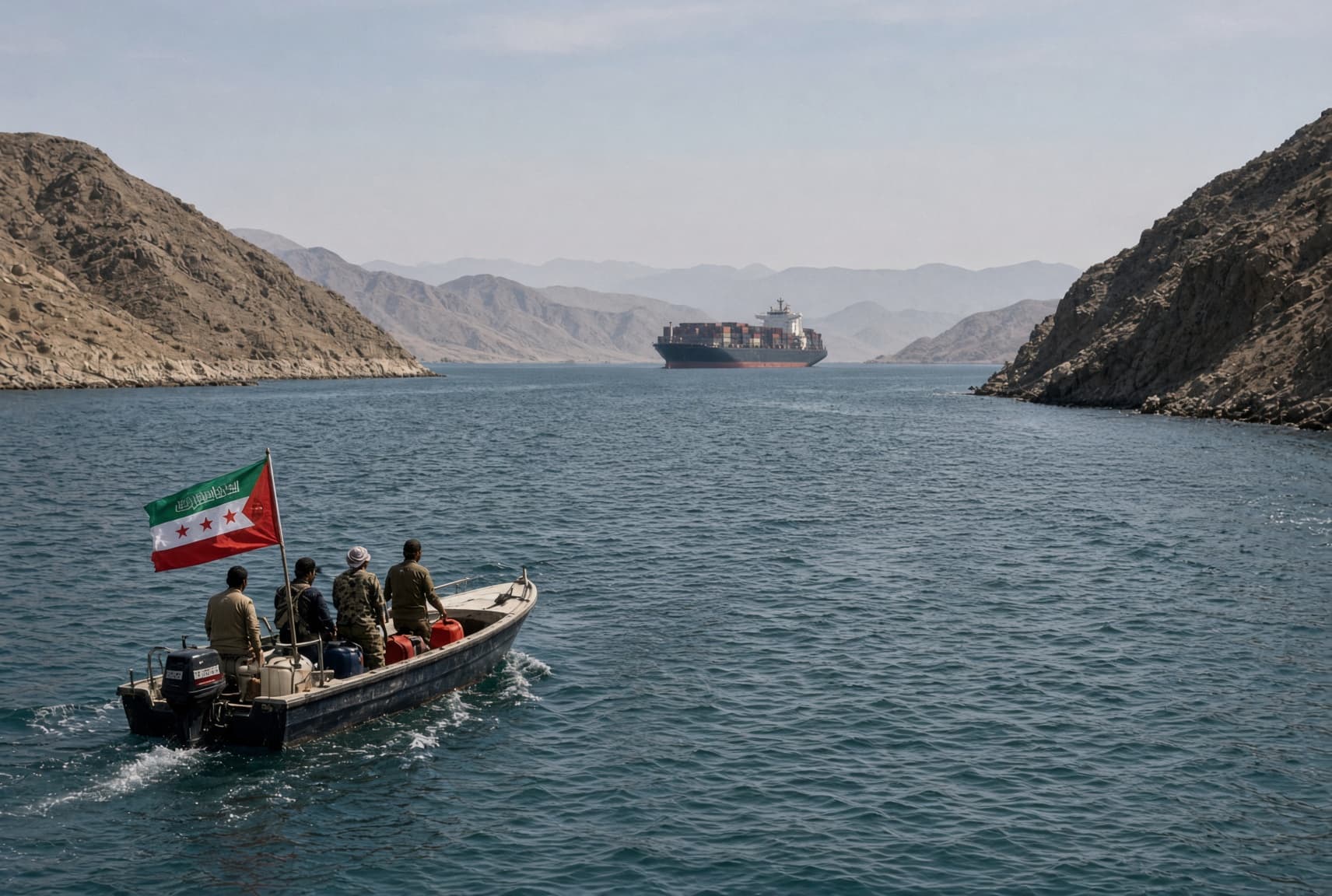
Iran-backed Houthi forces have taken control of Yemen's entire Red Sea coastline and seized the strategic Bab al-Mandeb strait — a shipping lane that carries oil from the Gulf to Europe and Asia — while an Iranian commercial vessel was struck near the Strait of Hormuz on Sunday, killing one person and wounding four others.
Iran's state-run news agency quoted the governor of Qeshm Island, located roughly 14 miles from the port city of Bandar Abbas, as blaming a "terrorist enemy" for the ship attack. The U.S. military had not commented on the incident as of Sunday. A separate vessel was also reported struck in the strait overnight, according to the United Kingdom Maritime Trade Operations Centre, which said a fire broke out and local authorities were evacuating the crew.
The Bab al-Mandeb assault came after a week-long Houthi offensive that culminated in the capture of the Red Sea port city of Mocha and Perim Island, which splits the strait in two. The waterway has grown in importance since Iran's blockade of the Strait of Hormuz sharply curtailed Gulf oil shipments at the war's outset. Traffic through Hormuz is now roughly 90 percent below pre-conflict levels.
Houthi military spokesperson Yahya Saree said fighters used ballistic missiles and drones to strike a Saudi military base in the Sharurah region of southern Saudi Arabia, targeting "weapons depots and command and control centres." Saudi civil defence confirmed a projectile struck al-Tawwal governorate near the Yemeni border, injuring two people and damaging a mosque and several buildings.
A senior Yemeni government official, Sultan al-Arada, a member of the ruling presidential council and governor of the central Marib province, called the Houthi advance along the western coast "painful and regrettable" and said forces were regrouping. More than 500 people have been killed in the renewed fighting, according to sources on both sides, and the International Organization for Migration reported 76,000 people displaced since July — a figure that quadrupled following the latest escalation. About 1,400 Yemenis fled to Djibouti in a single 24-hour period, that country's economy minister said.
Saudi Arabia's East-West oil pipeline, which allows the kingdom to bypass the Strait of Hormuz entirely and carries roughly 4 to 5 percent of global oil supply, was shut down as a precaution after drones struck it Thursday in the Riyadh and Medina regions. Iraqi authorities seized the drone-launching platform in Maysan province in southeastern Iraq, near the Iranian border. Iraq's Security Media Cell chief, Lieutenant General Saad Maan, said Iraq would not allow its territory to serve as a launch pad against other nations.
Saudi Crown Prince Mohammed bin Salman twice called President Donald Trump last week to request U.S. strikes on the Houthis, according to reports. Trump acknowledged the conversations Saturday but offered no commitment. "Everything's gonna work out fine and dandy," he told reporters.
Top Gulf diplomats were set to meet Iran's foreign minister in Oman on Monday to discuss maritime traffic management through Hormuz, though Iran's president made clear that the waterway would remain restricted until the U.S. lifted its blockade. Iranian parliament national security committee head Ebrahim Azizi said negotiations were pointless until all of Iran's conditions were met.
Reuters reported that Iran's Revolutionary Guards provided direct guidance to the Houthis during their Red Sea coast offensive. Iran publicly denies directing Houthi military operations while describing the group as an ally.
You Might Also Be Interested In

Sweden Votes as Anti-Immigration Party Eyes Cabinet Posts

Putin Warns Europe: Troops in Ukraine Mean War With Russia

Hong Kong Court Sentences Tiananmen Vigil Organizers to Seven Years