
Trump Shifts to Economic Squeeze as Iran Hardens on Hormuz
President Trump said the U.S. is 'semi-negotiating' with Tehran as Iran vowed the strait will not reopen without major U.S. concessions
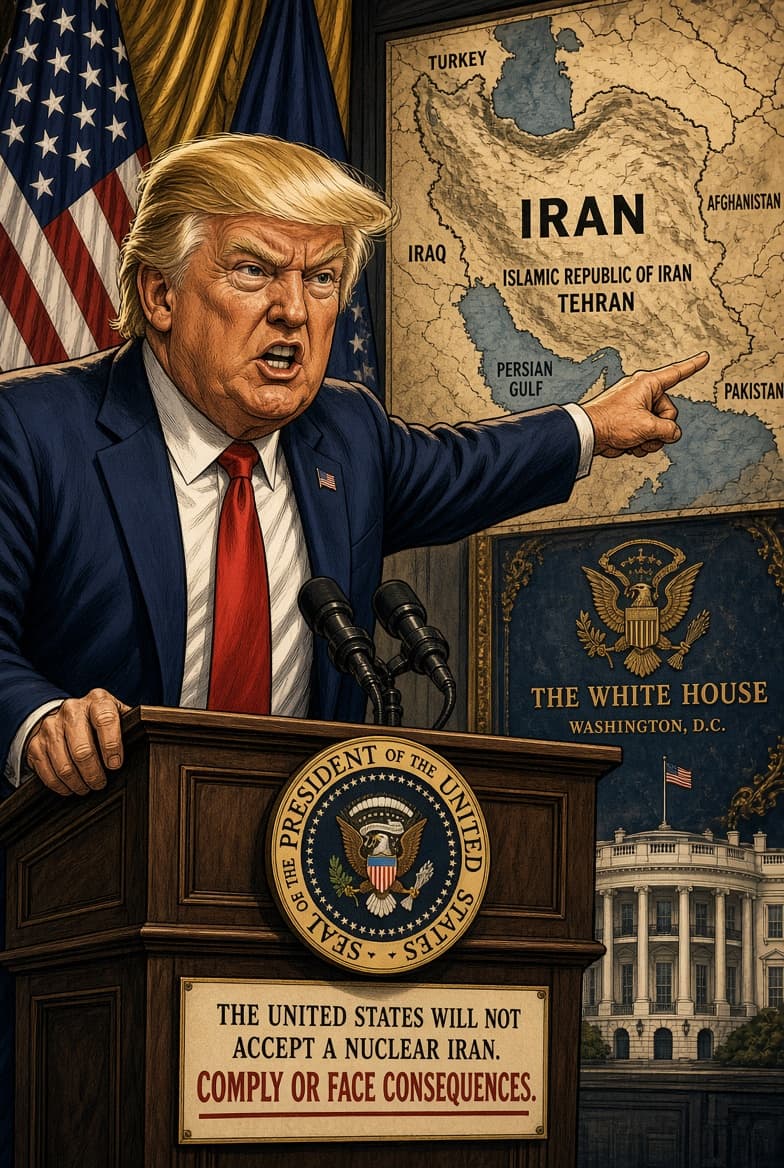
President Donald Trump declared Sunday that the United States is taking a patient, economically focused approach to its standoff with Iran over the Strait of Hormuz, stepping back — at least for now — from the threat of renewed military strikes he had issued just days earlier.
"We are low-keying it," Trump told Axios. "We are only semi-negotiating with them. We are just watching Iran with its huge inflation and the fact they have no money."
Trump posted a chart on Truth Social showing the declining value of Iran's currency, captioned with remarks about Tehran's depleted finances, and said falling global oil prices had helped cushion American consumers from the economic impact of the months-long blockade of the strait.
The Strait of Hormuz, a narrow waterway through which roughly one-fifth of the world's oil and liquefied natural gas once flowed freely, has been closed to normal traffic since a U.S.-Israeli military campaign against Iran began in February. The U.S. Navy has enforced a blockade against Iranian ports since mid-April, redirecting 55 commercial vessels as of Sunday and boarding or disabling four others, according to U.S. Central Command.
Iran showed no sign of yielding. Foreign Ministry Spokesperson Esmail Baghaei told reporters Monday that there are no direct negotiations with Washington — only message exchanges through intermediaries — and that the blockade "is not a diplomatic action that we can lift through diplomacy."
"Certainly, you have to use authority and military power, along with diplomacy, to prevent the United States' aggression, and that is what is being done," Baghaei said.
Tehran has set out sweeping conditions for reopening the waterway, including U.S. compensation for war damage, the lifting of the American naval blockade, withdrawal of U.S. troops from the region, release of frozen Iranian assets, and an end to fighting in Lebanon. U.S. officials have rejected those demands.
In a separate but related development, Iran appointed Mohsen Rezaei — a former commander-in-chief of the Islamic Revolutionary Guard Corps who led it from 1981 to 1997 — as secretary of the Supreme National Security Council. Rezaei has publicly described Iranian control of the Strait of Hormuz as more strategically valuable than "dozens of atomic bombs" and last week warned the U.S. it would "face serious risks and casualties" if its port blockade continued. The appointment signals a hardening of Iran's negotiating posture.
Oman has been serving as a channel for discussions about transit arrangements in the strait. Iranian Foreign Minister Abbas Araghchi said talks with Muscat had reached their "final stage" but insisted that any agreement would address transit routes only and would not constitute a full reopening of the waterway. Oman confirmed the talks were progressing in "a positive and constructive atmosphere."
Israeli Prime Minister Benjamin Netanyahu on Sunday rejected a separate U.S.-backed 15-point peace plan for Gaza, saying Israeli forces would not withdraw until Hamas is "genuinely" disarmed — a public break with a proposal Trump had previously called "historic."
Oil prices rose close to two percent Monday on the continued impasse. The United Arab Emirates said Saturday that Iran launched a missile at an Abu Dhabi National Oil Company tanker attempting to transit the strait. Yemen's Houthi rebels, backed by Iran, claimed responsibility for an attack on a Saudi oil refinery and struck the Red Sea port city of Mocha for the second time in 24 hours, raising concern that the conflict is spreading to a second strategic shipping lane.
Vice President JD Vance, speaking Saturday on Fox News, described the U.S. posture as deploying "a whole host of tools — diplomatic, economic, military tools" to secure "the best outcome for the American people."
You Might Also Be Interested In
Trump Announces U.S. Security Deal Over Greenland
Russia Launches Mass Drone and Missile Strike Across Ukraine

Patton and the Third Armies Dash Across France to the Seine River