

AI Inflation Is Here, and It's Not Just About Chips Anymore
Wall Street economists are now flagging AI-driven demand for electricity, memory chips and software as a genuine contributor to the inflation numbers the Fed watches — a twist that complicates the rate picture for anyone with a mortgage or a business loan.
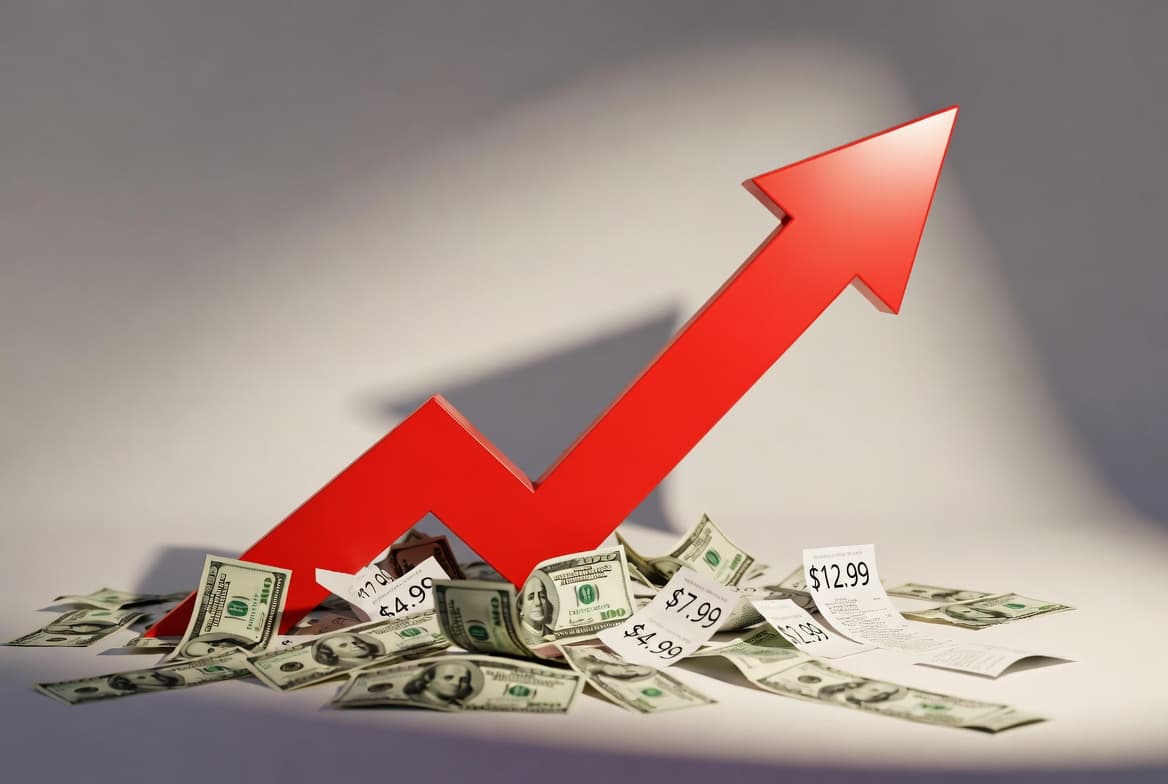
For the past two years, the AI boom and the inflation fight have mostly run on separate tracks in the public conversation — one a story about capital spending and stock valuations, the other about grocery bills and the Fed's next move. That's starting to change. Economists at multiple major banks are now pointing to a specific, measurable channel by which the AI buildout is pushing up prices in the broader economy: electricity, memory chips, and enterprise software.
The mechanism is straightforward once you see it. Building and running the data centers that power large language models requires enormous amounts of electricity — enough that utilities in several regions are now citing AI demand as a driver of rate increases headed to ordinary ratepayers. It also requires memory chips, and memory has been in a genuine supply crunch this year as manufacturers redirect capacity toward AI accelerators, pushing up prices for the DRAM and NAND that end up in everything from laptops to cars. And enterprise software vendors are increasingly bundling AI features into subscription price hikes, whether or not customers asked for them.
None of this shows up as a single dramatic line item in the Consumer Price Index. It shows up as a slow, grinding upward pressure across a handful of categories that used to be reliably disinflationary — electronics and services, in particular, have gotten cheaper for the American consumer for the better part of two decades thanks to global manufacturing efficiency and software's near-zero marginal cost. If that dynamic reverses even modestly, it removes one of the quiet tailwinds that helped the Fed tolerate a hot economy without runaway inflation.
This matters more than it might sound like at first, because it arrives just as the Fed's new leadership is trying to figure out how much weight to put on "AI-adjacent" price pressure versus the traditional stuff — shelter, wages, tariffs. If electricity and chip costs keep drifting higher because Big Tech is racing to build out compute capacity, that's a supply-side inflation story with no obvious near-term fix, since building power plants and chip fabs takes years, not quarters. A rate-setting committee that's already been reluctant to declare victory on inflation now has one more reason for caution.
For Long Island households and small businesses, the electricity angle is the one worth watching most closely. PSEG Long Island and the Long Island Power Authority don't run data centers of their own, but the region's rates are increasingly tied to regional grid dynamics set by NYISO, and data-center-driven demand growth anywhere on the Eastern grid can ripple into local capacity costs over time. It's a slow-moving risk, not an immediate shock, but it's one more reason utility bills have stopped behaving the way they did a decade ago.
The irony, of course, is that AI is simultaneously being sold to investors as a productivity miracle that will eventually lower costs across the economy by automating white-collar work. Both things can be true at once: the buildout phase is inflationary because it consumes real physical resources — power, chips, construction labor — while the payoff phase, if it arrives, could be disinflationary because it reduces labor costs elsewhere. The problem for policymakers is that the bill for the buildout is due now, while the productivity payoff is a bet on the future. Voters feeling the electricity bill increase this year won't be comforted by a promise that AI will make everything cheaper eventually. The Fed will have to decide how much of this to treat as transitory and how much as structural — and get it right without the benefit of hindsight.
You Might Also Be Interested In

U.S. Crude Settles Above $100 as Brent Reaches Its Highest Close Since April
CoreWeave's Falling Stock Shows Where the AI Buildout's Financing Gets Expensive
Washington Eased Up on Russian Energy. Oil Rose Anyway.