

Nine Days of Strikes on Iran, and Oil Just Broke Out. Long Island Drivers Will Feel It First
An escalating shadow war in the Gulf has pushed oil above $90 a barrel and rattled the Strait of Hormuz — and the transmission to your gas pump and grocery bill is faster than Washington's talk of de-escalation
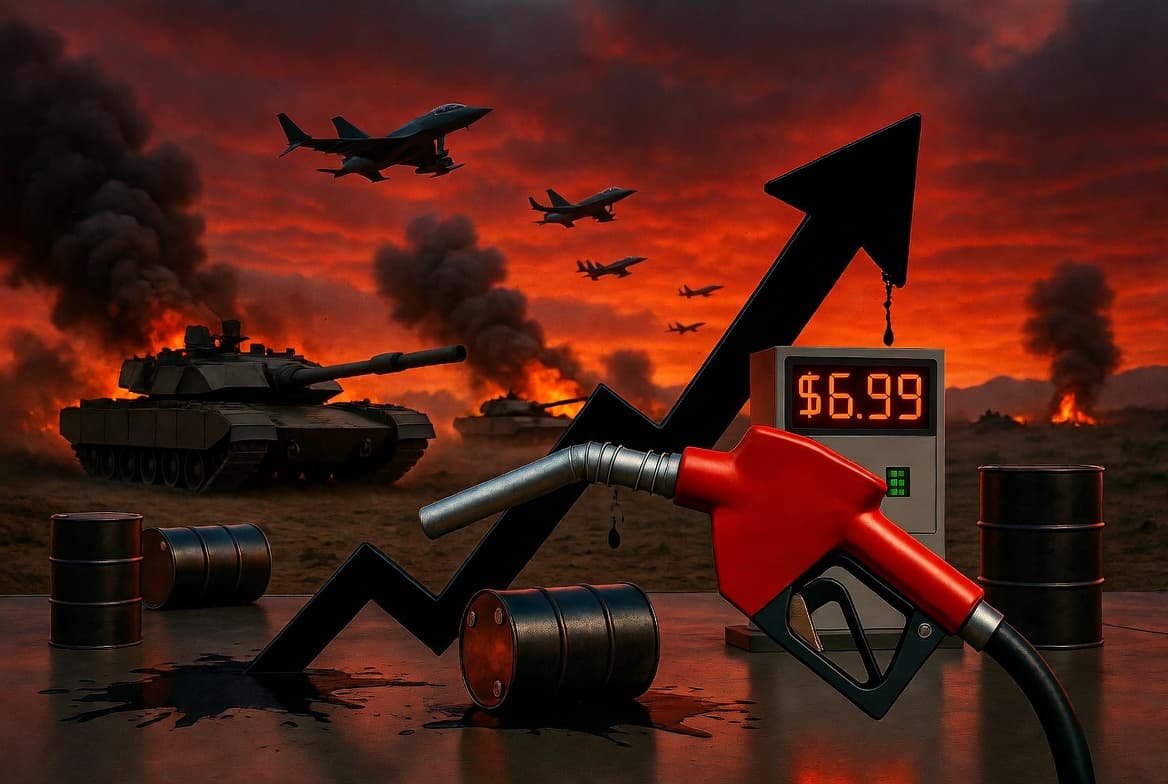
For nine straight nights, U.S. forces have struck targets inside Iran, and Iran has responded by targeting shipping near the Strait of Hormuz — the chokepoint through which roughly a fifth of the world's oil passes every day. Brent crude has pushed above $90 a barrel, up more than 15% in a matter of weeks, and volatility gauges tied to oil are flashing levels not seen since energy markets spiraled earlier this year. Reports over the weekend of tankers disabled in the strait, and of American service members killed in the fighting, suggest this is not a contained skirmish that fades from the headlines. It is a conflict with its own momentum.
Markets have spent the last week alternating between two stories: one in which mediators broker a fragile return to negotiations, and one in which the fighting spreads into infrastructure — ports, power grids, water systems — that would turn a regional conflict into a durable drag on global energy supply. Traders who watch this closely describe the shift bluntly: pricing has moved from "when does this end" to "how much disruption can the region absorb." That's a meaningfully more pessimistic framing, and it shows up first and most directly in the price of a barrel of oil.
For Long Island, where most households depend on cars for daily life and heating oil still warms a meaningful share of homes, sustained oil price increases are not an abstraction. Every $10 move in a barrel of crude eventually shows up at the pump and, come autumn, in the price of a heating oil delivery. Suffolk County commuters already contend with some of the longest average commute times in the state; a sustained energy price shock compounds a household budget that was already strained by elevated grocery and insurance costs. It also complicates the inflation picture right as the Fed has been signaling it isn't ready to declare victory on prices — a hawkish stance that becomes much easier to justify if energy costs are reaccelerating.
There's a second-order effect worth watching too: bond markets. Long-dated Treasury yields have ticked higher recently, and part of that move reflects investors pricing in the possibility that an energy shock forces the Fed to hold rates higher for longer, even as headline inflation data looked encouraging just weeks ago. That combination — geopolitical risk pushing energy costs up, at the same time long-term rates refuse to come down — is precisely the scenario that keeps mortgage rates elevated on the South Shore, regardless of what the Fed does with its short-term policy rate. Homebuyers hoping for meaningful mortgage relief this year are, in effect, also hoping for peace in the Gulf.
What makes this moment different from prior Middle East flare-ups is the reported willingness of both sides to target infrastructure beyond shipping — electricity grids, ports, and water systems — which analysts increasingly describe as a shift toward "pricing survivability" rather than just pricing disruption. That's a much harder scenario to hedge against, because it implies a longer timeline and higher tail risk than markets are used to discounting for Middle East conflicts, which historically have proven short-lived from an economic-impact standpoint. Whether this one follows that pattern or breaks it is arguably the single biggest swing factor for inflation, rates, and household budgets over the back half of the year — bigger, for now, than anything the Fed says in its own statements.
None of this means panic is warranted. Energy markets have a long history of pricing in worst-case scenarios that don't materialize, and a diplomatic off-ramp remains very much on the table according to officials on both sides. But for a region like Suffolk County that runs on cars, oil heat, and a housing market already stretched by high borrowing costs, the Gulf isn't a distant story. It's a direct pipeline into the household budget, and it deserves more attention at the kitchen table than it's currently getting in the news cycle.
You Might Also Be Interested In

Wall Street's Wake-Up Call: Don't Mistake a Pullback for a Panic
Oil, Missiles, and Your Mortgage: Why the Strait of Hormuz Suddenly Matters on Long Island

Where You Hold It Matters: The Overlooked Discipline of Asset Location